




Post-Claim Survey in Insurance: What to Ask, When to Send It, and How to Use It

- Post-claim surveys should be sent only after claim decisions
- NPS is the primary metric because it captures trust
- Use CSAT/attributes to diagnose the experience
- Focus on fairness, clarity, and communication
- Use feedback to identify churn risk and improve claims experience
Request a Demo
A customer may forget the policy details.
But they rarely forget the claim.
Because the claim is where the promise gets tested.
And more importantly –
it is where the customer decides:
→ “Do I trust this insurer?”
→ “Would I recommend them?”
That is why a post-claim survey in insurance matters.
Not as a reporting exercise.
But as a trust measurement system.
What is a Post-Claim Survey in Insurance?
A post-claim survey is a feedback survey sent after the claim decision is made – whether the claim is approved or rejected.
Not before. Not during.
Because this is not about measuring the process.
It is about measuring what the decision did to customer trust.
Why Post-Claim Surveys Matter More Than Most Insurers Realize
Most insurers focus heavily on optimizing the process:
- faster turnaround time
- smoother documentation
- better coordination
But customers don’t remember the process in detail.
They remember:
- Was my claim approved or rejected?
- Did it feel fair?
- Was it explained clearly?
- Did I feel respected?
That is what shapes:
- recommendation
- retention
- future purchase decisions
In many insurance programs, customers who report poor claim experiences are significantly more likely to churn at renewal, even if the policy was competitively priced.
The reality most teams miss
- A smooth process + rejection → can still destroy trust
- A delayed process + fair, well-explained approval → can still build trust
→ Which means: The decision moment matters more than the process
When Should You Send a Post-Claim Survey in Insurance?
A post-claim survey should be sent only after the claim decision is made.
This is the only moment that truly reflects the customer’s final perception.
Everything before this is process experience.
This is the outcome experience.
The Only Two Valid Trigger Points
1. After Claim Approval
This helps you understand:
- confidence in the insurer
- clarity of communication
- satisfaction with the outcome
- likelihood to recommend
2. After Claim Rejection
This is even more critical.
Because this is where trust breaks.
You need to understand:
- fairness perception
- clarity of rejection reasoning
- emotional dissatisfaction
- churn risk
Common Mistakes Insurers Make with Post-Claim Surveys
- Sending surveys before the claim decision
- Using CSAT as the primary metric instead of NPS
- Asking too many questions
- Not capturing open-ended feedback
- Collecting feedback but not acting on it
Why Claim Decision Drives Loyalty More Than Process
Most insurers measure experience across steps.
But customers don’t think in steps.
They think about outcomes.
- “Did I get what I expected?”
- “Was I treated fairly?”
- “Can I trust them again?”
That is why post-claim feedback is not just CX data.
It is loyalty data.
Should You Use NPS, CSAT, or CES for Post-Claim Surveys?
For post-claim surveys, the goal is not just to measure satisfaction. It is to understand what the claim outcome did to customer trust.
Use NPS as the primary metric
Why NPS Matters Here: Because this is the moment where the customer decides:
- whether they trust your insurer
- whether they would recommend you
- whether they will stay or switch at renewal
That is exactly what NPS captures.
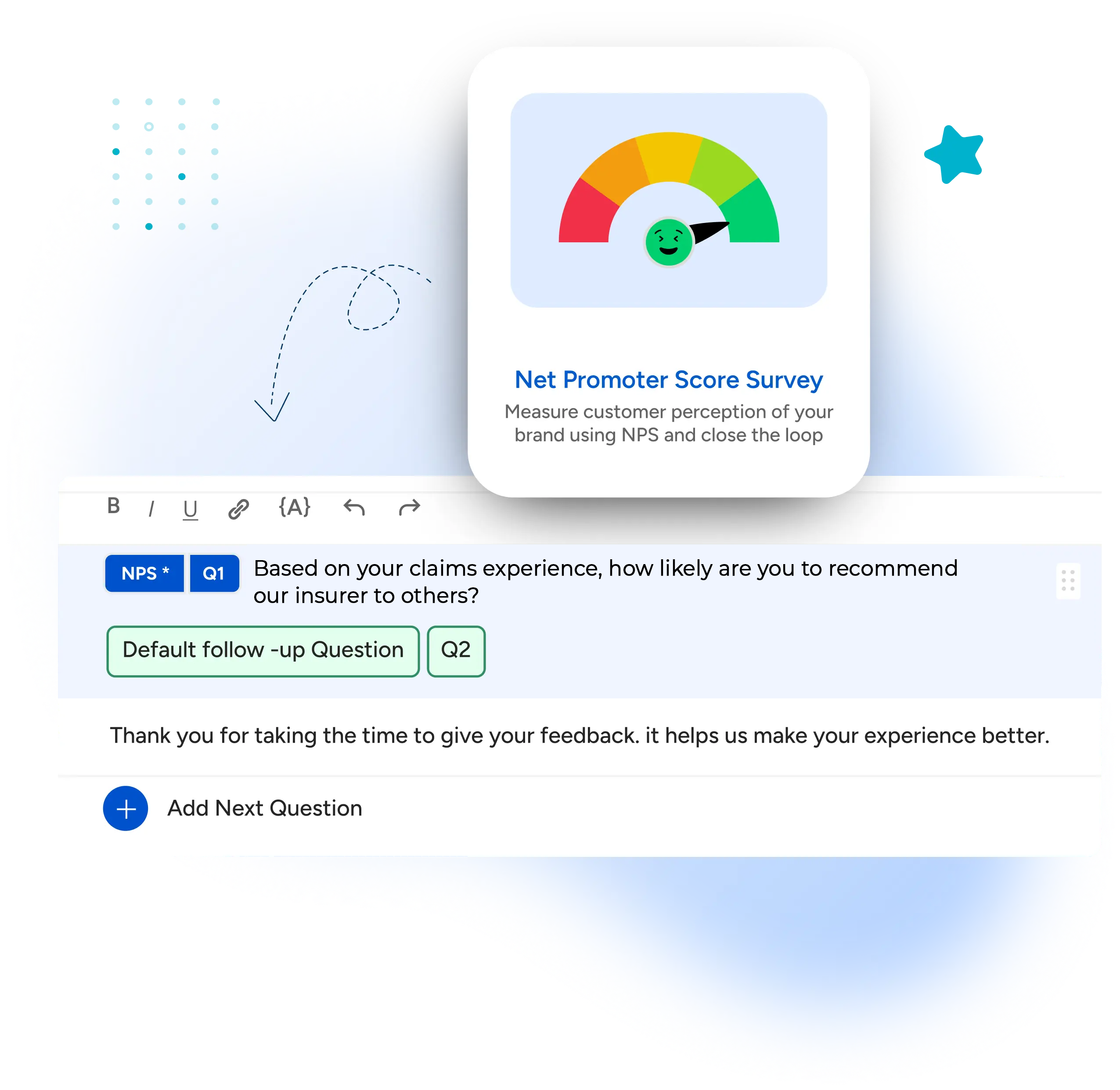
Based on your claims experience, how likely are you to recommend our insurer to others?
Where CSAT and CES Fit in Post-Claim Surveys
CSAT → Measure the satisfaction
CES → Identify effort and friction
They are also suited for process journeys, such as:
- post onboarding → CSAT (see how insurers design an insurance onboarding survey to capture early experience)
- post support interaction → CSAT
- claim submission → CES
- document upload → CES
NPS vs CSAT vs CES in Claims (Quick Comparison)
| Metric | When to Use | What It Measures |
| NPS | After claim decision | Trust and likelihood to recommend |
| CSAT | Post interaction | Satisfaction with specific touchpoints |
| CES | During process | Ease of completing tasks |
Best Questions for a Post-Claim Survey in Insurance
Here’s a simple, effective post-claim survey template insurers can use after a claim decision (approval or rejection).
Keep it short, focused, and aligned to the decision moment.
- How satisfied are you with your overall claims experience? (CSAT)
- What is the primary reason for the score you gave? (Open-Ended)
- Based on your claims experience, how likely are you to recommend our insurer to others? (NPS)
- Please rate the following aspects of your claim experience (Key Attribute Ratings)
- Timeliness of the claim process
- Ease of getting claim approval
- Transparency of the decision
- Communication during the claim
Note: A post-claim survey should ideally be limited to 3–5 questions to ensure high response rates.
How to Use This Template
- Use NPS as the primary metric to measure trust and recommendation
- Use CSAT and attribute ratings to diagnose what impacted the score
- Use open-ended responses to identify root causes and patterns
This combination helps you understand not just what the score is, but why it happened.
Why Open-Ended Feedback Matters Most
Scores tell you that something is wrong.
Open-ended feedback tells you what exactly is wrong.
This is where insurers uncover patterns like:
- “The rejection reason was unclear”
- “No one explained the delay properly”
- “I had to follow up multiple times”
- “The approval amount wasn’t explained”
Without this, you only see numbers.
With this, you see root causes.
What a Post-Claim Survey Should Actually Help You Fix
A good post-claim survey should not just measure experience.
It should help you fix real problems.
1. Rejection Communication Gaps
Customers accept rejection better when it is explained properly.
2. Perceived Unfairness
Even correct decisions can feel wrong if not communicated well.
3. Expectation vs Reality Mismatch
What customers expected vs what actually happened.
4. Trust Breakdown Signals
Early signs of churn or dissatisfaction.
5. Closure Experience Issues
Confusion even after the claim is resolved.
How Insurers Should Use Post-Claim Feedback
Collecting feedback is easy.
Using it is where most programs fail.
1. Identify Detractors Immediately
Low NPS scores after rejection or poor communication signal high risk.
2. Detect Patterns Across Claims
Over time, patterns emerge:
- certain claim types
- specific branches
- individual handlers
- product-specific issues
3. Route Feedback to the Right Teams
Claims feedback should drive action across:
- claims operations
- service quality
- training teams
- retention teams
– which is where having the right insurance customer feedback software becomes critical.
4. Close the Loop
If a customer shares poor feedback:
- follow up
- resolve the issue
- track closure
That is how feedback drives impact.
In many cases, customers who don’t complain still don’t return. The post-claim feedback helps identify these silent detractors before they churn.
What a Good Post-Claim Survey Program Looks Like
By this point, the strategy is clear.
Now comes execution.
To operationalize post-claim surveys effectively, insurers need a system that can:
- trigger surveys automatically after claim decisions
- differentiate between approval and rejection flows
- capture NPS and open-ended feedback
- analyze feedback at scale
- break insights by branch, region, and claim type
- identify detractors instantly
- enable follow-up and closure
How This Looks in Practice
This is where tools like SurveySensum come in – not as the strategy, but as the execution layer.
Instead of manually running surveys and analyzing feedback, insurers can:
- automatically trigger post-claim surveys
- track NPS across claim outcomes
- analyze open-text feedback into themes
- identify high-risk customers in real time
- route feedback into action workflows
Here’s how:
1. Designing a Post-Claim Survey
Instead of building surveys manually each time, teams can create a structured post-claim survey with:
- NPS as the primary question
- targeted follow-up questions (fairness, clarity, communication)
- open-ended feedback to capture context
This ensures consistency across all claim journeys while still capturing detailed insights.
2. Triggering Surveys After Claim Decisions
The most critical part of a post-claim survey is timing.
Rather than sending surveys manually, insurers can automate triggers based on claim events:
- survey sent immediately after approval
- separate flow triggered after rejection
- different question logic for each scenario
This ensures feedback is collected at the exact moment when customer perception is formed.
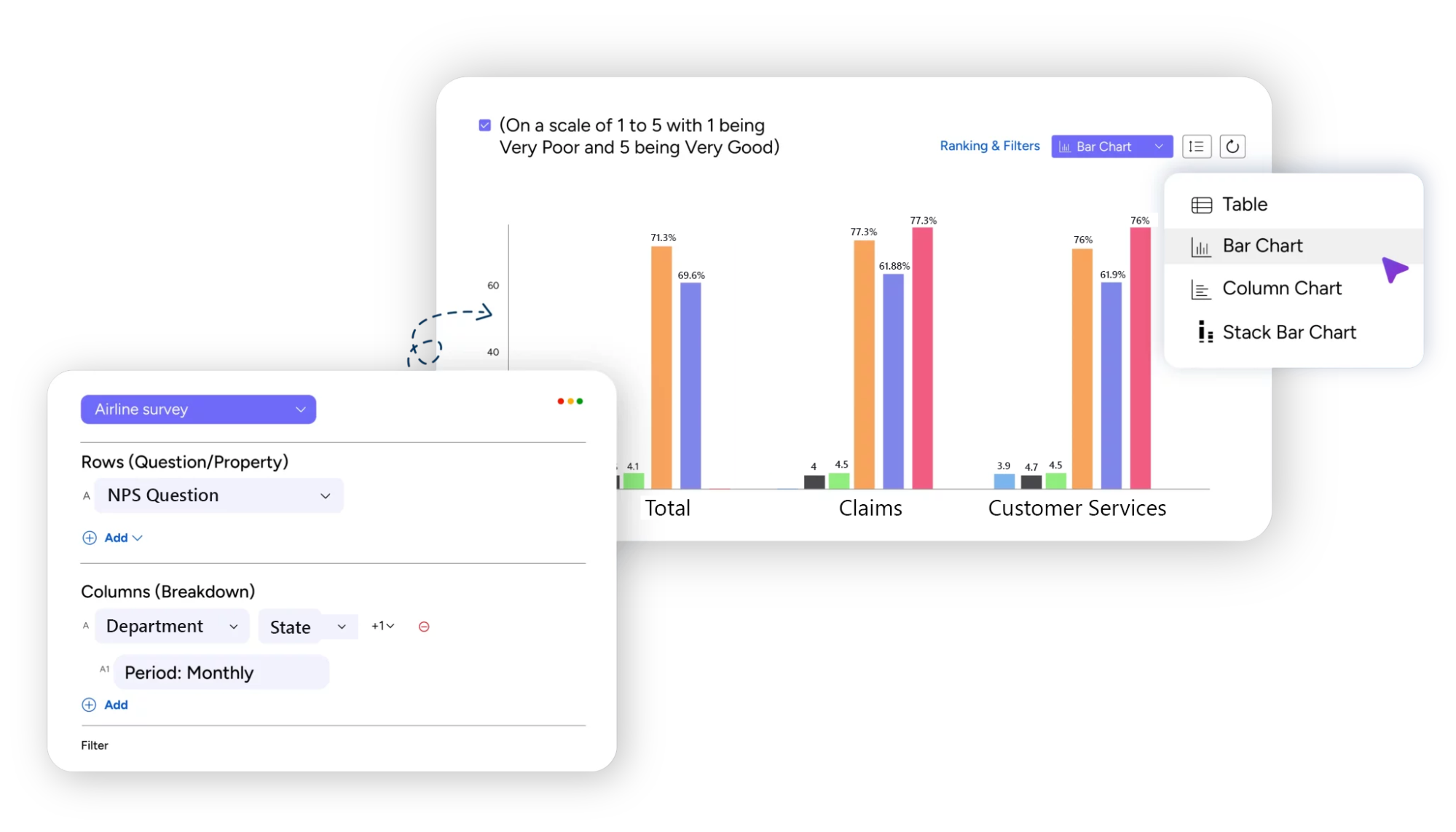
3. Tracking NPS Across Claim Outcomes
Once responses start coming in, the focus shifts to visibility.
Instead of looking at raw data, teams can track:
- NPS split by approval vs rejection
- performance by branch, region, or claim type
- trends over time
This helps identify where trust is being built vs where it is breaking.
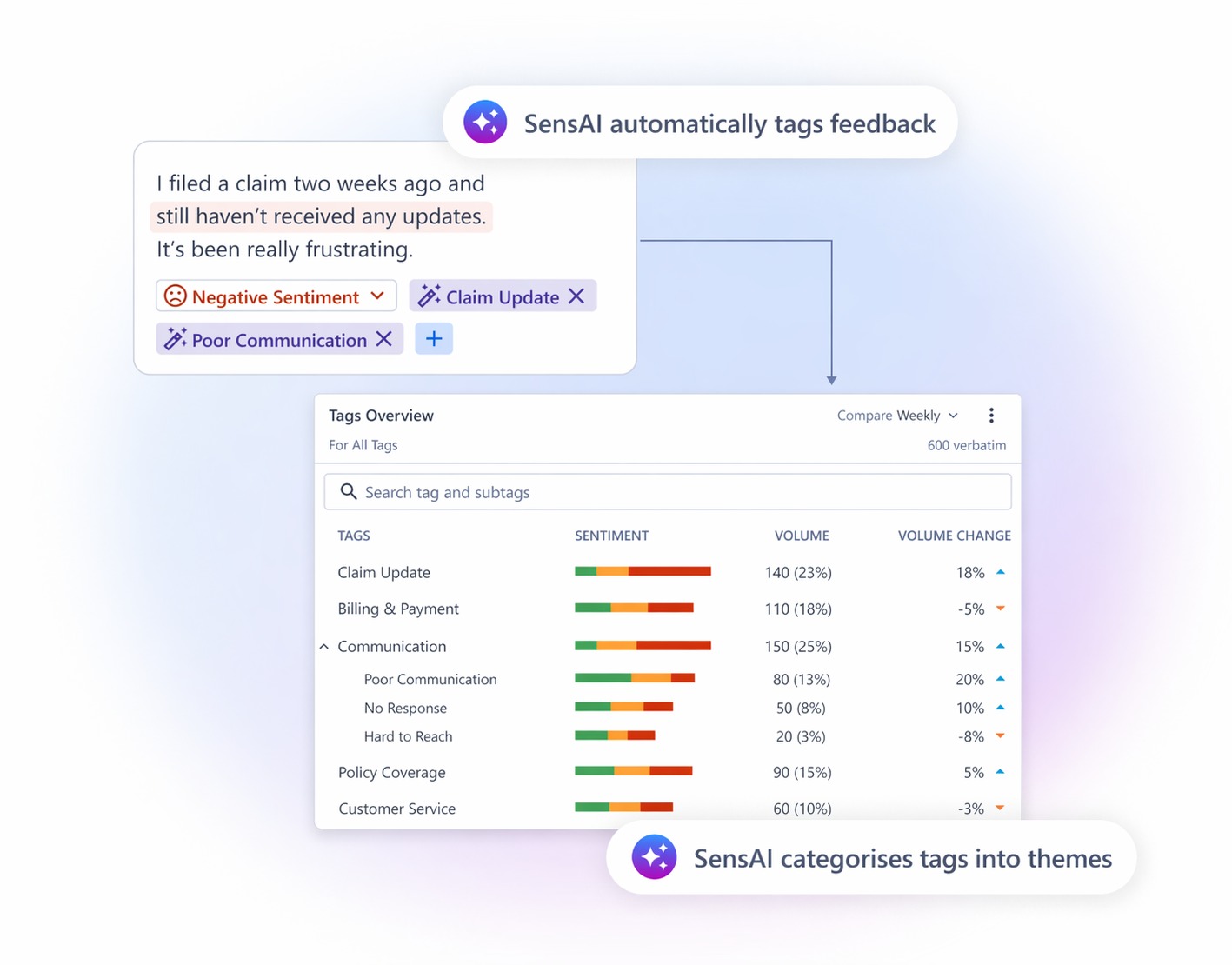
4. Understanding the “Why” Behind the Scores
Scores alone don’t tell the full story.
Open-ended feedback can be analyzed to identify patterns like:
- unclear rejection reasons
- communication gaps
- delays or expectation mismatches
Instead of reading responses manually, feedback can be grouped into themes to surface the most common issues.
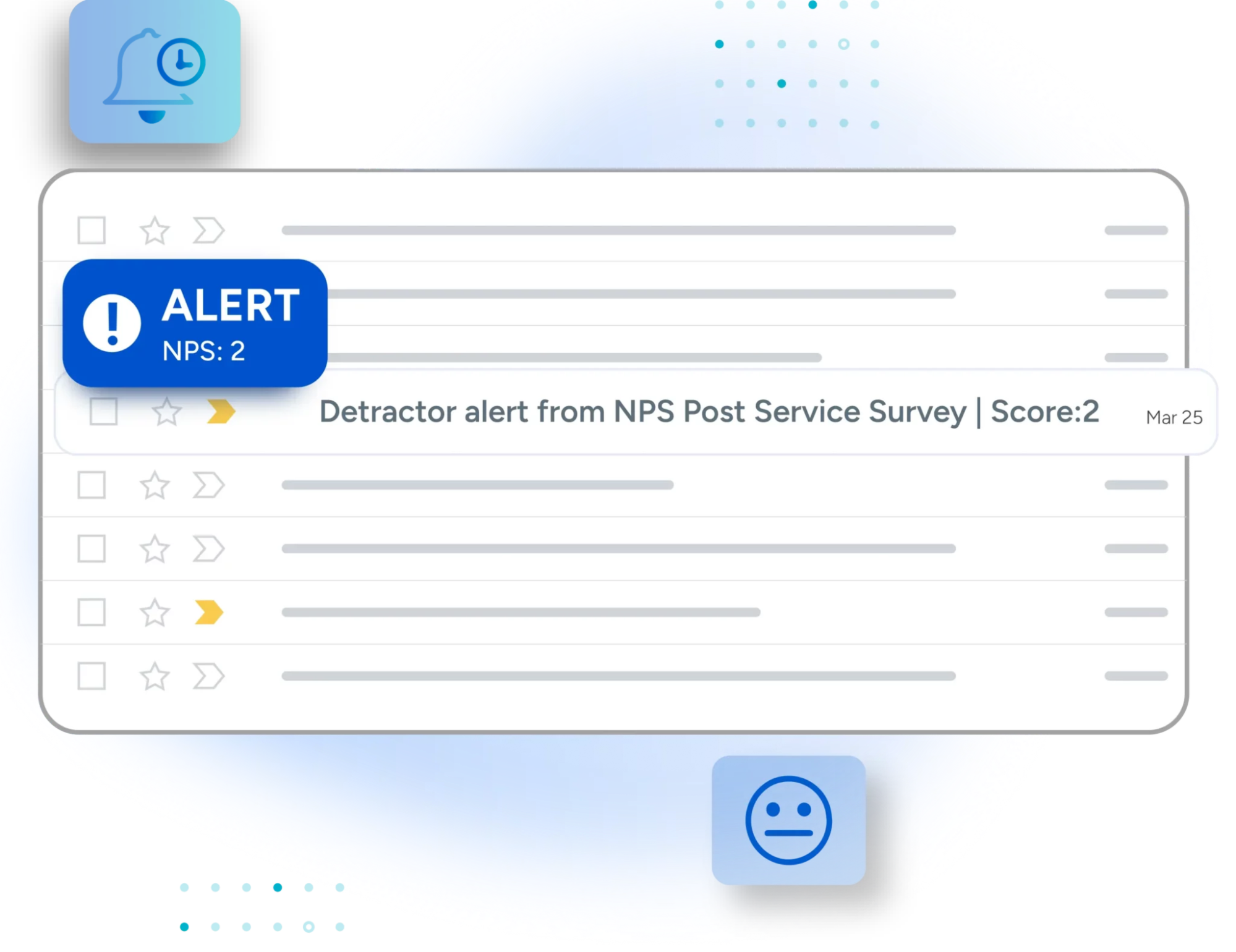
5. Identifying and Acting on At-Risk Customers
The real value of post-claim surveys comes from action.
When a low NPS score is received:
- the system can flag the response instantly
- assign it to the relevant team
- trigger follow-up workflows
This helps insurers move from measurement → intervention → resolution.
What This Enables
With this setup, insurers are not just collecting feedback.
They are able to:
- detect dissatisfaction immediately after claim decisions
- understand root causes behind poor experiences
- act on high-risk cases before churn happens – often by following up with targeted journeys like an insurance renewal survey
- continuously improve claims experience across teams
Without a system:
→ feedback is delayed, fragmented, and rarely acted on
With a structured post-claim survey setup:
→ feedback becomes real-time, actionable, and tied to outcomes
Want to see how this works in a real post-claim workflow?Book a demo to see how insurers automate post-claim NPS, analyze open-text feedback, and act on detractors in real time.
What to Look for in Post-Claim Survey Software
If you are evaluating tools, look for:
- trigger-based automation
- text analytics capabilities
- NPS + open-text feedback capture
- role-based dashboards
- real-time alerts for detractors
- closed-loop workflows
- flexible reporting across claims data
A Simple Way to Think About It
A post-claim survey should answer five questions:
- Did the claim decision build or break trust?
- How serious is the dissatisfaction?
- Which customers are at risk?
- Where are the recurring issues?
- What should we fix first?
If your system cannot answer these, you don’t have a post-claim feedback system.
You have a reporting tool.
Final Thought
Most insurers measure the claim process.
The best insurers measure what the claim decision did to customer trust.
That is the difference between collecting feedback…
and actually improving the claims experience.
FAQs: Post-Claim Surveys in Insurance
What is a Post-Claim Survey in Insurance?
A post-claim survey in insurance is a feedback survey sent after a claim decision is made, whether approved or rejected, to measure customer trust, satisfaction, and likelihood to recommend the insurer.
When should a post-claim survey be sent?
A post-claim survey should be sent only after the claim decision is made, whether the claim is approved or rejected, as this reflects the customer’s final experience.
Should insurers use NPS or CSAT after claims?
NPS should be used as the primary metric after claims because it measures trust and recommendation, while CSAT can be used as a supporting metric to understand satisfaction.
What questions should be included in a claims survey?
A post-claim survey should include an NPS question, fairness and clarity questions, communication rating, and an open-ended question to capture detailed feedback.
Why is claim experience important in insurance?
The claim experience is the most critical moment in the customer journey, as it determines trust, satisfaction, and future loyalty.
How long should a post-claim survey be?
A post-claim survey should be short, typically 3–5 questions, focusing on trust, communication, and overall experience.
See how post-claim NPS is tracked across approvals and rejections in real time →
Free Forever • No Feature Limitation • No Credit Card Required • Sign Up For Free 


Increase ROI by 3x with targeted feedback & analysis
Boost Customer Satisfaction by up to 20%
Reduce Churn by identifying pain points in real time
See it in Action
How much did you enjoy this article?