





Best NPS Software in 2026: Measurement to Action (AI-Led CX Tools Compared)
Most NPS tools help teams measure feedback. Very few help teams act on it. This guide compares the best NPS software based on AI insights, workflows, implementation speed, pricing, and how effectively they help CX teams move from feedback → action.
Request a Demo
Most companies don’t fail at collecting NPS.
They fail at doing something meaningful with it.
Over the last few years, we’ve spoken with CX leaders, product teams, support heads, and enterprise customers across industries.
And we kept asking the same question:
→ “What actions did you take from customer feedback, and what business impact did it create?”
That’s where the silence usually starts.
Because most NPS programs today are still built around measurement:
- collecting scores
- generating dashboards
- tracking trends
But customer experience doesn’t improve because a dashboard exists.
It improves when:
- product teams prioritize the issue
- operations teams respond fast
- service teams close the loop
- leadership connects CX with churn, retention, and revenue
And that’s where most NPS software tools struggle.
They help teams measure experience.. Very few help teams operationalize it.
That’s why this guide is different.
This is not a list of survey tools.
It’s a breakdown of NPS software platforms based on:
- how actionable they are
- how quickly teams can move from insight → execution
- and which tools actually help CX teams influence business outcomes
Because ultimately, the best NPS software isn’t the one with the most dashboards.
It’s the one that helps your organization take action.
Quick Decision: What Do You Actually Need?
| Your Need | Choose This Category | Best Tools |
| You only need to collect NPS scores | Measurement tools | SurveyMonkey, Typeform |
| You want to close the loop with detractors | Workflow-led NPS tools | AskNicely, Zonka, SurveySparrow |
| You want AI summaries, root-cause analysis, and guidance | AI + guided action platforms | SurveySensum |
| You are a B2B company tracking account health | Account-based NPS tools | CustomerGauge |
| You are a SaaS/product team collecting in-app NPS | Product-led NPS tools | Refiner, Survicate |
| You are a very large enterprise with complex governance | Enterprise XM platforms | Qualtrics, Medallia, InMoment |
👉 Most wrong decisions happen because teams choose a tool that requires more complexity than they can operate.
Comparison Table: Best NPS Software (2026)
| Tool | Category | Best For | How It Drives Action | Where It May Not Fit | Pricing Visibility |
| SurveySensum | AI + guided action | CX teams that want insight + action | Summaries and insights from AI, SensAI chat-based engine, closed-loop workflows, research guidance | Teams needing only basic forms | Starts $3600/year |
| AskNicely | Frontline action | Service and frontline teams | Coaching workflows, employee-level feedback, service recovery | Complex multi-journey CX programs | Typically starts around ~$5K–10K/year |
| CustomerGauge | Revenue-linked CX | B2B CX teams | Account-level NPS, churn risk, revenue linkage | B2C or transactional CX | Enterprise B2B pricing |
| Qualtrics | Research-driven CX | Large enterprises | Research depth, governance, partner ecosystem | Mid-market teams needing speed and lower cost | Enterprise pricing (~$100K-1M+) |
| Medallia | Enterprise XM | Very large CX programs | Consultant-led strategy, enterprise workflows | Teams needing affordable and light setup | Enterprise pricing (~$100K–1M+) |
| InMoment | Enterprise CX | Mature CX teams | Analytics, orchestration, structured programs | Teams wanting simplicity | Upper enterprise pricing (~70% of Qualtrics) |
| SurveySparrow | Lightweight CX | Growing CX teams | Recurring NPS, basic workflows, alerts | Limited AI guidance | Typically ~$3K–5K/year |
| Zonka Feedback | Retail and small CX | Budget-conscious teams | Alerts, reports, basic action workflows | Heavy enterprise CX | Typically around ~$3K–5K/year |
| Refiner | SaaS Product-led NPS | SaaS/product teams | In-app NPS, segmentation, product feedback | Broader CX programs | Starts $99/month |
| Survicate | Product-led feedback | SaaS and product teams | Website/app feedback, user segmentation | Enterprise CX action | Typically ~$5K/year |
| SurveyMonkey | Measurement | Basic surveys | Score collection, manual analysis | Closed-loop CX | Starts ~$17/user/month |
| Typeform | Measurement | UX-first forms | Data collection, manual follow-up | Full NPS programs | Starts ~$28/month |
The Workflow: Measurement to Action
Most NPS tools fall into one of four categories:
1. Measurement
You get a score.
Everything else is manual.
2. Workflow-led action
You can respond to feedback.
But you still decide what matters.
3. AI + guided action
You don’t just get data.
You get direction on what to fix and why
4. Enterprise-led action
Action comes from consultants, research teams, and structured programs
👉 The real question is: Do you want data, workflows, or decisions?
Best NPS Software by Category
Category: AI + Guided Action NPS Platforms
1. SurveySensum – Best for AI-Led Action + CX Guidance
Best for: Mid-market to enterprise CX teams running real CX programs
What makes it actionable: AI summaries, SensAI chat-based insights, closed-loop workflows, CX + research guidance
How action actually happens
- AI summarizes thousands of responses into clear drivers
- SensAI answers: “Why did NPS drop?”
- Detractors trigger workflows automatically
- Feedback is routed to the right teams
- CX leaders get prioritized recommendations, not dashboards
- Research + CX expertise help translate insights into decisions
👉 Action = AI insights + guidance + execution workflows
Why it stands out: Most tools show dashboards. SurveySensum tells you what to fix and helps teams act on it
Where it may not fit: Teams looking for heavy research-only, DIY survey tools, or extremely large global deployments across 20+ countries.
Pricing: Starts at ~$3,600/year for smaller teams, scales based on responses, AI, and workflows. You can also explore SurveySensum’s pricing for a detailed breakdown.
👉 Want to see how AI summaries, SensAI, and closed-loop workflows actually work in practice? Book a quick demo with the team.
Category: Workflow-Led NPS Tools
2. AskNicely – Best for Frontline CX Action
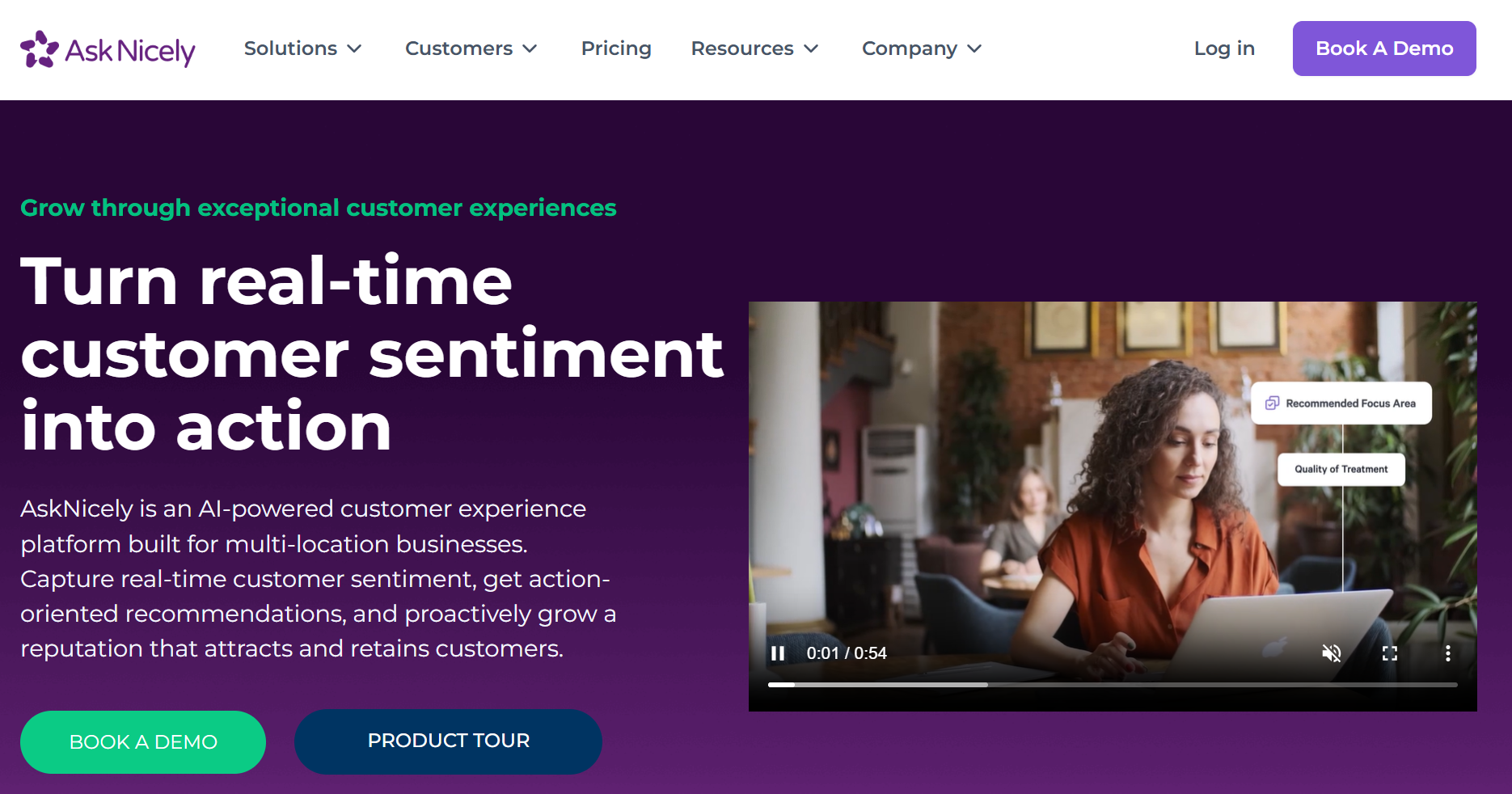
Best for: Service businesses, multi-location brands, frontline teams
What makes it actionable: Real-time feedback loops + coaching workflows
How action actually happens
- Feedback is tied to frontline employees
- Alerts trigger immediate response
- Managers coach teams based on NPS
- Daily operational improvements happen
👉 Action = frontline behavior + service recovery
Where it may not fit: Not designed for complex multi-journey or enterprise-wide CX programs
Pricing: Typically starts around ~$5K–10K/year for frontline CX programs
→ As CX programs mature beyond frontline feedback, teams often evaluate AskNicely alternatives for broader analytics and workflow capabilities.
3. SurveySparrow – Best for Lightweight CX Programs
Best for: SMEs and mid-market teams starting CX
What makes it actionable: Basic workflows + easier adoption
How action actually happens
- Feedback collected across channels
- Alerts and reports highlight issues
- Teams act manually on insights
👉 Action = basic workflows + manual prioritization
Where it may not fit: Limited AI depth and decision guidance
Pricing: Typically ~$3K–5K/year for growing CX and recurring NPS programs
4. Zonka Feedback – Best for Retail & Small CX Programs
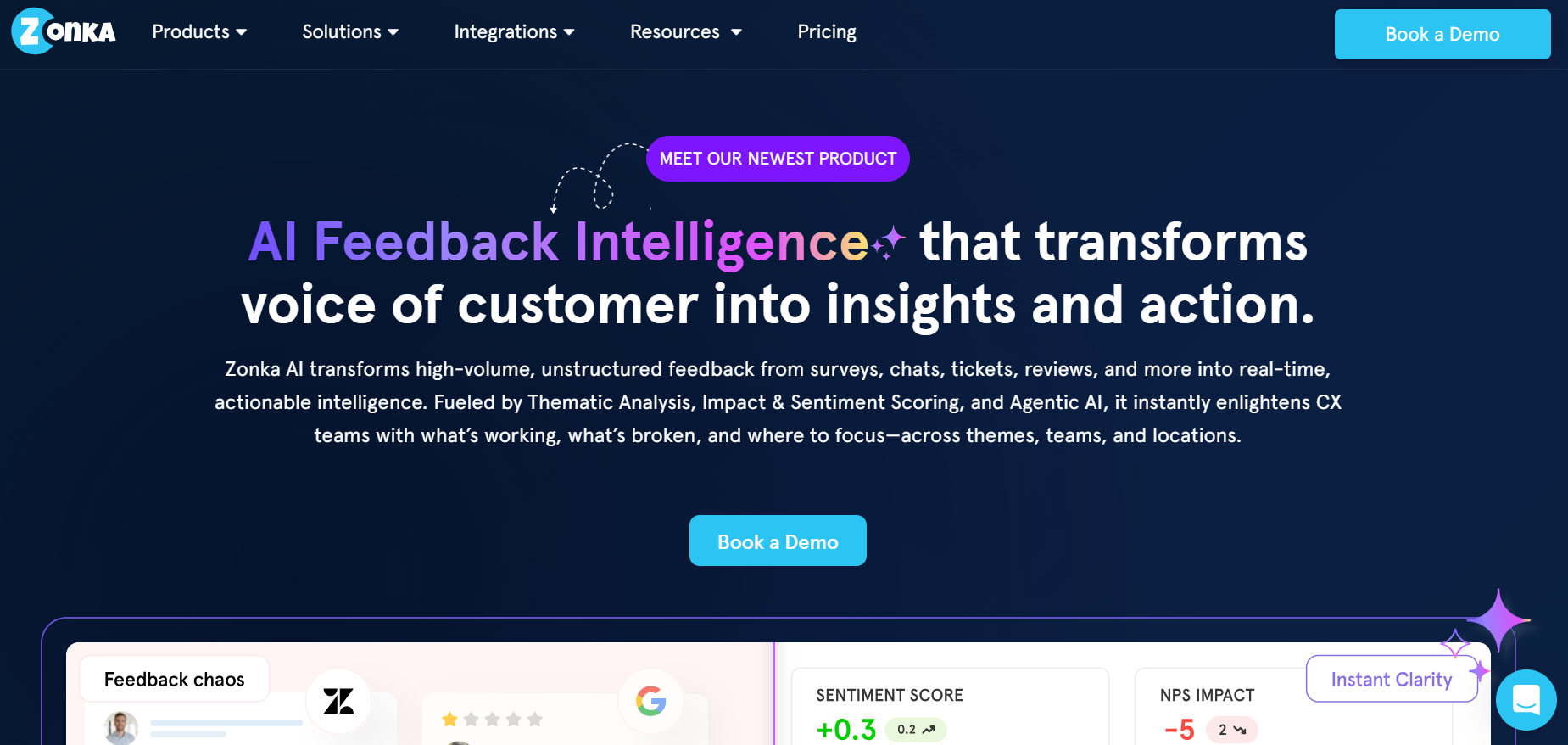
Best for: Retail brands, offline businesses, and teams running small or early-stage CX programs
What makes it actionable: Simple workflows, multi-channel feedback (QR, kiosks, email), and easy setup
How action actually happens
- Feedback collected at key touchpoints (stores, counters, visits)
- Alerts notify teams on poor experiences
- Teams review dashboards and respond manually
- Action is driven at store or location level
👉 Action = localized response + manual follow-up
Where it may not fit
- Limited AI-driven prioritization
- No strong guidance on what to fix first
- Not designed for large-scale or complex CX programs
Pricing: Budget-friendly SMB pricing, typically around ~$3K–5K/year for CX teams
Category: B2B Account-Based NPS Tools
5. CustomerGauge – Best for Revenue-Linked CX
Best for: B2B companies tracking account-level experience
What makes it actionable: Account-level NPS + revenue linkage
How action actually happens
- Feedback mapped to accounts, not individuals
- Detractors trigger account-level follow-ups
- CX aligns with sales teams
- Insights tied to churn and expansion
👉 Action = retention + revenue conversations
Where it may not fit: Not suited for transactional or B2C CX programs
Pricing: Enterprise B2B pricing based on accounts, integrations, and journey complexity
→ As B2B CX programs expand beyond account-level NPS into broader customer journeys and AI-led insights, teams often explore CustomerGauge alternatives for greater flexibility and faster execution.
Category: Product-Led NPS Tools
6. Refiner – Best for SaaS Product NPS
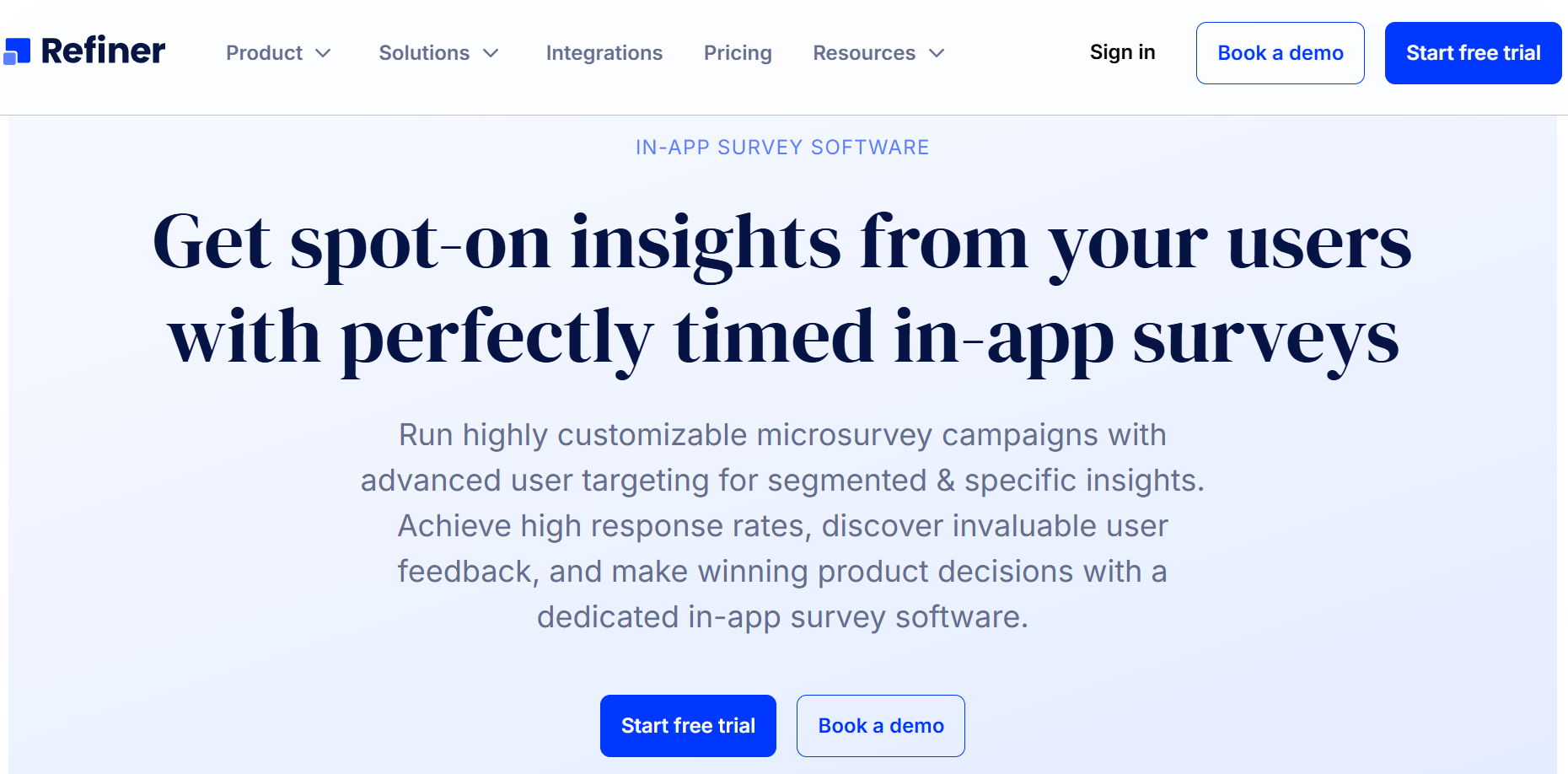
Best for: SaaS and product-led teams
What makes it actionable: In-app feedback + segmentation
How action actually happens
- Feedback tied to user behavior
- Product teams identify friction points
- Improvements driven via roadmap
👉 Action = product optimization
Where it may not fit: Not built for cross-functional CX teams
Pricing: Starts around ~$99/month for SaaS and product-led growth teams.
7. Survicate – Best for Product-Led & Digital CX Programs
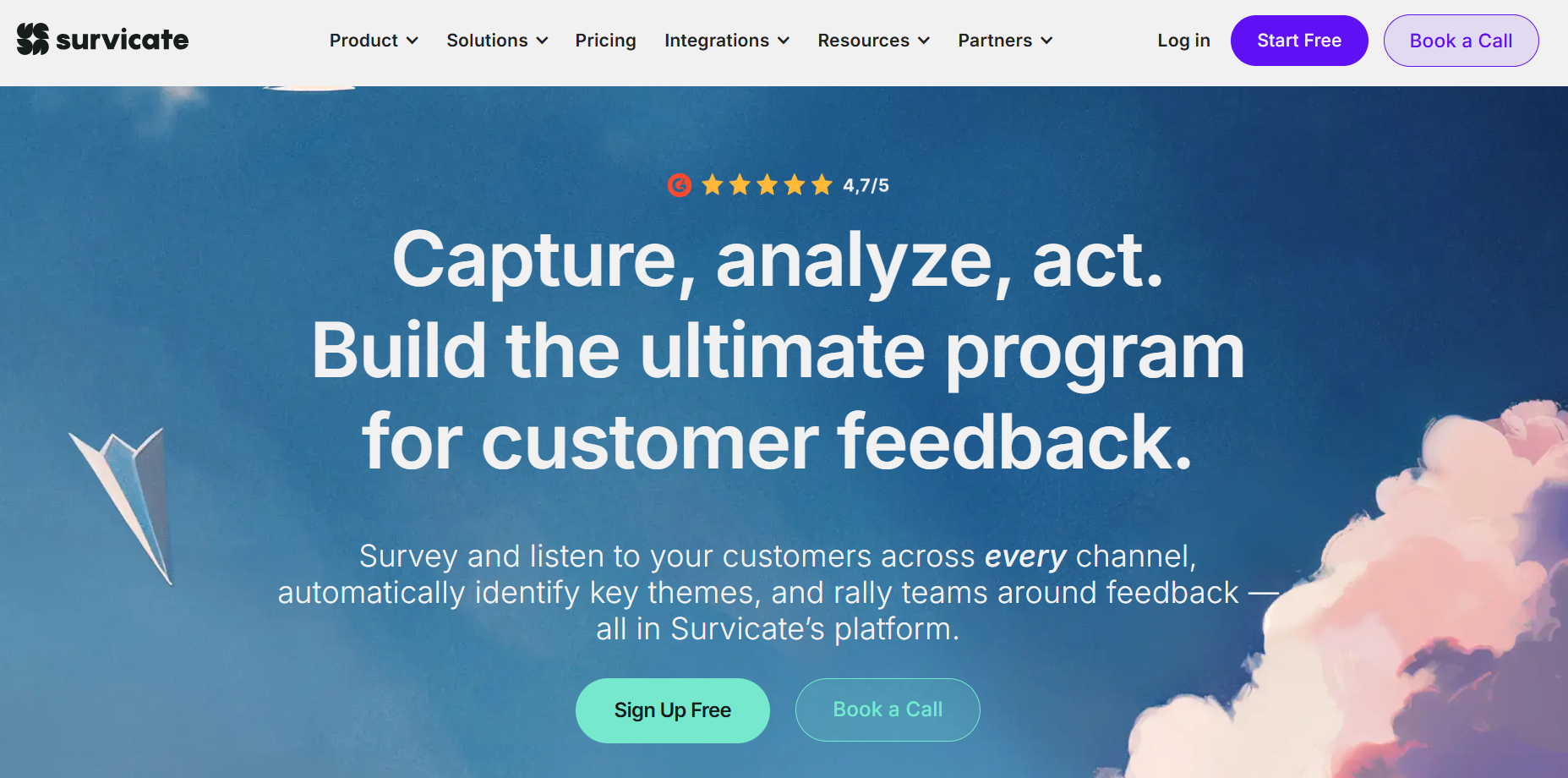
Best for: SaaS companies, product teams, and digital-first businesses collecting feedback across apps, websites, and emails
What makes it actionable: In-app and on-site feedback collection tied to user behavior and segments
How action actually happens
- Feedback collected at key product moments (onboarding, feature usage, churn points)
- Responses segmented by user behavior or cohorts
- Product and growth teams identify friction areas
- Insights feed into product improvements and roadmap decisions
👉 Action = product optimization based on user feedback
Where it may not fit
- Limited support for offline or operational CX (stores, branches, call centers)
- No strong cross-functional workflows (support, ops, CX teams)
- Limited AI-driven prioritization or guided decision-making
Pricing: Typically ~$5K/year+ for product-led feedback and in-app surveys
Category: Enterprise CX Platforms (Heavy Governance + Consultants)
8. Qualtrics – Best for Research-Driven CX Programs
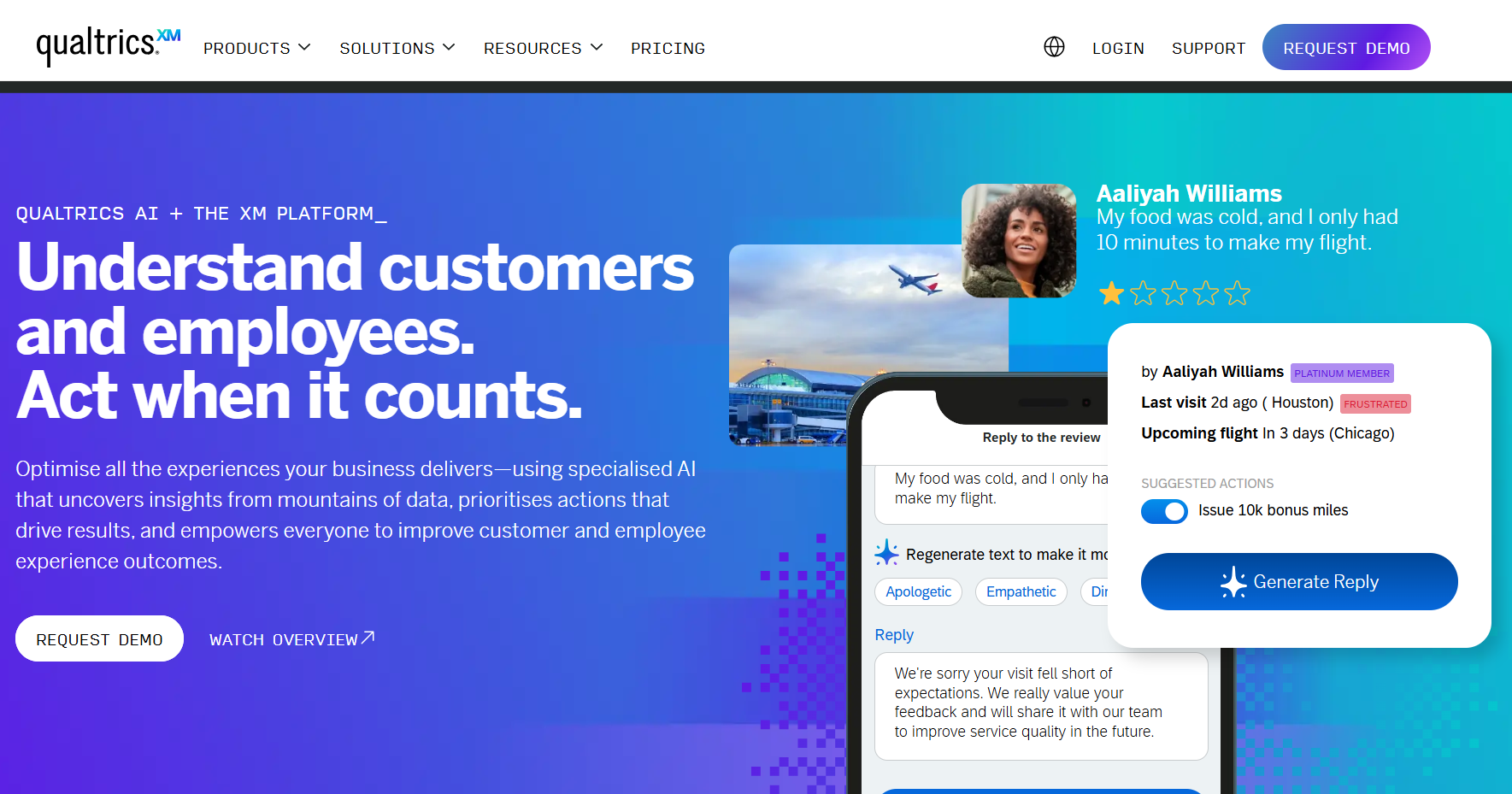
Best for: Enterprises needing deep research and governance
What makes it actionable: Strong research capabilities + partner ecosystem
How action actually happens
- Data collected and analyzed through research frameworks
- Action driven via research partners or internal CX teams
- Requires structured interpretation and execution
👉 Action = platform + research partners + internal teams
Trade-offs
- Extremely expensive at enterprise scale
- Support can become slow outside implementation phases
- Additional workflows, modules, and support often increase total cost significantly
- Mid-market teams may struggle to realize ROI quickly
Pricing: Enterprise pricing, typically starts around ~$100K/year and scales significantly for global programs.
→ If you’re evaluating enterprise tools but need faster implementation and lower operational complexity, it’s worth comparing a few Qualtrics alternatives as well.
9. Medallia – Best for Enterprise CX with Consulting Support
Best for: Large enterprises with complex CX programs
What makes it actionable: Consultant-led CX programs + enterprise workflows
How action actually happens
- Platform insights combined with consulting teams
- External experts define CX improvements
- Execution driven through structured enterprise processes
👉 Action = consultants + platform + enterprise teams
Trade-offs
- Enterprise-level pricing similar to Qualtrics
- Heavy implementation dependency
- Limited DIY flexibility
- Requires mature CX operations to fully utilize
Pricing: High-end enterprise pricing, usually suited for multi-million dollar CX transformations.
→ Teams looking for a lighter and more flexible setup often explore Medallia alternatives before finalizing.
10. InMoment – Best for Mature CX Teams with Enterprise Programs
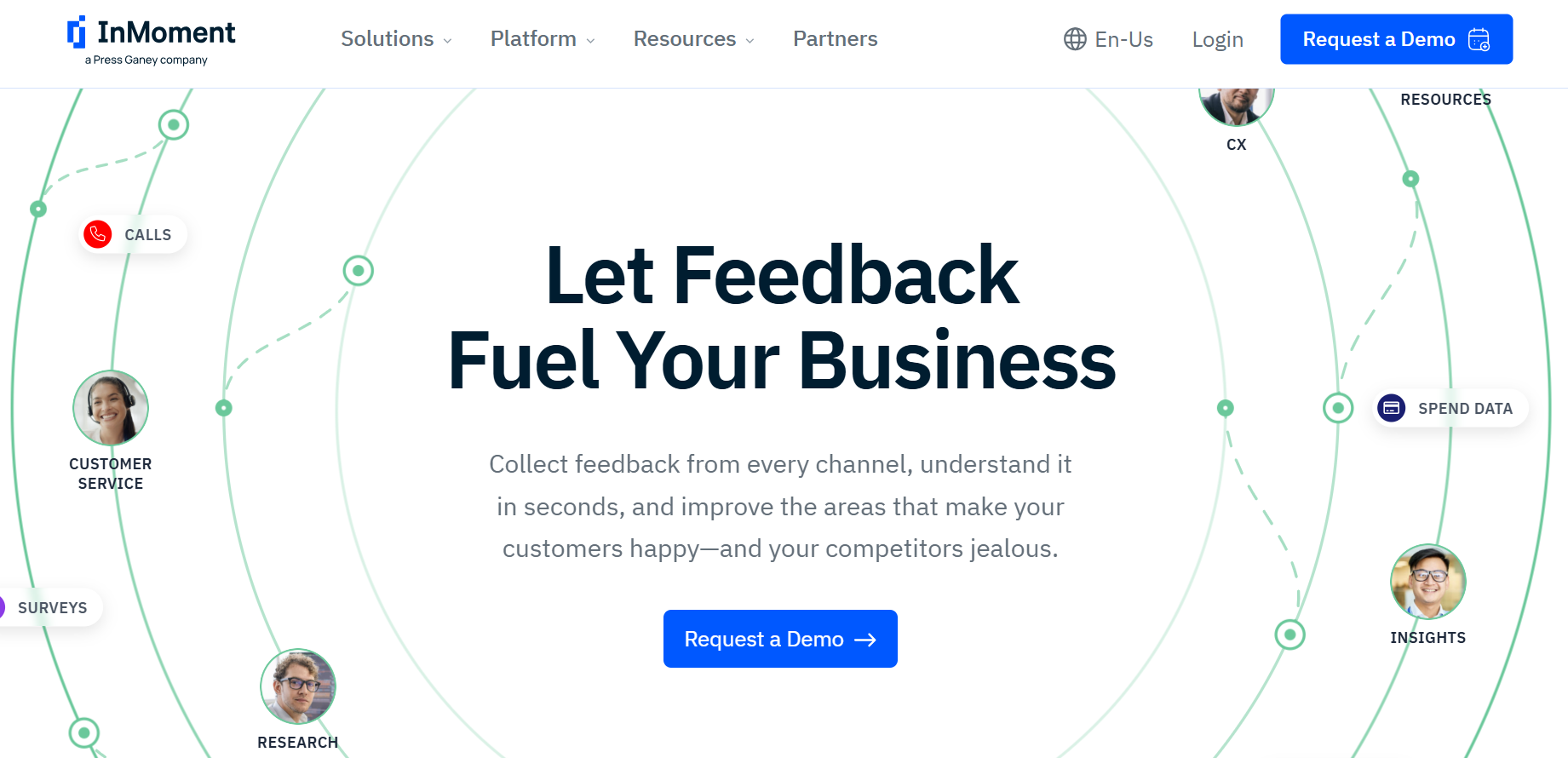
Best for: Large organizations with established CX teams running structured, multi-journey programs
What makes it actionable: Enterprise analytics, journey orchestration, and structured CX workflows
How action actually happens
- Feedback collected across multiple journeys and touchpoints
- Advanced analytics identify trends and experience gaps
- Insights distributed through dashboards and reports
- Teams act through predefined CX processes and governance layers
👉 Action = structured execution driven by internal CX teams
Where it may not fit
- Requires mature teams and strong internal ownership
- Slower to implement and operationalize
- Limited real-time guidance compared to AI-led platforms
Pricing: Upper enterprise pricing, often positioned around ~70% of Qualtrics pricing.
→ Teams looking for faster execution, simpler workflows, and lower operational complexity often explore InMoment alternatives before committing to long-term enterprise CX programs.
Category: Measurement Only NPS Tools (Not Full CX Platforms)
11. SurveyMonkey & Typeform – Best for Measurement Only
Best for: Simple surveys and data collection
What makes it actionable: They don’t – they measure
Reality
- Collect NPS scores
- Provide basic dashboards
- No workflows or prioritization
👉 Action = fully manual
Pricing: Affordable self-serve pricing, typically starts between ~$20–30/month for basic survey and form usage.
Which NPS Tool Should You Choose?
Choose based on how your team operates:
- Choose SurveyMonkey / Typeform → if you only need to measure NPS
- Choose SurveySparrow / Zonka → if you want a simple, lower-cost recurring NPS setup
- Choose AskNicely → if your NPS program depends on frontline coaching and service recovery.
- Choose CustomerGauge → if you are a B2B company and need account-level NPS.
- Choose Qualtrics / Medallia / Inmoment → if you need enterprise governance
- Choose SurveySensum → if you want AI-led insights + action + execution
👉 The best NPS tool is not the one with the most features. It’s the one your team can actually use to drive change
Why Most NPS Programs Fail
- They collect scores but don’t act
- Insights stay in dashboards
- No ownership
- No prioritization
👉 NPS works only when it drives decisions and action
Want to See What “Actionable NPS” Actually Looks Like?
See how teams use:
- AI summaries
- SensAI guidance
- closed-loop workflows
- and operational CX dashboards
to move from: feedback → insight → execution
See how teams go live in weeks – not months.
Free Forever • No Feature Limitation • No Credit Card Required • Sign Up For Free 

New to NPS?
List of Features

Looking for NPS Alternative?
Here's the Comparison

Increase ROI by 3x with targeted feedback & analysis
Boost Customer Satisfaction by up to 20%
Reduce Churn by identifying pain points in real time
See it in Action
Contents
How much did you enjoy this article?