



8 Best Market Research Tools in 2026: Compare Use Case, Features & Pricing

The best market research tools depend on your workflow, not just features. Tools like SurveySensum, Qualtrics, and SurveyMonkey serve very different use cases – from end-to-end research to quick surveys and enterprise programs. Choose the one that helps you move faster from data → insight → decision, not just collect responses.
Request a Demo
Looking for the best market research tools?
Most teams start with this question: → “Which is the best market research tool?”
But that’s usually the wrong place to start.
Because in reality, you’re not choosing between 12 tools.. You’re choosing between different types of research workflows
Some tools help you:
- run surveys
- access respondents
- analyze data
- test concepts
- or bring everything together
And this is exactly where most teams get stuck.
They compare:
- features vs features
- pricing vs pricing
And still end up switching tools later.
We see this all the time. Teams spend weeks evaluating tools. And still end up switching 6–12 months later.
Not because features were missing.
But because the workflow didn’t work.
👉So the real decision is: Which tool actually fits how your team runs research?
Let’s make this simpler
If your goal is:
- fast, end-to-end research → there are a few tools built for that
- quick surveys → a different set of tools
- audience insights → completely different category
So instead of trying to compare everything at once, let’s break it down by use case first.
Quick answer: Best market research tools by use case
If you want the shortlist first:
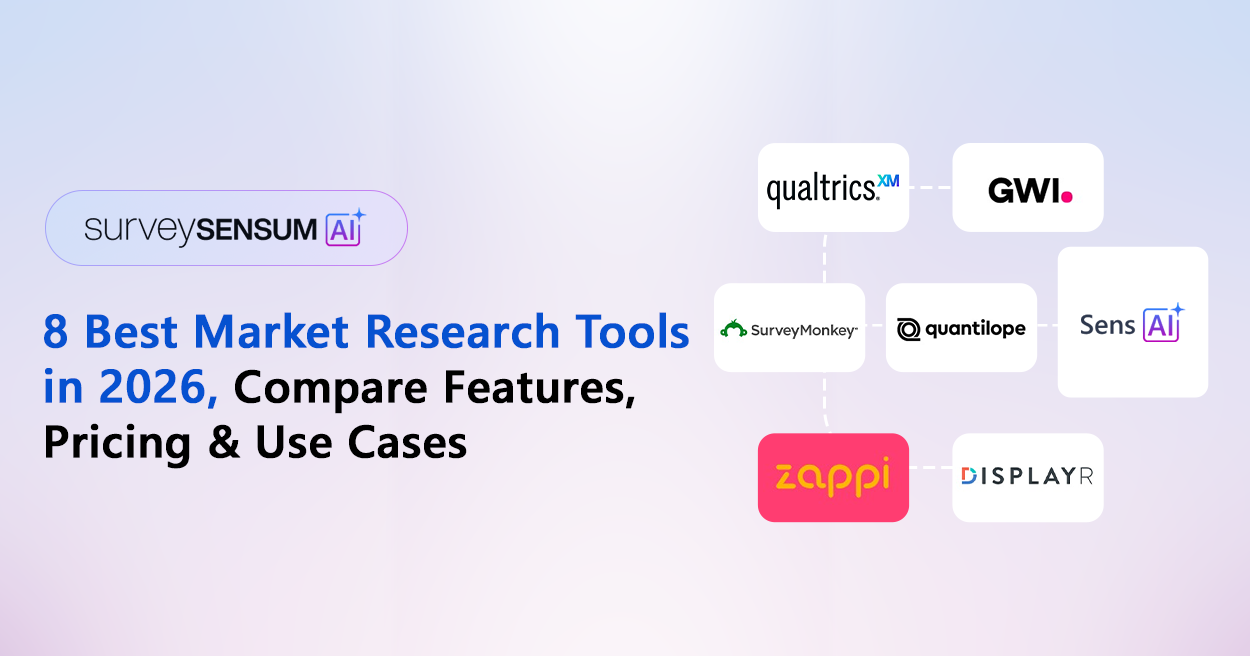
- End-to-end market research platform → SurveySensum
- Enterprise research programs → Qualtrics
- Quick surveys + panel access → SurveyMonkey
- Audience intelligence → GWI
- Advanced methodologies → Quantilope
- Concept & campaign testing → Zappi
- Analytics & reporting → Displayr
- Panel-based data collection → Pollfish
If this shortlist works – if you already know what you need. But most teams don’t!!
👉 If your goal is to move faster from survey → insight → decision, this is usually where teams start evaluating platforms like SurveySensum.
Before we go deeper, let’s make one thing clearer.
Not all market research tools do the same job
This is the biggest mistake in most comparisons.
Tools look similar on the surface.
But they’re solving completely different problems.
Here’s the simplest way to think about it:
1. End-to-end research platforms
- SurveySensum
- Qualtrics
- Quantilope
👉 Best when you want one system instead of multiple tools
2. Survey-led tools (with panel access)
- SurveyMonkey
- Pollfish
👉 Best when you want fast data collection
3. Audience intelligence platforms
- GWI
👉 Best when your question is: “Who is my audience?”
4. Testing & validation platforms
- Zappi
👉 Best for: ad testing and concept validation
5. Analysis & reporting tools
- Displayr
👉 Best when you already have data and need insights + reporting
If you’ve already explored a few tools, this is where the decision usually gets harder.
→ Because now you’re not asking: “What tools exist?”
→ You’re asking: Which one will actually work for our team?
👉 And if your current setup involves multiple tools stitched together, this is usually where teams start looking for a more unified platform.
Now that this is clear, the list below will make a lot more sense.
Comparison table: Market research tools
At this stage, most teams are not exploring anymore.
They’re comparing tools side by side.
Trying to understand trade-offs.
Shortlisting 2–3 options.
So instead of going tool by tool randomly, here’s a direct comparison to make that easier.
| Tool | Best for | Category | Panel Access | AI Role | Pricing |
| SurveySensum | End-to-end research | MR Platform | Yes | Built-in | Custom |
| Qualtrics | Enterprise research | Enterprise MR | Yes | Add-on heavy | $420/month+ / custom |
| SurveyMonkey | Quick surveys | Survey tool | Yes | Limited | From $30/user/month |
| GWI | Audience insights | Data platform | No | Moderate | Custom + free tier |
| Quantilope | Advanced quant | MR platform | Yes | Moderate | Starts ~$22,000 |
| Zappi | Concept testing | Testing platform | Yes | Moderate | Custom |
| Displayr | Reporting | Analytics tool | No | Moderate | Free + paid tiers |
| Pollfish | Panel surveys | Data collection | Yes | Low | Pay-per-response |
👉 If you’re actively comparing tools right now, this is usually the stage where teams book a walkthrough to see how the workflow actually works in practice.
But before jumping into tools, there’s one more important question.
What to look for in Market Research Tools
Most teams don’t struggle with data collection.
They struggle with:
- slow execution
- fragmented tools
- manual analysis
- unclear insights
So instead of asking: “Which tool has more features?”
→ Ask: “Which tool reduces the most effort in our workflow?”
Here’s what to evaluate:
1. Workflow coverage
Does it handle just surveys – or the full research lifecycle?
2. Speed
How fast can you go from brief → insight?
3. Panel access
Can you reach respondents easily?
4. AI capability
Does it reduce effort – or just assist slightly?
5. Data quality
Does it detect bad responses?
6. Insight generation
Does it give answers – or just dashboards?
→ If your team is spending more time analyzing than deciding, this is usually a tooling problem.
And this is exactly where platforms like SurveySensum start standing out, it’s worth exploring how SurveySensum reduces that effort across the workflow.
Now lets move onto the detailed breakdown of the top market research tools
Best Market Research Tools & Software (Detailed Breakdown)
Now let’s go tool by tool – based on how they actually perform in real workflows.
1. SurveySensum
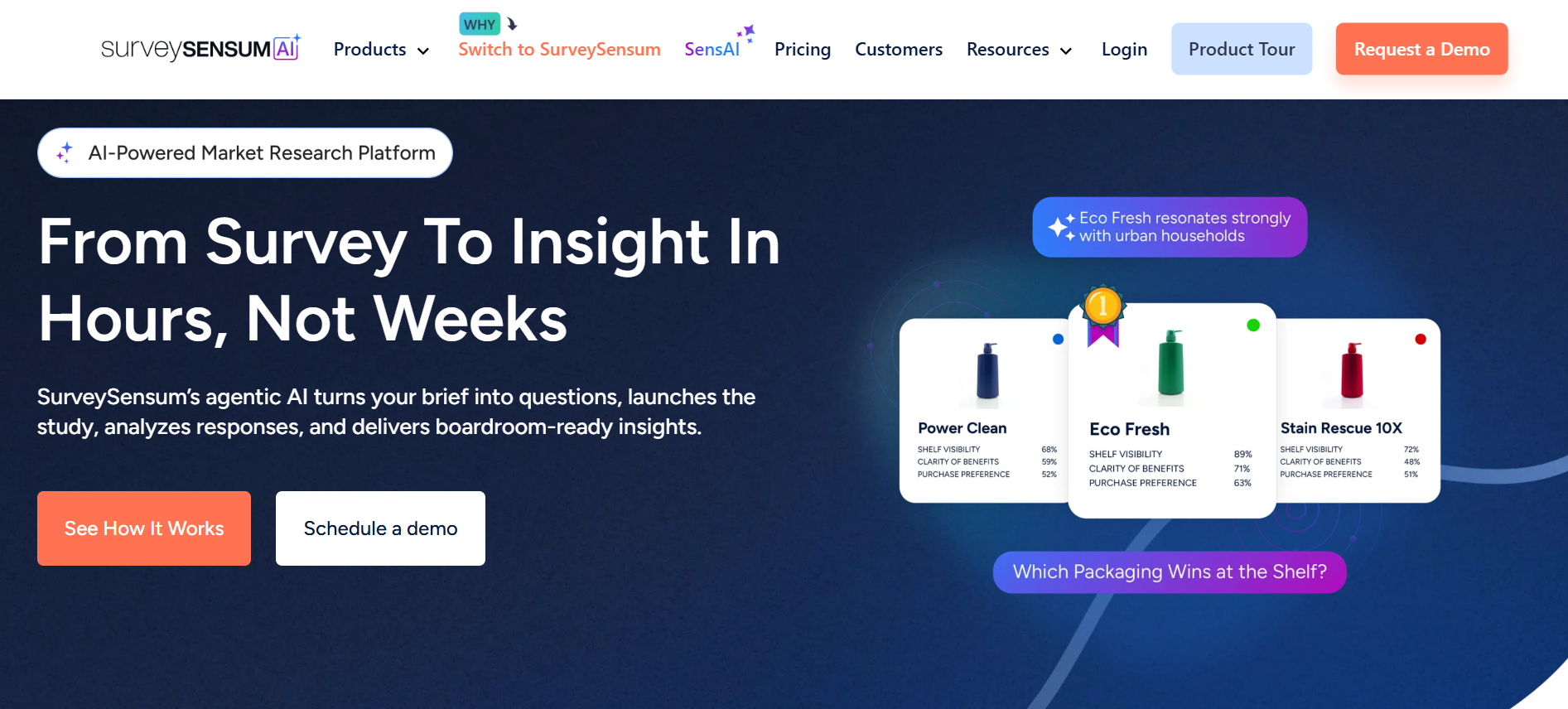
Best for: End-to-end research workflows with AI built in to reduce manual effort
SurveySensum is built around one idea: Reduce effort across the entire research process
Not just surveys. Not just analysis. The full workflow.
From:
- brief → questionnaire
- responses → insights
- data → decisions
All in one system.
Why teams choose SurveySensum
- AI turns research briefs into structured questionnaires
- Built-in data quality checks
- Strong open-ended analysis at scale
- Faster reporting without manual work
- Multi-use-case support:
- concept testing
- ad testing
- product research
- usage & attitude studies
What you get
- AI questionnaire creation (SensAI)
- Automated data quality checks
- AI-powered text analytics
- Dashboards + reporting
- Panel access + survey distribution
When to choose SurveySensum
Choose it if your question is: “How do we run research faster and actually use the insights?”
Not: “How do we just create surveys?”
👉 If your team wants one platform from survey → insight → decision, it’s worth exploring how this works in practice.
2. Qualtrics
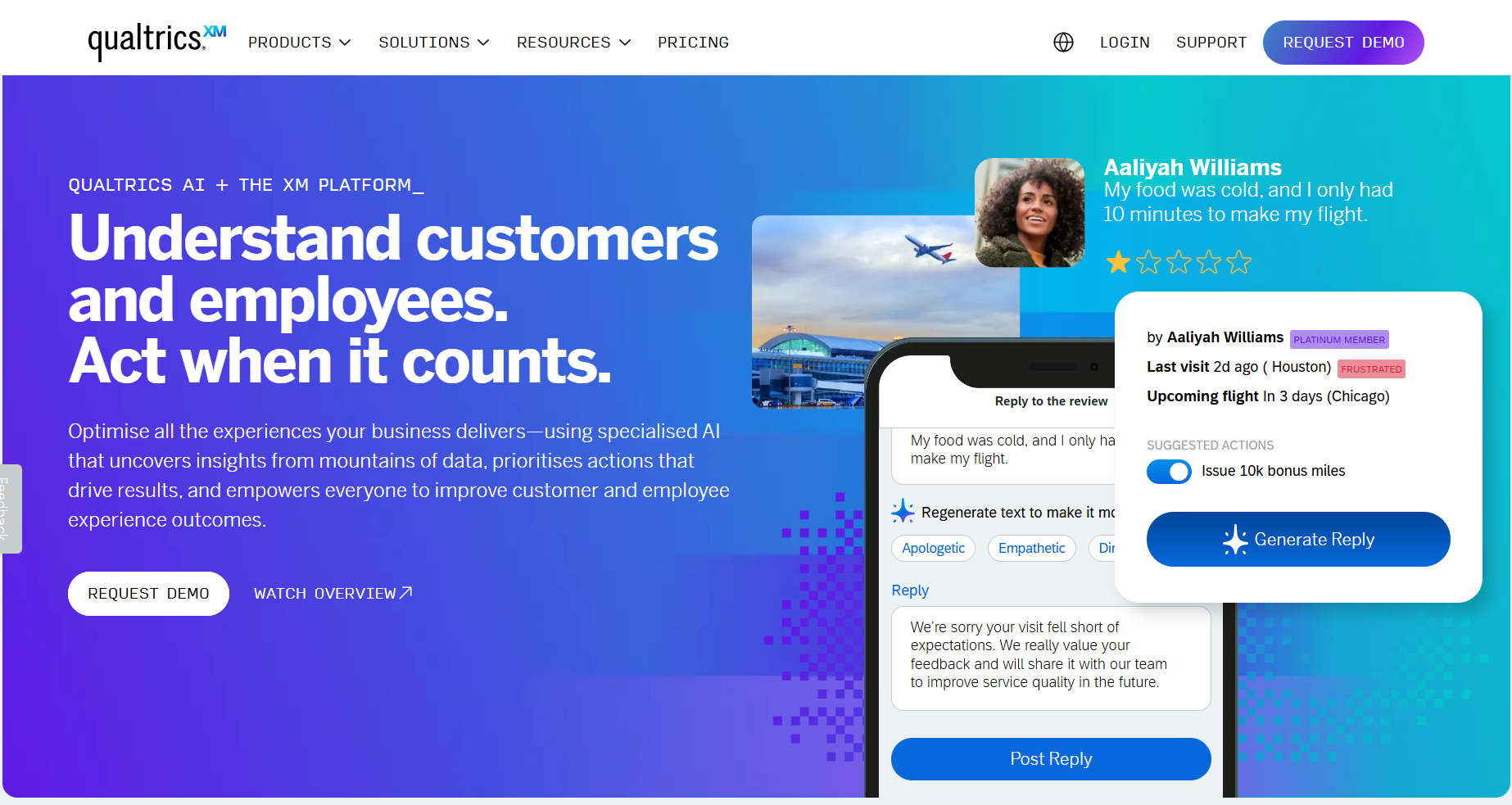
Best for: Enterprise research programs with complex workflows
Qualtrics is one of the most comprehensive research platforms, designed for enterprises managing large-scale, multi-method research programs across CX, EX, and market research.
What you get
- Advanced survey builder with deep logic and branching
- Multi-method research (brand, product, CX, EX)
- Enterprise-grade dashboards and reporting
- Strong integrations with CRM and internal systems
Why it stands out
- Extremely customizable for complex research setups
- Built for large-scale global programs
- Strong ecosystem and enterprise support
Who it’s for
- Enterprises with dedicated insights teams
- Organizations running global research programs
Pricing
- Enterprise pricing (quote-based)
Watchouts
- Longer implementation time
- Requires internal expertise and training
3. SurveyMonkey
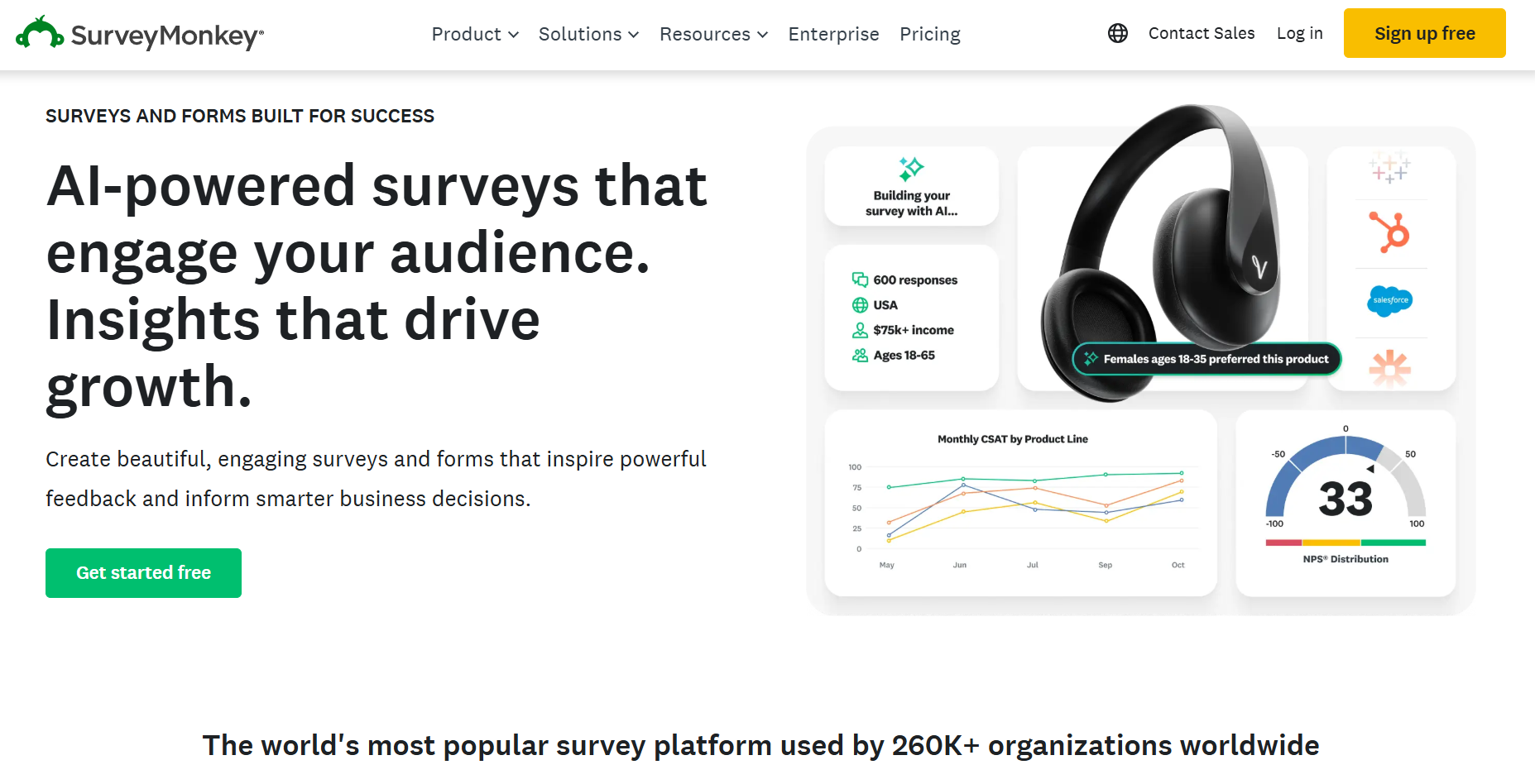
Best for: Fast, survey-led research with panel access
SurveyMonkey is one of the most widely used tools for quick survey deployment, especially for teams that need fast feedback without complex setup.
What you get
- Easy-to-use survey builder
- Access to global respondent panels
- Templates for common research use cases
- Basic reporting and dashboards
Why it stands out
- Very fast to set up and launch surveys
- Strong panel access for quick responses
- Low learning curve
Who it’s for
- Startups and small teams
- Marketing teams running quick surveys
Pricing
- Tiered subscription + panel costs
Watchouts
- Limited depth for advanced research
- Basic analytics compared to enterprise tools
4. GWI
Best for: Audience intelligence and market understanding
GWI is not a traditional survey tool. It provides access to large-scale consumer datasets, helping teams understand audience behavior, preferences, and trends.
What you get
- Global consumer datasets
- Audience segmentation and profiling
- Market trend analysis
- Industry benchmarking
Why it stands out
- Strong for discovery and strategy
- No need to run surveys for initial insights
Who it’s for
- Strategy teams
- Brand and marketing teams
- Market intelligence teams
Pricing
- Premium subscription
Watchouts
- Not suitable for custom research
- Limited control compared to survey-based tools
5. Quantilope
Best for: Advanced quantitative research methods
Quantilope focuses on automating complex research methodologies, making advanced techniques more accessible without manual setup.
What you get
- Automated advanced research methods (MaxDiff, TURF, etc.)
- Integrated panel access
- Real-time data processing
- Structured reporting
Why it stands out
- Strong methodological depth
- Reduces manual effort in advanced studies
Who it’s for
- Research teams running complex quantitative studies
- Insights teams needing structured methodologies
Pricing
- Enterprise pricing
Watchouts
- Less flexible for simple research needs
- Higher cost compared to basic tools
6. Zappi
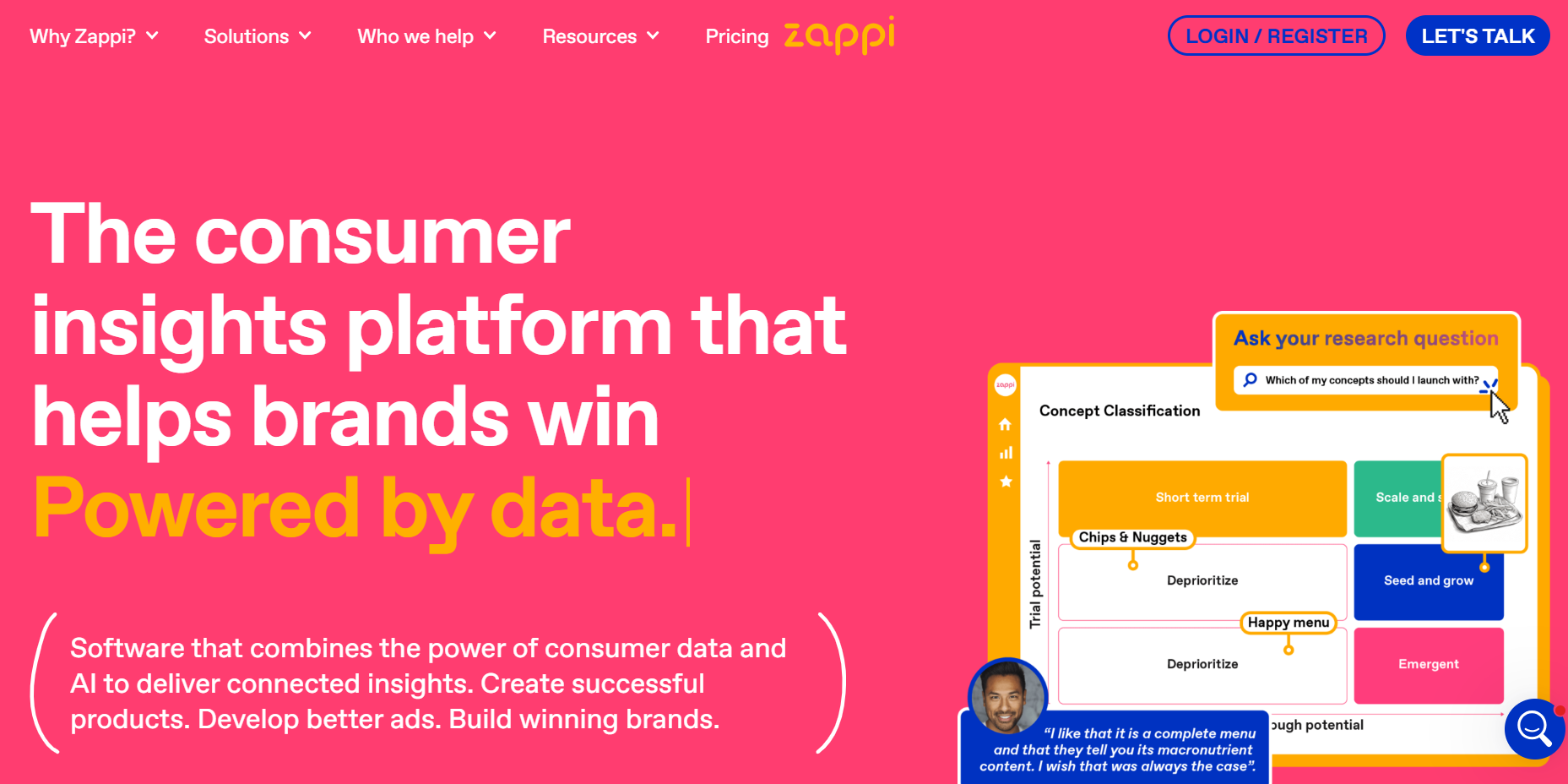
Best for: Concept and campaign testing
Zappi is built for fast validation of ads, concepts, and campaigns using standardized testing frameworks.
What you get
- Pre-built testing frameworks
- Benchmarking tools
- Panel-based research
- Fast turnaround insights
Why it stands out
- Designed specifically for marketing validation
- Quick decision-making support
Who it’s for
- Marketing teams
- Brand managers
Pricing
- Custom pricing
Watchouts
- Limited beyond testing use cases
- Not a full research platform
7. Displayr
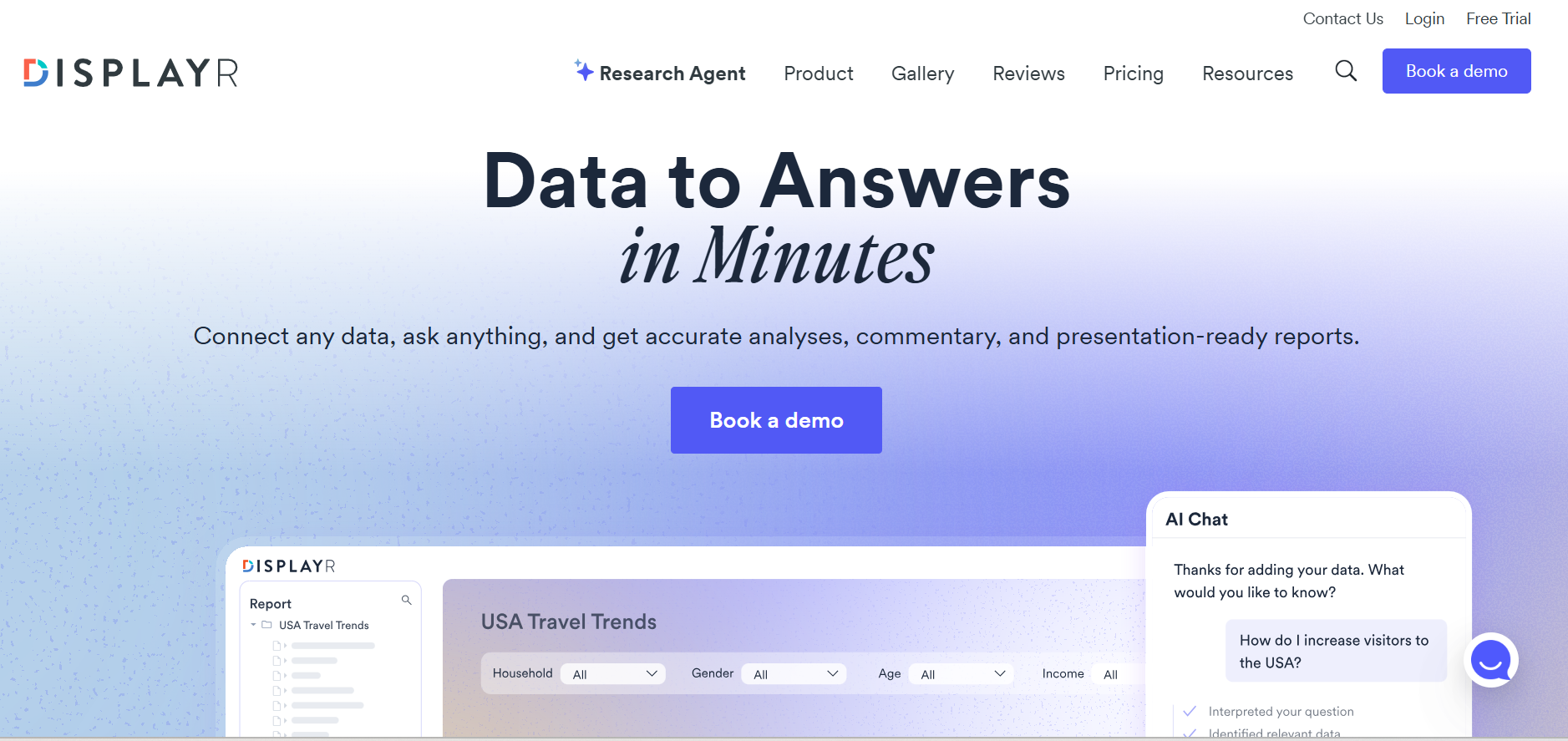
Best for: Advanced analytics and reporting
Displayr focuses on data analysis and visualization, helping teams turn raw research data into detailed insights.
What you get
- Advanced statistical analysis
- Data visualization dashboards
- Automated reporting
- Integration with survey data
Why it stands out
- Strong for deep analysis
- Ideal for data-heavy workflows
Who it’s for
- Insights and analytics teams
- Researchers working with complex datasets
Pricing
- Mid-tier pricing
Watchouts
- Not a survey or data collection tool
- Requires analytical expertise
8. Pollfish
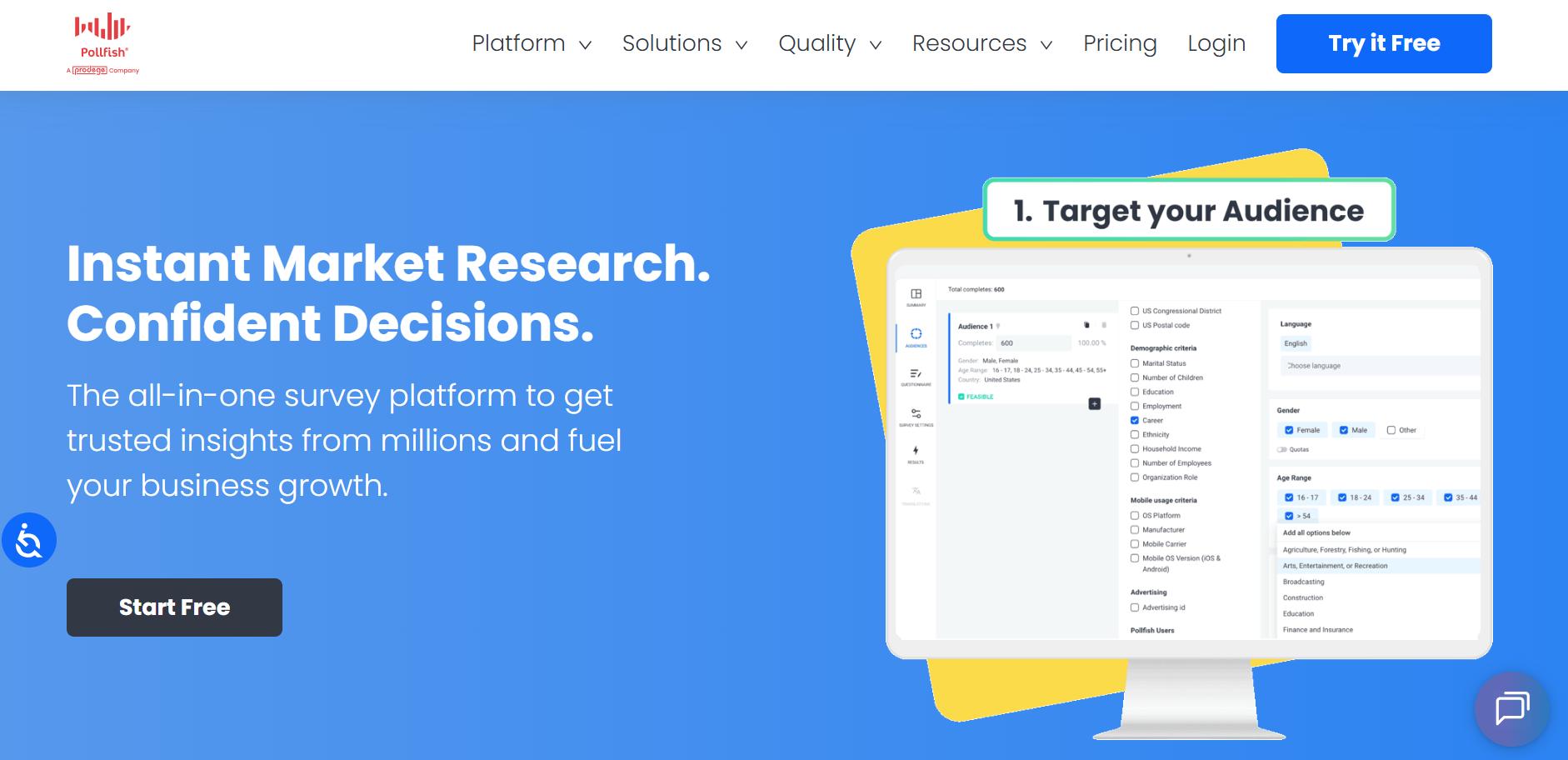
Best for: Fast panel-based surveys
Pollfish provides access to a global respondent panel, enabling quick data collection through mobile-first surveys.
What you get
- On-demand respondent panel
- Mobile-first survey distribution
- Pay-per-response model
- Quick turnaround
Why it stands out
- Fast access to respondents
- Flexible pricing model
Who it’s for
- Teams needing quick data collection
- Market validation teams
Pricing
- Pay-per-response
Watchouts
- Limited analytics capabilities
- Requires external tools for deeper insights
Who should NOT use SurveySensum
SurveySensum may not be the best fit if:
- you need only a panel provider
- you rely heavily on advanced statistical modeling tools
- you already have a complex enterprise research stack in place
SurveySensum vs Qualtrics vs SurveyMonkey
SurveySensum vs Qualtrics
- SurveySensum → faster, AI-led, easier setup
- Qualtrics → deeper, enterprise-focused, complex
SurveySensum vs SurveyMonkey
- SurveySensum → full workflow + AI
- SurveyMonkey → fast surveys only
When to choose what
- Choose SurveySensum → if you want speed + end-to-end workflow
- Choose Qualtrics → if you need enterprise scale
- Choose SurveyMonkey → if you need quick surveys
How to Choose the Right Market Research Tool
Now that you know what to look for, here’s how to actually make the decision.
Most teams don’t struggle with what to research.
They struggle with:
- how long it takes
- how fragmented the process is
- how much manual effort is involved
This is usually the point where teams start evaluating alternatives.
Not because they want a new tool.
👉 But because the current one slows them down.
If your workflow feels slow or disconnected, switching tools alone will not help.
The real shift happens when the platform:
- reduces steps
- automates analysis
- connects research to decisions
Platforms like SurveySensum are built around that shift – not just collecting data, but helping teams move faster from insight to action.
👉 Explore how SurveySensum helps teams move from survey to insight faster
FAQs on Top Market Research Tools
What are market research tools?
Market research tools are platforms used to collect, analyze, and interpret customer and market data to support business decisions.
What are the types of market research tools?
Market research tools fall into categories like survey tools, panel platforms, audience intelligence tools, testing platforms, and end-to-end research platforms.
Which market research tool is best?
It depends on your use case. For end-to-end workflows, tools like SurveySensum are built to handle the full process from survey to insight.
What is the best market research tool?
The best tool depends on your use case. For end-to-end workflows, SurveySensum is a strong option.
What is market research software?
Market research software refers to platforms used to run and manage research studies.
Can one market research tool handle everything?
Some market research platforms can – especially AI-enabled tools designed for full workflows.
👉 Explore the SurveySensum platform and see how it fits your workflow
Free Forever • No Feature Limitation • No Credit Card Required • Sign Up For Free 


Increase ROI by 3x with targeted feedback & analysis
Boost Customer Satisfaction by up to 20%
Reduce Churn by identifying pain points in real time
See it in Action
Contents
How much did you enjoy this article?