



Best Zappi Alternatives in 2026: Choose the Right Market Research Platform for Your Workflow

Most teams look for Zappi alternatives when they need faster, more flexible, and cost-effective research workflows. The best options depend on your use case – SurveySensum for end-to-end AI-led research, Qualtrics for enterprise programs, and Attest for agile testing. Choosing the right platform is less about features and more about how your research actually runs.
Request a Demo
Most teams don’t choose Zappi wrong.
They just outgrow it.
It works well when research is structured – concept testing, ad testing, brand tracking.
But as research becomes more frequent, more iterative, and more tied to business decisions, the limitations start to show.
The real problem is not finding alternatives.
It’s choosing the right type of market research platform based on how your team actually works.
This guide helps you do exactly that.
Who this guide is for
This is for you if:
- Your research frequency is increasing
- You need faster study iteration
- You want more control over research design
- You’re moving from project-based → continuous research
- You’re comparing platforms based on workflow, not feature lists
If that sounds like your situation, you’re not just looking for alternatives.
You’re looking for a better research model.
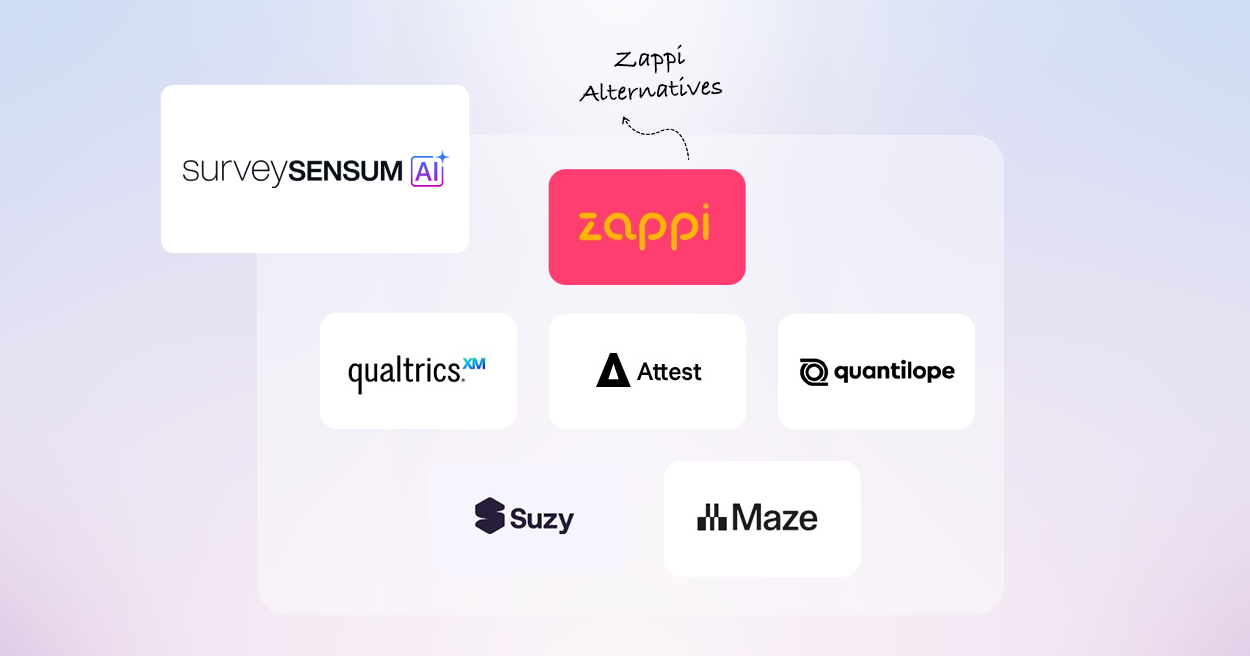
Best Zappi Alternatives (Quick Answer)
If you want the short version:
- SurveySensum → Best for AI-led, end-to-end market research
- Qualtrics → Best for enterprise research programs
- Attest → Best for agile consumer research
- Quantilope → Best for advanced quantitative research
- Suzy → Best for rapid consumer insights
- Prolific → Best for high-quality participant sourcing
- Maze → Best for product and UX research
But evaluating individual market research tools alone doesn’t solve the problem.
Choosing the right type of platform does.
Why Teams Look for Zappi Alternatives
The switch rarely happens because of missing features.
It happens because of workflow friction.
Common triggers:
- Template dependency limits flexibility
- Black-box scoring models lack transparency
- Per-study pricing becomes expensive at scale
- Not designed for continuous research
- Slower iteration for agile teams
- Limited fit outside FMCG
- Insights remain disconnected from execution
Once these issues become consistent, teams start exploring alternatives seriously.
What to Look for in a Zappi Alternative
Most teams compare features.
But the decision usually comes down to how well the platform fits your research workflow.
Here’s what actually matters:
- Research design flexibility: Can you build studies the way you want, or are you limited to predefined templates?
- Speed of execution: How quickly can you launch, iterate, and re-run studies?
- AI-led analysis: Does the platform generate insights automatically, or are you still manually analyzing data?
- Audience access: Does it support panels, targeted audiences, or multiple distribution methods?
- Pricing model: Is it per study, or does it scale predictably with usage?
- Output quality: Are you getting dashboards, or decision-ready insights?
👉 The right platform will align with how often you run research and how quickly you need answers.
This is also where many teams start evaluating newer approaches to research. Instead of relying on manual analysis and static reports, modern platforms are increasingly built to automate insight generation and reduce turnaround time – which is why interest in AI market research tools has grown significantly in recent years.
Comparison Table: Best Zappi Alternatives
Once these friction points become consistent, the next step is usually shortlisting a few alternatives. Here’s how the most common options compare.
| Platform | Best For | Why Teams Choose It Over Zappi | Tradeoff |
| SurveySensum | End-to-end research | AI insights, flexibility, automation | No pre-built benchmarks |
| Qualtrics | Enterprise programs | Depth, governance, global scale | Complex, expensive |
| Attest | Agile research | Fast setup, easy iteration | Limited advanced methods |
| Quantilope | Advanced quant | Conjoint, MaxDiff, automation | Learning curve |
| Suzy | Speed-first research | Fast results, proprietary panel | Limited deep analytics |
| Prolific | Participant sourcing | High-quality respondents | Not full platform |
| Maze | UX research | Product testing workflows | Not for market research |
At this stage, most teams narrow down to two or three platforms.
The difference usually comes down to how each one fits into your actual research workflow, not how it looks on a feature list.
7 Best Zappi Alternatives by Use Case
By this point, the differences are clearer.
But it helps to step back and look at how these platforms compare at a higher level.
1. SurveySensum
Best for: AI-led, end-to-end market research with automation
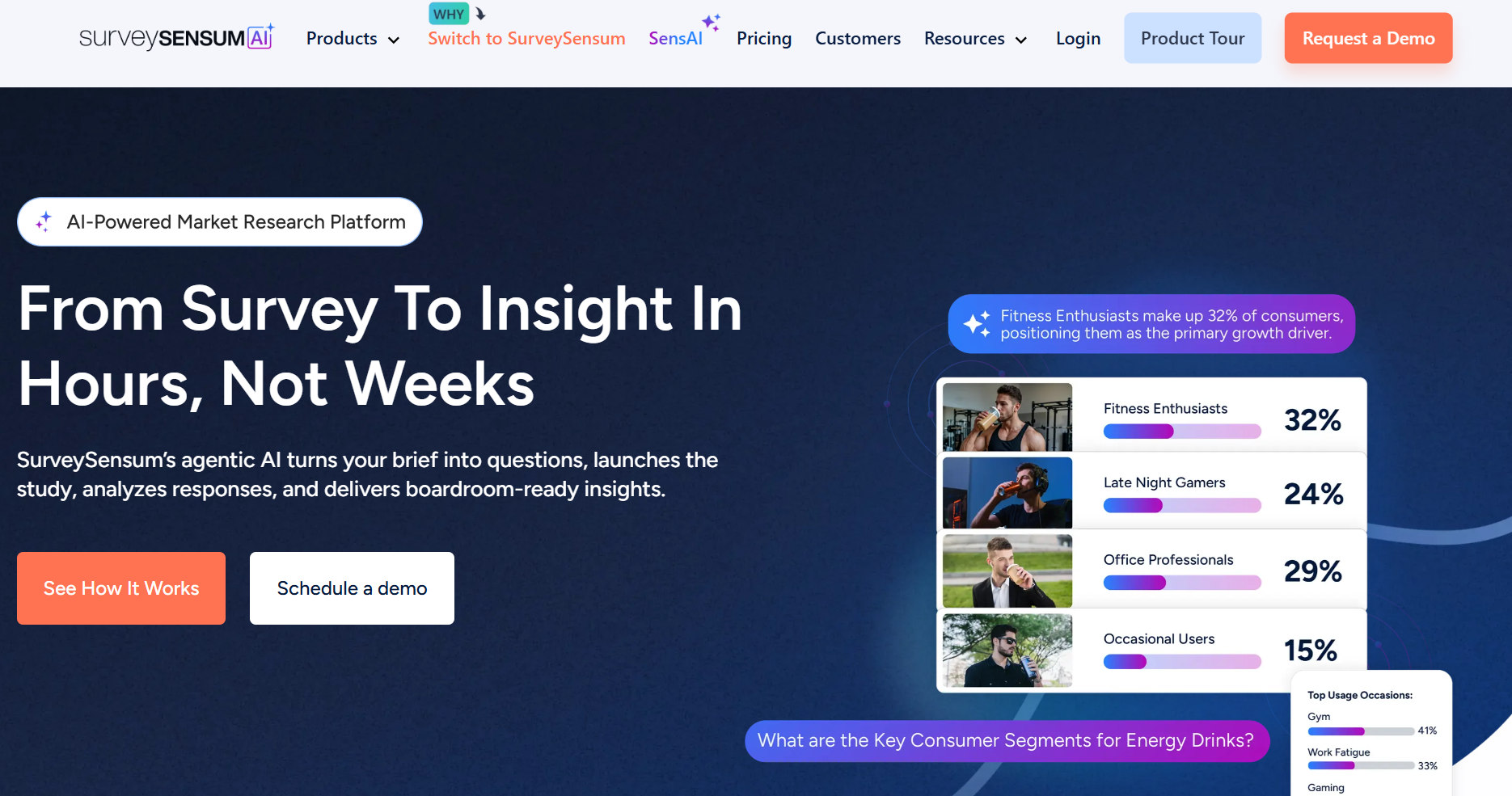
SurveySensum is built for teams that want to move beyond structured, template-driven research and run faster, more flexible studies at scale.
It combines concept testing, brand research, product validation, and continuous research workflows into a single platform – powered by AI-driven analysis and automation.
Why it’s a Zappi alternative
Teams switch when they need:
- More flexibility in research design
- Faster execution and iteration
- Lower cost at scale
- AI-led insights instead of static reports
Where it is stronger than Zappi
- End-to-end market research platform (not just structured testing)
- Full control over study design without template dependency
- AI-powered analysis, summaries, and decision support
- Faster study launch and iteration cycles
- Predictable pricing without per-study cost escalation
Where Zappi is still better
- Pre-built benchmarking norms
- Standardized scoring frameworks
When to choose SurveySensum
- You want a complete research platform, not just a testing tool
- You need AI-led insights and automation
- You run research frequently and want faster turnaround
You want cost predictability at scale
If your evaluation is moving toward flexibility, speed, and AI-led analysis, it helps to see how an end-to-end research workflow actually operates in practice.You can explore how this works in a real setup here →
2. Qualtrics
Best for: Enterprise research programs
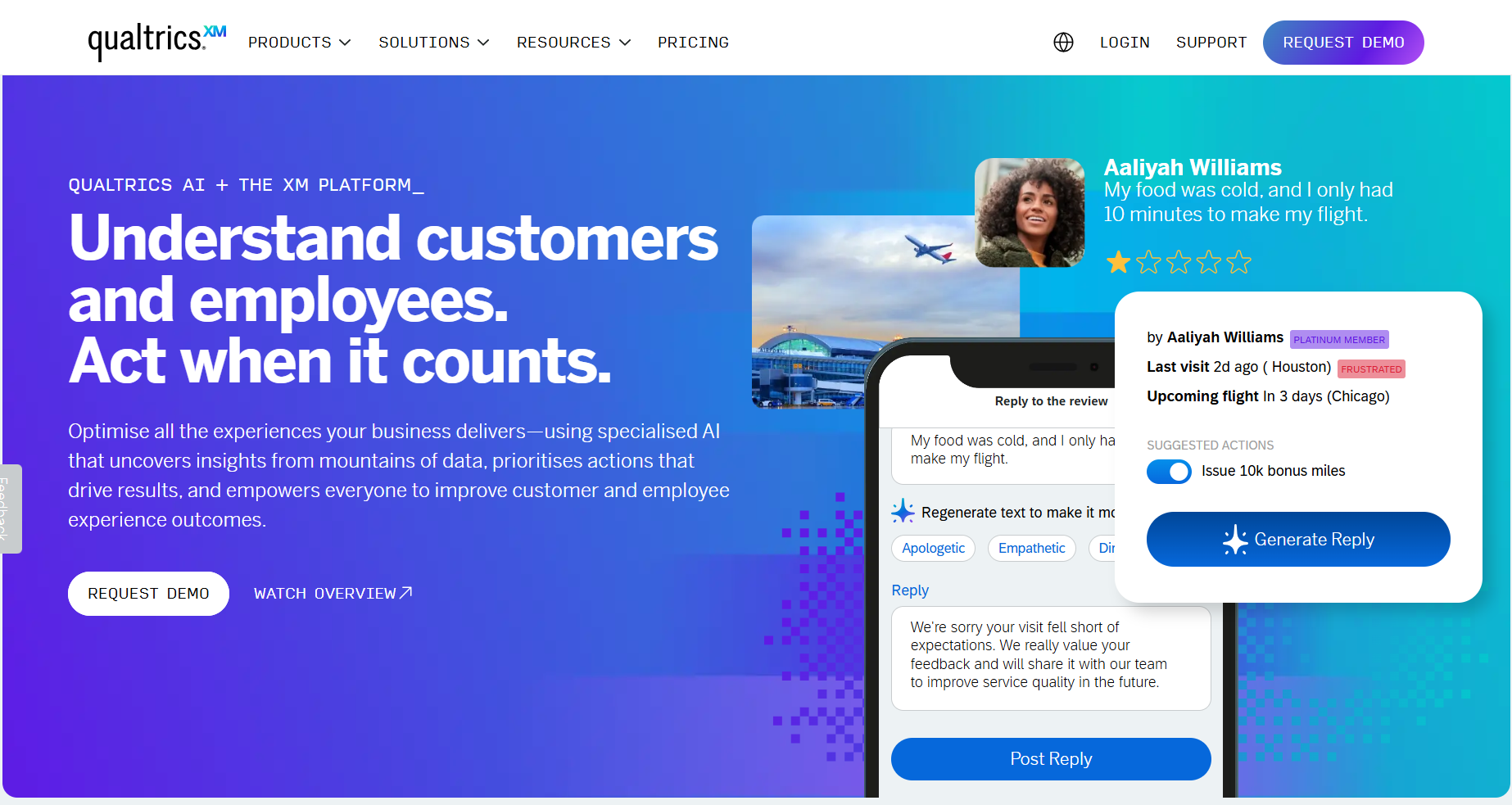
Qualtrics is designed for large organizations managing research across regions, teams, and methodologies.
Why it’s a Zappi alternative
- Broader research coverage across multiple domains
- Advanced analytics and modeling
Strengths
- Extremely flexible research design
- Large global panel access
- Enterprise governance
Tradeoffs
- High cost
- Long implementation timelines
When to choose: You need enterprise-grade control and scale
If you’re evaluating enterprise research platforms, it’s also useful to see how Qualtrics compares with other tools in real-world setups – especially in terms of implementation, cost, and flexibility.
You can explore that in more detail here: Qualtrics alternatives for market research
3. Attest
Best for: Agile consumer research
Attest is built for teams that want to run fast, iterative studies without heavy setup.
Why it’s a Zappi alternative
- More flexibility than structured testing
- Faster study launch
Strengths
- Easy to use
- Strong panel access
- Subscription pricing
Tradeoffs: Limited advanced methodologies
When to choose: You run frequent consumer research and need speed
4. Quantilope
Best for: Advanced quantitative research
Quantilope focuses on complex research methods like conjoint and segmentation.
Why it’s a Zappi alternative
- Automates advanced statistical research
Strengths
- Conjoint, MaxDiff, TURF
- Real-time data
Tradeoffs: Higher complexity
When to choose: You run methodologically advanced research
5. Suzy
Best for: Rapid consumer insights
Suzy prioritizes speed, delivering insights quickly through its panel.
Strengths
- Fast turnaround
- Quant + qual support
Tradeoffs: Limited deep analytics
When to choose: You need answers in hours, not days
6. Prolific
Best for: High-quality participant sourcing
Prolific is focused on participant quality rather than full research workflows.
Strengths
- Verified respondents
- Flexible usage
Tradeoffs: Requires external tools
When to choose: You need better participants, not a new platform
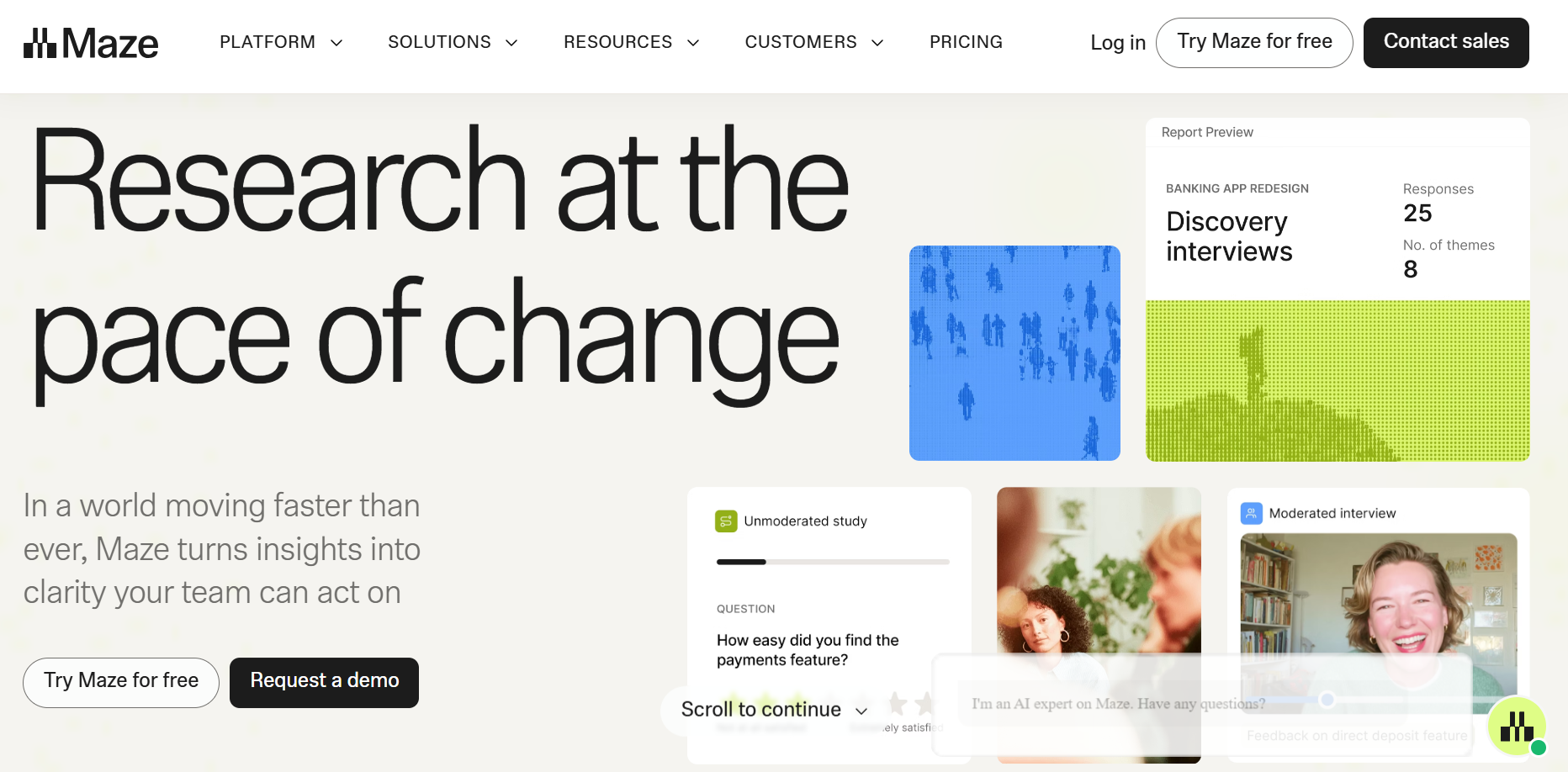
7. Maze
Best for: Product and UX research
Maze is designed for testing product flows, prototypes, and usability.
Strengths
- UX-focused workflows
- Design integrations
Tradeoffs: Not suited for market research
When to choose: You focus on product validation and usability
If you’re comparing a few of these options, mapping them against your current research process usually makes the decision much clearer than comparing features alone.
When You Should Still Use Zappi
Stay with Zappi if:
- You are an FMCG / CPG brand
- You rely heavily on benchmarking
- Your workflows are structured and project-based
- You don’t need flexibility or continuous research
Switching only makes sense if your workflow has changed.
Before moving forward, it’s worth stepping back and aligning the platform with how your team actually runs research day to day.
How to Choose the Right Zappi Alternative
Before you evaluate tools, answer these:
- Do you need continuous or project-based research?
- Do you need full control over study design?
- Do you need AI-led insights?
- How fast do you need results?
- Does pricing match your research frequency?
👉 Getting this right saves weeks of evaluation time.
Frequently Asked Questions
What is Zappi used for?
Zappi is used for structured consumer research like concept testing, ad testing, and brand studies.
Why do companies switch from Zappi?
They need more flexibility, faster iteration, lower cost at scale, or continuous research workflows.
What is the best Zappi alternative?
It depends on your workflow. SurveySensum for end-to-end research, Qualtrics for enterprise, Attest for agile research.
Is Zappi good for small teams?
It can be, but pricing and structure may not fit teams running frequent studies.
What is a concept testing software?
Concept testing software helps teams evaluate ideas, campaigns, or products before launch by gathering structured consumer feedback and insights.
Final Thought
At this stage, most teams are choosing between two or three platforms.
Seeing how an end-to-end research workflow actually runs – from study setup to insight generation – often makes that decision much clearer.
You can explore that with SurveySensum.


Increase ROI by 3x with targeted feedback & analysis
Boost Customer Satisfaction by up to 20%
Reduce Churn by identifying pain points in real time
See it in Action
Contents
How much did you enjoy this article?