



9 Best Qualtrics Alternatives in 2026 for Mid-Market CX Teams

- Choose based on how your CX program runs day to day, not feature lists.
- Pick SurveySensum for fast execution and action, AskNicely for frontline teams, CustomerGauge for B2B CX, InMoment for enterprise depth, and SurveySparrow or Zonka for simpler, lower-cost programs.
- The right tool is the one your team can launch quickly, adopt easily, and act on consistently.
Request a Demo
Most teams don’t choose Qualtrics wrong.
They just choose it too early.
They do not switch from Qualtrics because it is “bad.”
They switch because they bought enterprise complexity before they were ready for it.
A 2-3 person CX team buys an enterprise platform.
They expect automation, insights, adoption across teams.
What actually happens?
- Costs doesn’t justify the ROI
- Implementation takes months
- Only a fraction of features are used
- Business teams don’t adopt it
And suddenly, the question changes from “How do we use Qualtrics better?” to “Do we even need these many complex features?”
That’s where most teams start looking for Qualtrics alternatives.
This guide is for you if:
- your CX team is small or mid-sized
- you want clear, affordable pricing that doesn’t scale unpredictably
- you want faster rollout and lower operational complexity
- you need feedback → insight → action, not just dashboards
- you’re comparing tools based on real execution, not feature lists
If you are searching for qualtrics alternatives or similar tools, this guide is built for a very specific buyer: a mid-market or growth-stage CX team that wants stronger execution, clearer pricing logic, and more hands-on support without stepping down to a basic survey tool.
Best Qualtrics Alternatives (Quick Answer)
The best Qualtrics alternatives for mid-market teams are:
- SurveySensum → best for action-focused CX
- AskNicely → best for frontline teams
- CustomerGauge → best for B2B CX
- InMoment → best for enterprise CX
- SurveySparrow / Zonka/ Retently→ best for small CX program
Comparison: Best Affordable Qualtrics Alternatives for Mid-Market CX Teams
| Tool | Best For | Why Teams Choose It Over Qualtrics | Best For
(Company Size) |
Onboarding / Support Model | Pricing Visibility |
| SurveySensum | Action-focused CX | Fast setup, AI insights, action workflows | Mid-market to Enterprise | Hands-on onboarding, fast go-live | Contact them for details |
| AskNicely | Service & frontline teams | Strong adoption, coaching workflows | Mid-market to Enterprise | Guided onboarding, CSM-led | Custom |
| InMoment | Mature CX teams | Enterprise-grade capabilities | Mid-market to Enterprise | Structured, enterprise onboarding | Custom |
| CustomerGauge | B2B CX | Account-level NPS | Mid-market to Enterprise | Guided B2B setup | Custom |
| SurveySparrow | Small CX program | Easy setup, recurring CX | SME to mid-market | Self-serve + light onboarding | Custom |
| Zonka Feedback | Small CX program | Affordable, action-focused | SME to mid-market | Simple onboarding | Custom |
| Retently | Small CX program | Clear pricing, structured CX | SME to mid-market | Self-serve, limited support tiers | Starts $49/month |
| SurveyMonkey | Simple surveys | Easy to use | Data collection | Self-serve | Starts ~$17/user/month |
| Typeform | UX-first forms | High completion rates | Data collection | Self-serve | Starts ~$28/month |
| Google Forms | Basic surveys | Free, simple | Data collection | Self-serve | Free |
Which Qualtrics Alternative Should You Choose
Choose based on CX maturity, not just brand familiarity or starting price.
Here’s the simplest way to decide:
| Your Stage | What You Need | Tool Type |
| Early | Data collection | SurveyMonkey, Typeform |
| Growing | Feedback + action | SurveySensum, AskNicely |
| Scaling | Structured CX programs | SurveySensum, InMoment |
| B2B CX | Account-level insights | CustomerGauge |
The wrong decision here is usually not choosing a “bad” tool. It is choosing a tool that assumes a level of complexity, ownership, and rollout effort your team is not ready for yet.
- SurveySensum if you want a practical CX platform for faster implementation, omnichannel execution, AI-led analysis, and stronger business adoption.
- AskNicely if you run a frontline-heavy service business and want NPS plus coaching and day-to-day action.
- InMoment if you still want a mature CX stack, but want an alternative perspective on packaging and platform approach.
- CustomerGauge if you are B2B and account-based, and you care about revenue-linked account experience more than generic survey workflows.
- SurveySparrow or Zonka Feedback if you want mid-range pricing, faster evaluation, and a more approachable recurring CX setup.
- Retently if you want a lighter but still structured NPS, CSAT, and CES program for a growing business.
- SurveyMonkey, Typeform, or Google Forms only if your main problem is data collection, not end-to-end CX execution.
Most bad decisions here happen because teams don’t define this clearly upfront.
Why teams actually move away from Qualtrics
It’s rarely about missing features.
It’s about the gap between what the platform requires and what the team can realistically operate.
What starts breaking first:
- Implementation takes longer than expected
- CX becomes dependent on specialists
- Insights stay in dashboards instead of driving action
- Adoption remains limited beyond the CX team
- Cost feels high relative to actual usage
At this point, teams don’t look for a “more powerful” platform.
They look for a CX platform that is easier to implement, easier to use, and easier to operate day-to-day. (And most importantly affordable pricing)
So, What to look for in a Qualtrics alternative
When evaluating platforms, look at six areas.
- Faster implementation without heavy setup
- Usability across business teams, not just CX admins
- Actionability, not just dashboards
- Pricing that matches your program size
- Support that helps you go live and stay operational
It’s the tool that fits the maturity level your team is actually at.
The Best Qualtrics Alternatives for Mid-Market CX Teams
🟢 Mid-Market to Enterprise CX Platforms
(Best fit for teams replacing Qualtrics)
1) SurveySensum
Best for: Mid-market to enterprise CX teams that want faster implementation and stronger execution.
Not ideal for: Teams needing heavy enterprise XM governance layers
Why choose it over Qualtrics:
- Omnichannel feedback (WhatsApp, SMS, email, in-app, website-embed, QR codes)
- Fast implementation (days, not months)
- Transparent Pricing
- Regional Support on all channels
- AI text analytics and action-oriented workflows
- SensAI Chat-based engine to get instant insights such as “Why did the NPS go down last week?”
- Better fit for teams that want ROI and usability, not just platform depth
What it is not: Not positioned as a heavy legacy XM suite for highly complex enterprise governance layers
Pricing: Contact them for details
When to choose this tool: Choose SurveySensum if your priority is getting your CX program live quickly and actually driving action across teams
👉 See how SurveySensum helps teams go live in weeks and drive real action from feedback
2) AskNicely
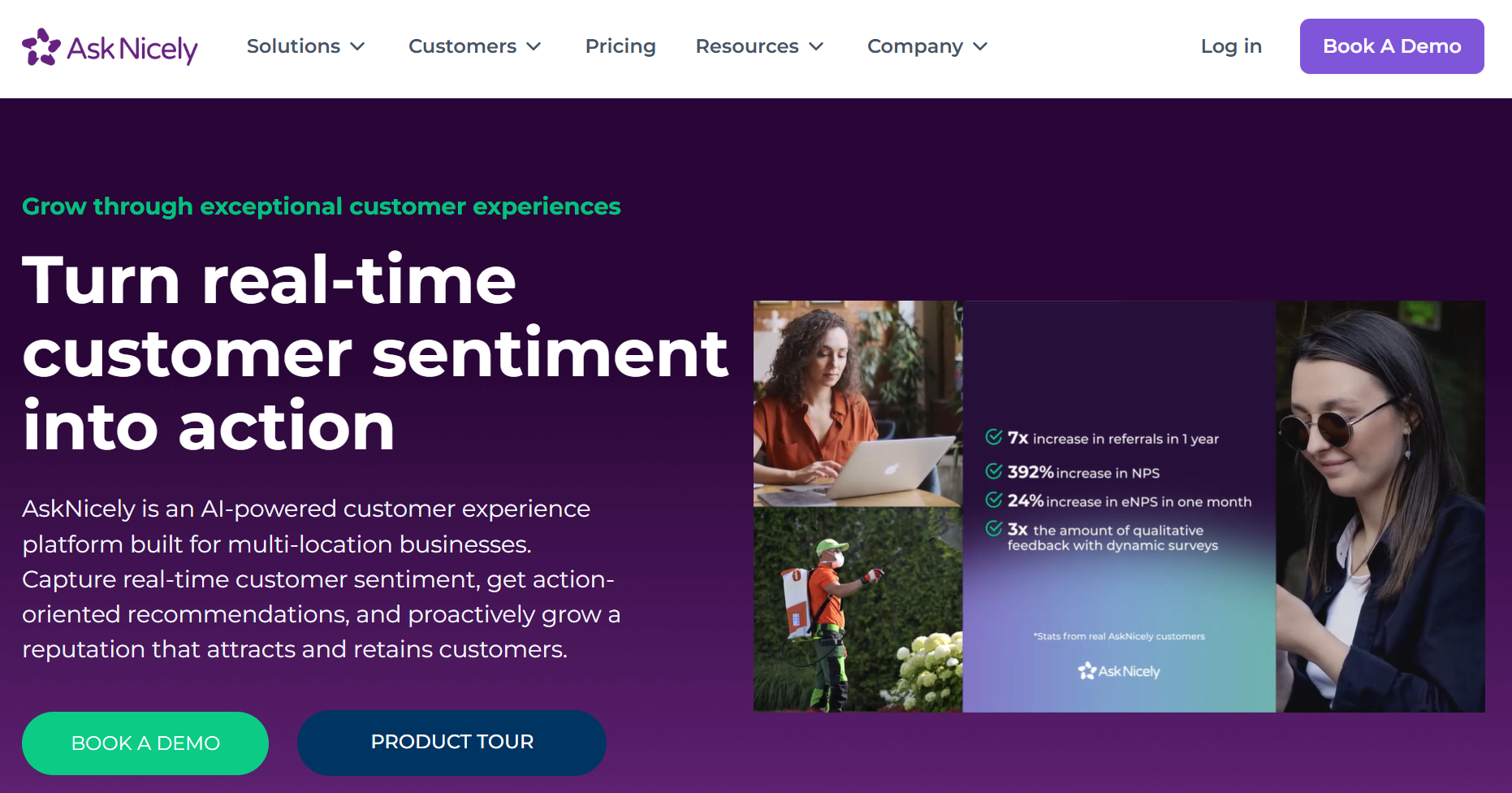
Best for: Service businesses, multi-location brands, and frontline CX teams
Not ideal for: Teams needing broad enterprise CX orchestration
Why teams pick it:
- Strong frontline and coaching-focused CX model
- Clear service-business positioning
- Better operational fit than broad enterprise platforms for day-to-day CX execution
Where it falls short: If you want broader enterprise-wide experience management across many listening posts and deep governance layers, it may feel narrower than Qualtrics.
Pricing: Custom pricing
When to choose this tool: Choose AskNicely if your CX program is driven by frontline teams and daily service interactions
If you’re evaluating frontline-focused CX tools, here’s a deeper comparison of AskNicely alternatives and where they differ.
3) InMoment
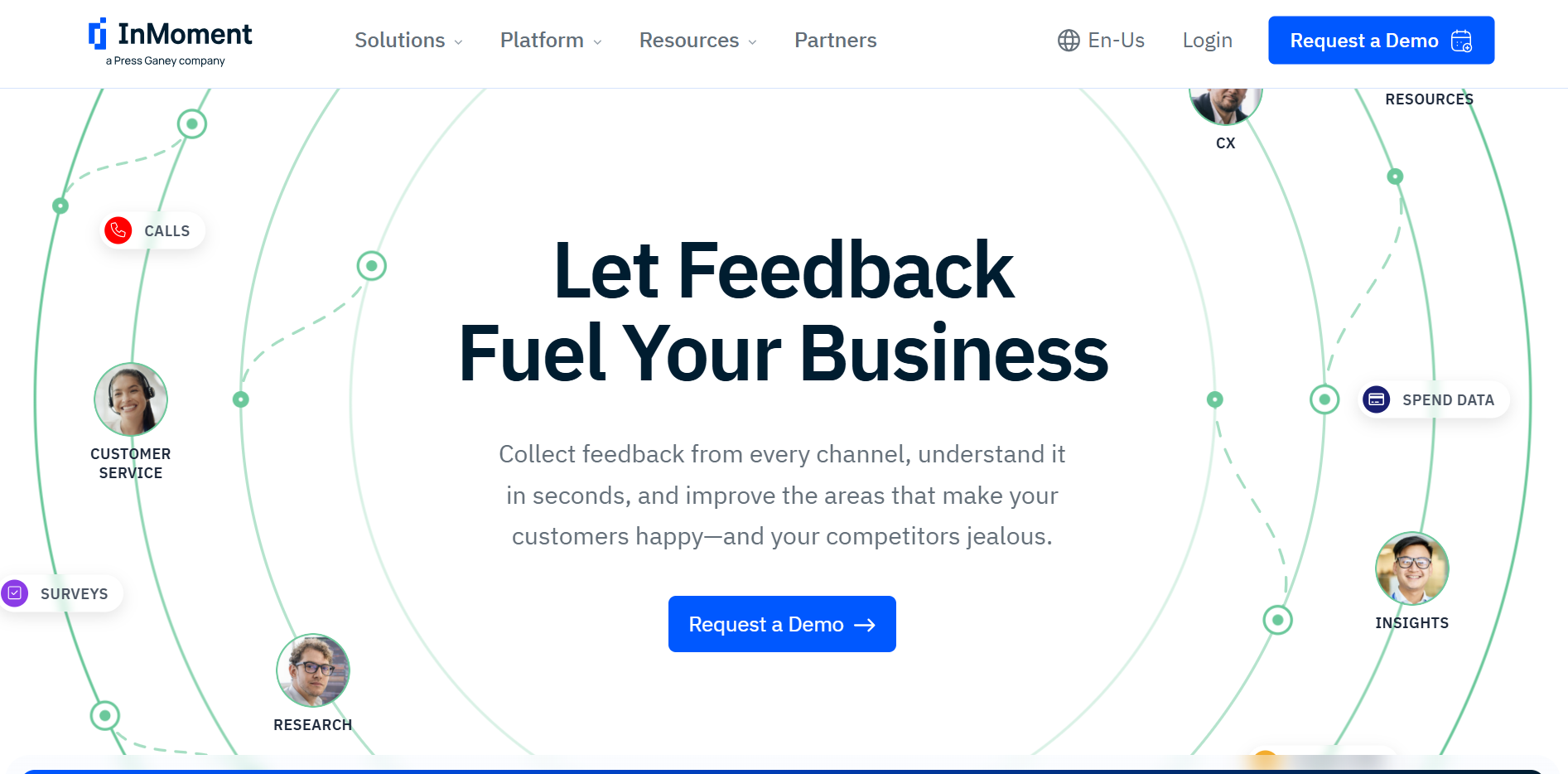
Best for: Mature CX teams needing enterprise-level capabilities
Not ideal for: Teams prioritizing speed and simplicity
Why choose it over Qualtrics:
- Strong analytics and orchestration
- Omnichannel insights
- Enterprise-ready
Where it falls short: If your real need is speed, simplicity, and DIY adoption, InMoment can still feel heavier than lighter mid-market tools.
Pricing: Custom
When to choose this tool: Choose InMoment if you want enterprise-level CX capabilities but are open to alternatives to Qualtrics
InMoment might feel closer to enterprise complexity. Explore other InMoment alternatives that offer faster implementation and simpler adoption.
4) CustomerGauge
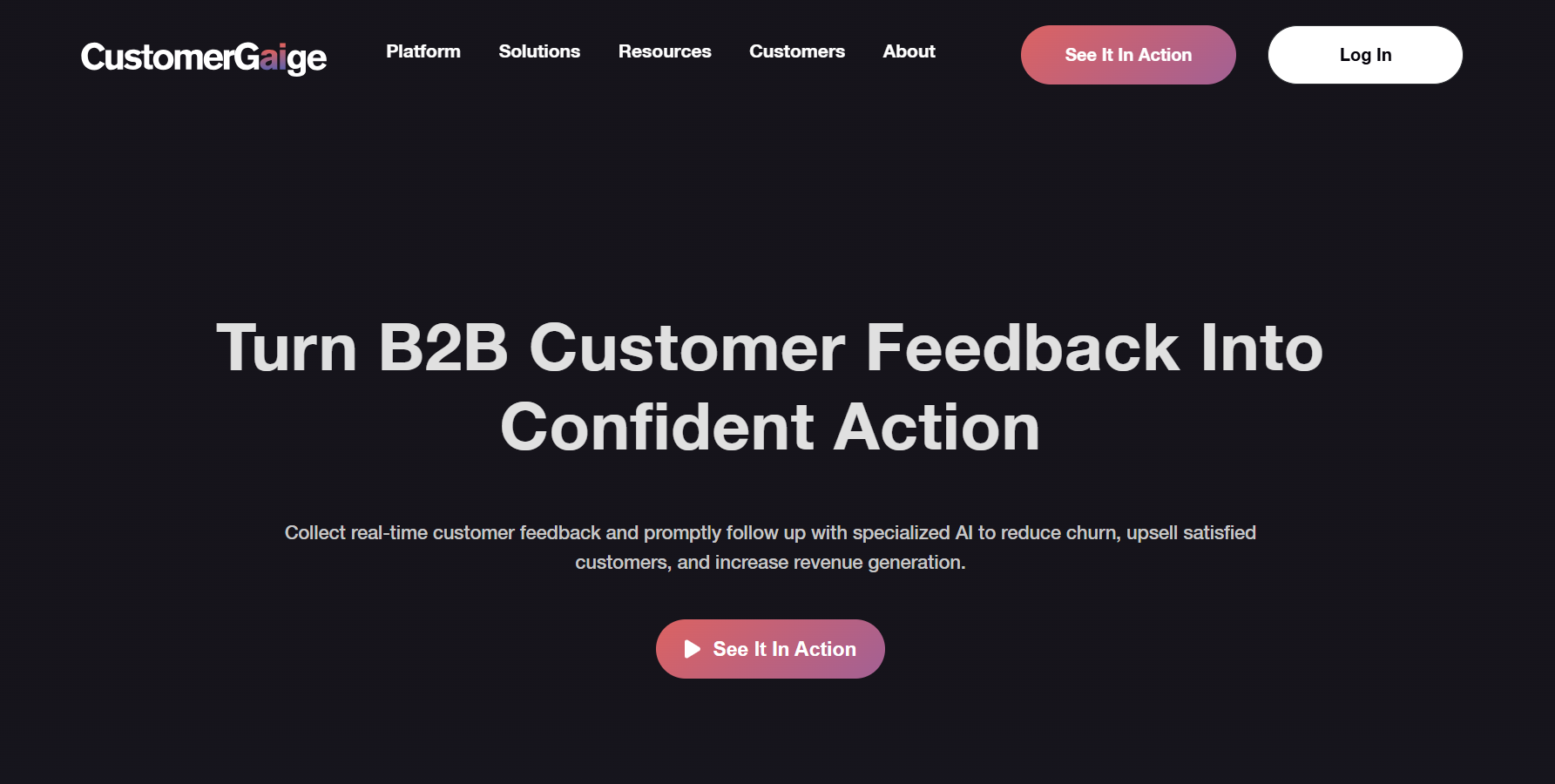
Best for: B2B account-based CX and revenue-linked NPS.
Not ideal for: B2C or transactional survey programs
Why it works better for some teams:
- Strong B2B account-level CX positioning
- Account hierarchy and account-level NPS view
- Better fit for revenue-linked B2B relationship tracking than generic survey-first tools
Where it falls short: If your program is B2C, transactional, or centered on broad data collection rather than account intelligence.
Pricing: Custom pricing
When to choose this tool: Choose CustomerGauge if you need account-level CX insights tied directly to revenue and retention
→ Exploring B2B CX platforms? Compare CustomerGauge alternatives to understand how account-based NPS tools differ.
This is the bucket most teams end up choosing from. Not because it’s cheaper, but because it actually fits how they work.
🟡 SME to Mid-Market CX Tools
(Affordable, faster alternatives)
5) SurveySparrow
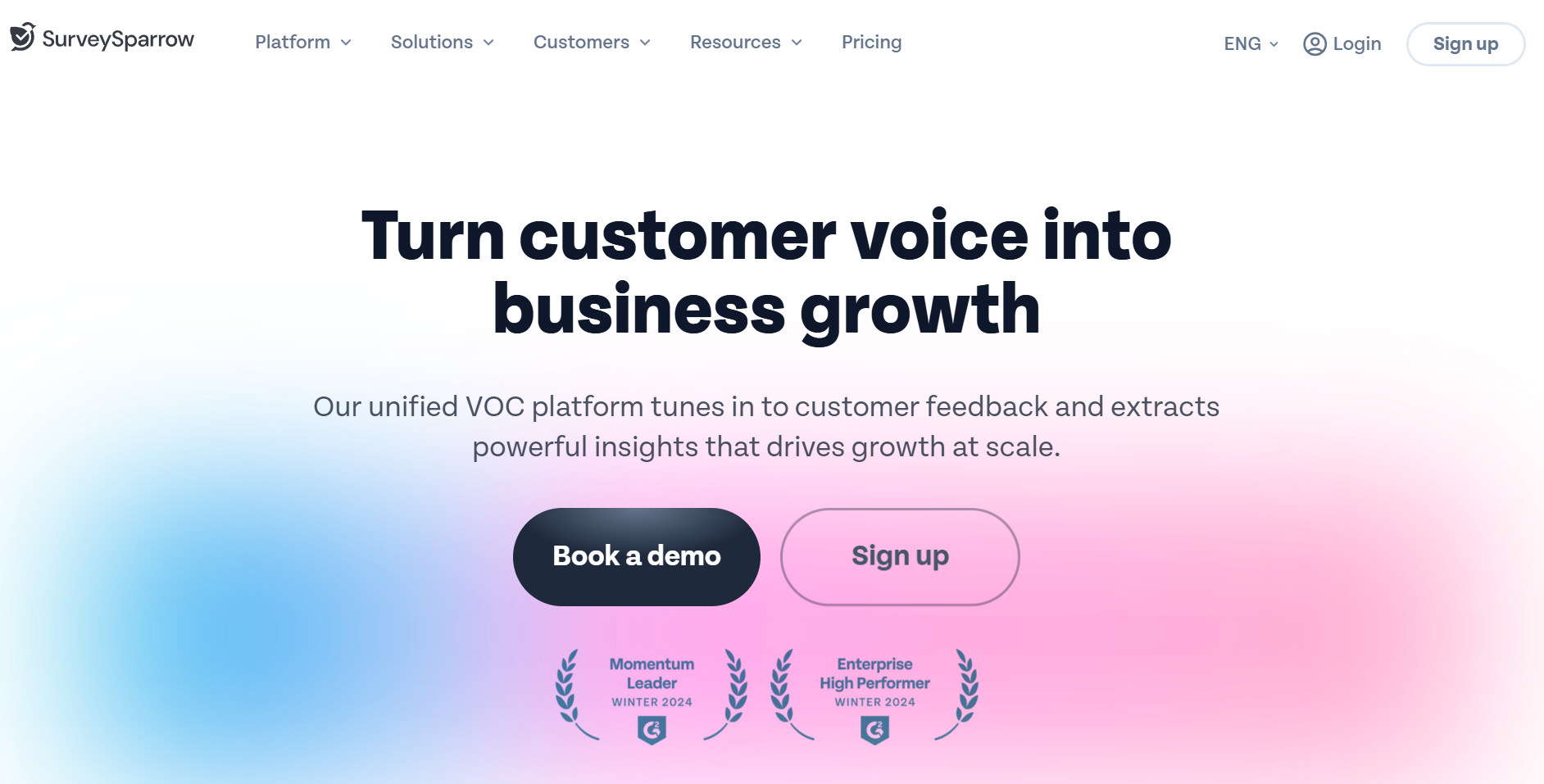
Best for: SME to mid-market CX teams running recurring NPS, CSAT, and CES programs
Not ideal for: Deep enterprise analytics needs
Where it stands out:
- Accessible evaluation path
- Dedicated CX suite positioning
- Good fit for teams that want more than data collection but less than enterprise-suite complexity
Where it falls short: If you want deeper orchestration, advanced governance, or a more enterprise-grade action layer.
Pricing: Custom
When to choose this tool: Choose SurveySparrow if you want a simple, scalable CX setup without enterprise complexity
If you’re considering lightweight CX tools, here’s a breakdown of SurveySparrow alternatives and how they compare on analytics and workflows.
6) Zonka Feedback
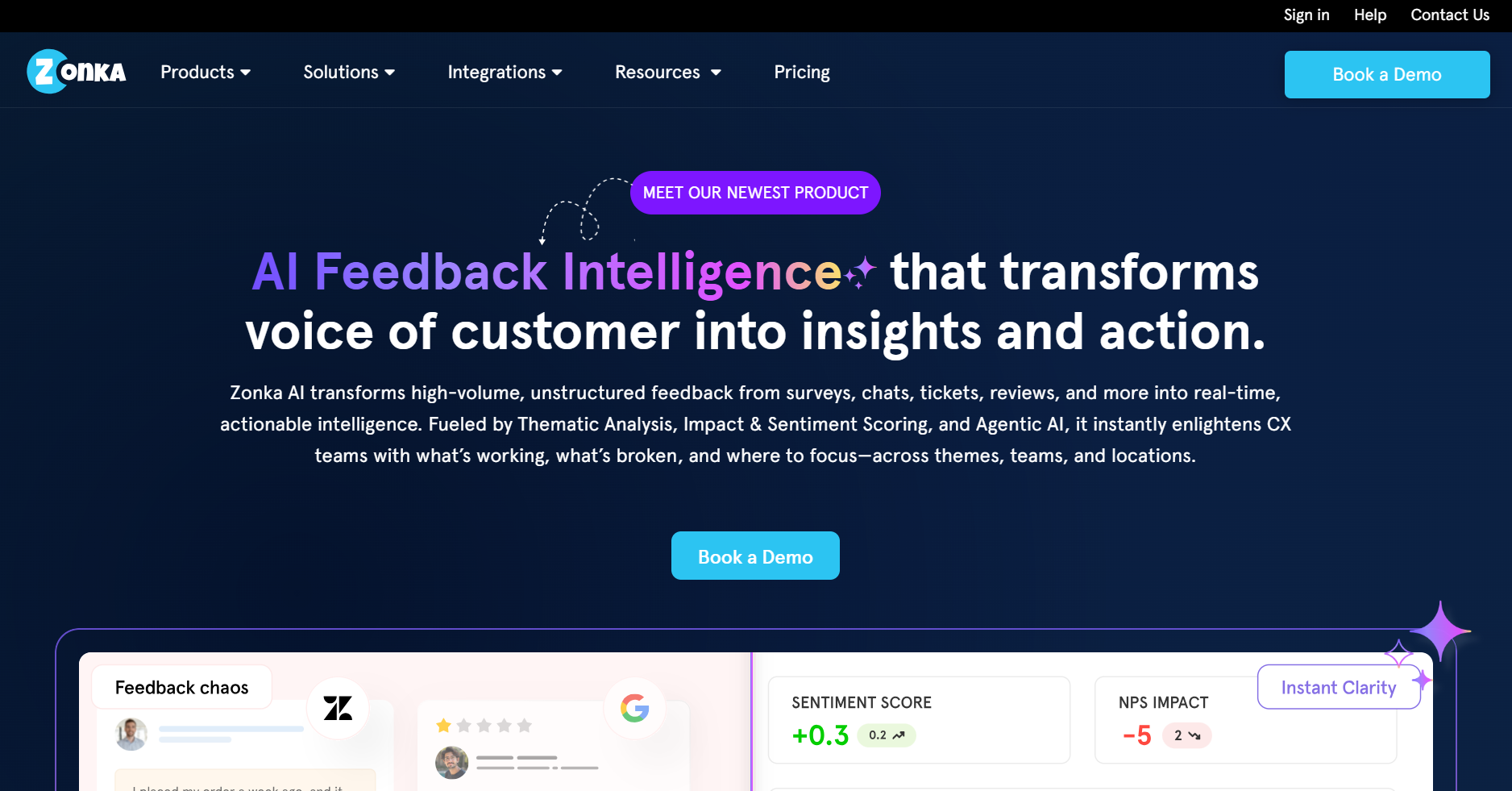
Best for: Budget-conscious SME and mix-sized teams that want multi-channel feedback programs with analytics and actionability,
Not ideal for: Heavy enterprise CX programs
Why teams pick it:
- Action-oriented positioning
- Public pricing page
- Affordability and ease-of-use are part of its brand story
- Broader feedback tool positioning than a simple form builder
Where it falls short: If you want the brand depth, ecosystem breadth, or enterprise governance of the biggest CX suites. It is less established as a heavyweight enterprise CX suite than Qualtrics or InMoment
Pricing: Custom
When to choose this tool: Choose Zonka if you want affordable CX tools with faster rollout and basic analytics
7) Retently
Best for: Growing ecommerce brands and lighter-weight B2B teams that want structured CX
Not ideal for: Enterprise-scale CX orchestration
Why it works better for some teams:
- Clear public pricing
- NPS, CSAT, and CES support
- AI-powered feedback classification and topic analytics
- Transparent support differences by plan
Where it falls short: If you need enterprise-scale orchestration or more advanced cross-functional governance. Not ideal for teams that need deep enterprise orchestration or complex governance layers
Pricing: Starts $49/month
When to choose this tool: Choose Retently if you want structured CX measurement without enterprise overhead
These work well if you’re starting out. Just be clear on how far you want your CX program to go.
If you’re unsure how far you need to go, it’s easier to map this out in a quick discussion →
🔵 Data Collection Tools (Not Full CX Alternatives)
Not every tool in this space is a true CX alternative
Some tools come up in almost every comparison but they solve a different problem. They are useful for data collection, but they are not full customer experience platforms.
1. SurveyMonkey
Best for simple surveys and team-based feedback collection
→ Not built for closed-loop CX workflows
2. Typeform
Best for UX-focused forms and lead capture
→ Strong experience, limited CX capabilities
3. Google Forms
Best for basic surveys and internal forms
→ Too lightweight for CX programs
If your goal is running a full CX program – collecting feedback, analyzing it, and driving action – these tools usually fall short compared to dedicated CX platforms
Other tools you might come across while comparing
While the shortlist above covers what most mid-market CX teams actually choose, you’ll also see names like Medallia, Alchemer, QuestionPro, Survicate, GetFeedback, and Formbricks.
These usually come up for different reasons:
- Medallia → closer to enterprise CX, similar to Qualtrics in complexity
- Alchemer, QuestionPro → more research-focused or survey-heavy
- Survicate, GetFeedback → lighter feedback and product-led use cases
- Formbricks → developer-led, custom feedback setups
In most cases, teams don’t evaluate all of these seriously.
The shortlist usually narrows down quickly based on how easy the tool is to implement, use, and scale.
Who should still choose Qualtrics?
The problem is not that Qualtrics is weak. The problem is that many buyers do not need all of it yet.
Qualtrics can still be the right choice if:
- You’re a large enterprise
- You have dedicated CX teams
- You’re running multi-country CX programs (10–20+ markets)
- You need deep governance
- Budget is not a constraint
- You’re managing complex enterprise setups like McAfee, HP, or similar global organizations
For these teams, Qualtrics works because they have the scale, structure, and resources to fully utilize it.
For everyone else – especially mid-market teams – it often becomes more platform than program.
The right tool isn’t the one with the most features. It’s the one your team will actually use and act on.
FAQs on Best Qualtrics Alternatives
What is a Qualtrics alternative?
A Qualtrics alternative is a customer experience or survey platform that replaces Qualtrics with simpler implementation, lower cost, or better usability for mid-market teams.
What is the best Qualtrics alternative?
SurveySensum, AskNicely, and CustomerGauge are the best alternatives depending on your use case. The right choice depends on your CX maturity and whether you need execution, frontline adoption, or B2B insights.
What are the best Qualtrics alternatives for mid-market teams?
The best options are usually SurveySensum, AskNicely, SurveySparrow, Zonka Feedback, Retently, and CustomerGauge.
Is there a cheaper alternative to Qualtrics?
Yes. SurveySparrow, Retently, SurveyMonkey, and Typeform all offer lower entry pricing than broad enterprise platforms.
Which Qualtrics alternative is easiest to implement?
For most growing teams, lighter-weight platforms such as SurveySensum, AskNicely, SurveySparrow, Zonka Feedback, and Retently will usually be easier to evaluate and operationalize than a broad enterprise XM stack.
What is the best Qualtrics alternative for B2B?
CustomerGauge is one of the strongest B2B-specific options because it is built around account hierarchy, account-level NPS, churn prediction, and retention revenue rather than standard person-level feedback alone. Retently can also work well for lighter B2B programs.
Are SurveyMonkey or Typeform true alternatives to Qualtrics?
Not for most CX teams. They are better thought of as survey tools than full customer experience platforms.
What should mid-market CX teams prioritize when switching?
Prioritize implementation speed, adoption across non-CX teams, actionability, pricing fit, and enough analytics to identify root causes without creating admin overhead. That matters more than buying the largest feature set on paper.
Final Thought
Choosing a Qualtrics alternative isn’t about switching tools.
It’s about fixing what’s slowing your CX program down.
- Faster setup
- Better adoption
- Clear insights
- Real action
See how a mid-market CX platform would work for your setup — before you commit to the wrong tool →
Free Forever • No Feature Limitation • No Credit Card Required • Sign Up For Free 


Increase ROI by 3x with targeted feedback & analysis
Boost Customer Satisfaction by up to 20%
Reduce Churn by identifying pain points in real time
See it in Action
Contents
How much did you enjoy this article?