





The policy is sold.
But the customer is not fully onboarded yet.
They may still be wondering:
Did I buy the right policy?
Were the benefits explained properly?
What is covered and what is not?
Will I receive the documents on time?
Can I trust this insurer?
That is why an insurance onboarding survey matters.
Not as a satisfaction checkbox.
But as an early trust signal.
It helps insurers identify confusion, mis-selling risk, documentation gaps, and early dissatisfaction before they turn into cancellations, complaints, or renewal churn.
What is an Insurance Onboarding Survey?
An insurance onboarding survey is a feedback survey sent shortly after a customer buys a policy or completes the onboarding process.
It helps insurers understand:
- whether the customer clearly understood the policy benefits and exclusions
- whether the premium, terms, and conditions were explained properly
- whether they know what happens next after purchase
- whether the onboarding process (documentation, communication) was smooth
→ The goal is simple: to ensure the customer understands, trusts, and feels confident about their policy – before any confusion turns into complaints or churn.
Why Insurance Onboarding Surveys Matter
In insurance, the first few days after policy purchase are critical.
This is when the customer compares what was promised during sales with what they actually receive after purchase.
If there is a gap, it usually shows up as:
“I was not told this earlier.”
“The agent promised something different.”
“I do not understand what is covered.”
“I have not received my policy copy.”
“I did not know this exclusion existed.”
These are not small issues.
They are early warning signs of trust breakdown.
And if insurers wait until claims or renewal to detect them – often through insurance claim surveys – it is already too late.
Use NPS and CSAT Together for Insurance Onboarding
For an insurance onboarding survey, both NPS and CSAT have a role to play.
Why?
Because onboarding sits between:
- a transactional experience (process, documentation, onboarding steps)
- and a trust moment (did the customer feel confident about what they bought?)
How to Think About It
- CSAT measures how smooth the onboarding experience was
- NPS measures whether that experience built trust and confidence
A smooth process alone is not enough. A customer may be satisfied with onboarding but still feel unsure about:
- coverage
- exclusions
- pricing
- what happens during claims
Recommended Approach
Use both metrics together:
- CSAT as the operational metric → to track onboarding quality
- NPS as the outcome metric → to measure trust and recommendation intent
Best Questions for an Insurance Onboarding Survey
Here’s a simple, effective insurance onboarding survey template insurers can use after policy purchase.
Keep it short, focused, and aligned to the confidence moment after purchase.
- How satisfied are you with your overall onboarding experience? (CSAT)
- What is the primary reason for the score you gave? (Open-Ended)
- Please rate the following aspects of your onboarding experience (Key Attribute Ratings)
- Clarity of policy explanation
- Transparency of benefits, pricing, and coverage shared by the sales team
- Ease of documentation process
- Communication after purchase
- Based on your policy purchase and onboarding experience, how likely are you to recommend our insurer to others? (NPS)
Note: A good onboarding survey should be limited to 3–5 questions to ensure high response rates.
Best Time to Send an Insurance Onboarding Survey
The best time to send an insurance onboarding survey is:
- immediately after onboarding
- after the policy document is delivered
What an Insurance Onboarding Survey Helps You Detect
A good onboarding survey should help insurers detect five things.
1. Mis-selling Risk
If customers mention that something was promised but not delivered, it is a mis-selling signal.
Common phrases:
“Agent promised…”
“I was told…”
“This was not explained…”
“I did not know…”
2. Confusion About Coverage
Many customers buy insurance without fully understanding exclusions, waiting periods, claim conditions, or renewal terms.
Onboarding feedback helps detect this early.
3. Documentation Delays
Policy copy delays, missing documents, or unclear next steps create anxiety immediately after purchase.
4. Channel-Level Issues
Onboarding problems often vary by:
- Branch
- Agent
- bancassurance partner
- Region
- Product
- digital vs offline channel
Without feedback segmentation, teams only see average scores.
5. Early Churn or Cancellation Risk
A low onboarding NPS score is an early warning. The customer may not complain immediately. But they may cancel, avoid renewal, or switch later.
How Insurers Should Use Onboarding Feedback
Collecting feedback is the easy part. The real value comes from using it.
1. Identify Detractors Immediately
Any customer giving a low NPS score after onboarding should be treated as high priority.
Especially if the reason mentions:
- Mis-selling
- unclear policy terms
- document delay
- premium confusion
- agent misinformation
2. Break Feedback by Branch, Region, and Channel
Do not only look at the overall onboarding NPS.
Break it down by:
- Branch
- Region
- Agent
- sales channel
- Product
- policy type
- partner
This helps identify where the issue is recurring.
3. Analyze Open-Ended Feedback
Scores tell you there is a problem.
Open-ended feedback tells you what the problem is.
For example:
“Policy exclusions were unclear”
“Agent did not explain premium properly”
“Documents were delayed”
“I was promised faster approval”
These comments should be tagged into themes so teams can see patterns.
4. Close the Loop
If a customer gives a low score, someone should follow up.
That could be:
- branch manager
- customer support team
- sales quality team
- retention team
The goal is to resolve the issue before it becomes a complaint or cancellation.
What a Good Insurance Onboarding Survey Program Looks Like
By now, the strategy is clear.
Now comes execution.
A strong insurance onboarding survey program should be able to:
- trigger surveys automatically after policy issuance
- send surveys through Email, SMS, or WhatsApp
- capture onboarding NPS
- collect open-ended feedback
- segment results by branch, agent, region, product, and channel
- detect mis-selling signals from comments
- alert teams on low scores
- track follow-up until closure
How This Looks in Practice
This is where SurveySensum comes in, not as the strategy, but as the execution layer.
Instead of manually sending surveys and reading comments one by one, insurers can use SurveySensum to run onboarding NPS programs across channels, teams, and regions.
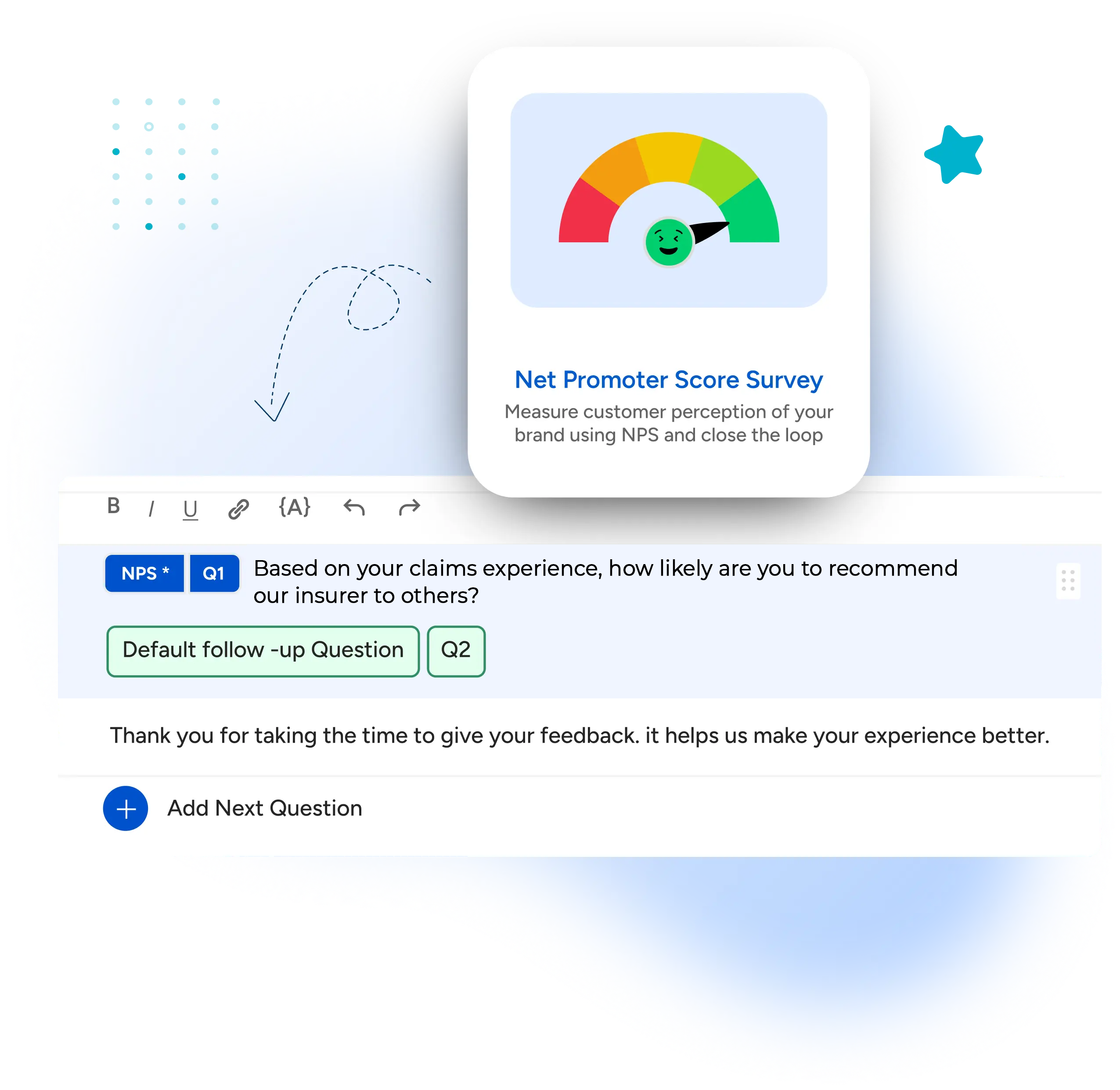
1. Build the Insurance Onboarding Survey
Use SurveySensum to create a short onboarding NPS survey with:
- NPS as the primary question
- reason-for-score open text
- policy clarity questions
- documentation questions
- optional attribute ratings
2. Trigger Surveys After Policy Issuance
The survey can be triggered after key onboarding milestones such as:
- policy issuance
- policy document delivery
- KYC completion
- onboarding call completion
3. Track Onboarding NPS by Channel and Region
Once responses come in, teams can track onboarding NPS by:
- Branch
- Region
- Agent
- Product
- Channel
- Partner
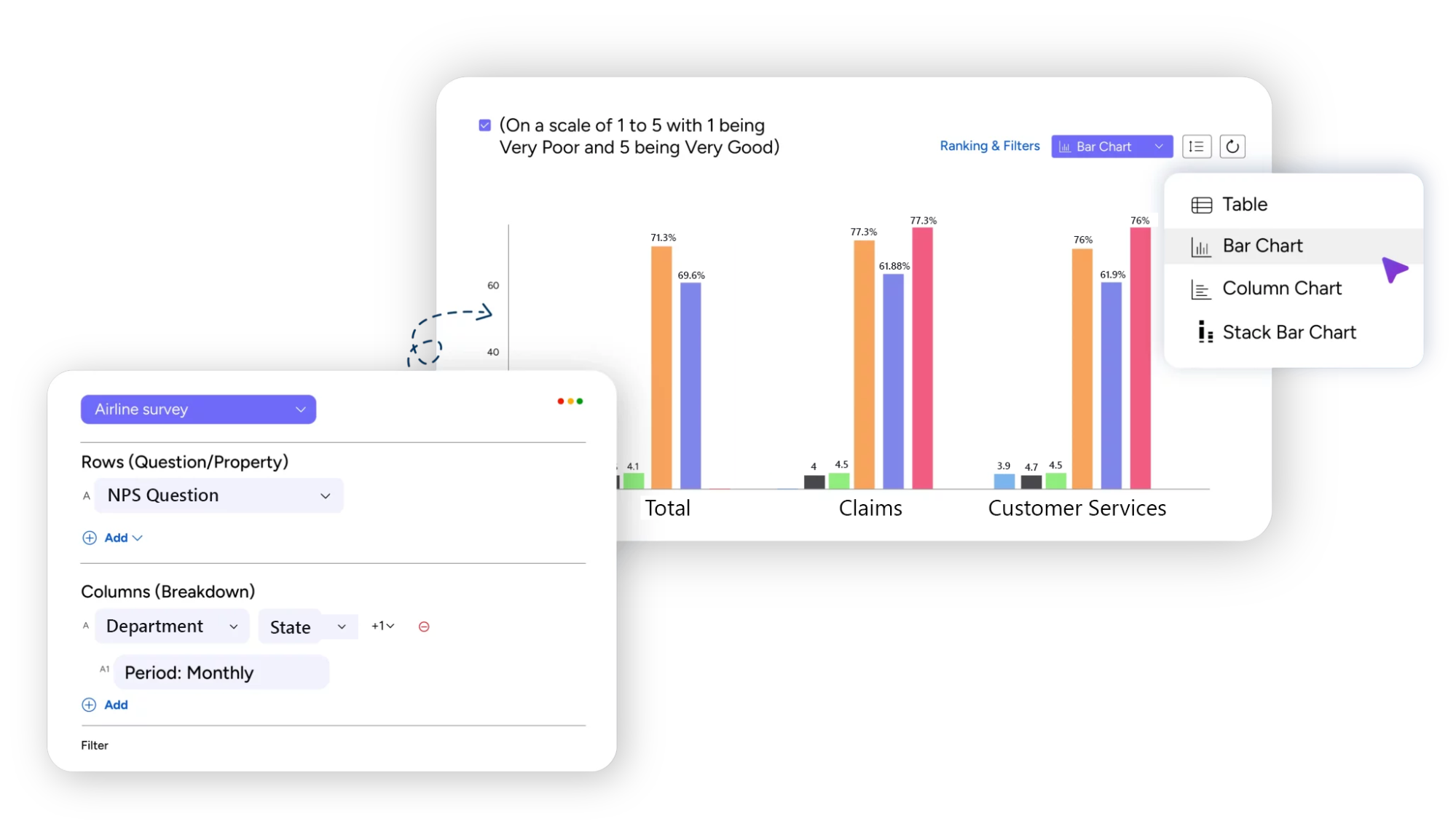
This helps identify where onboarding experience is strong and where customers are confused.
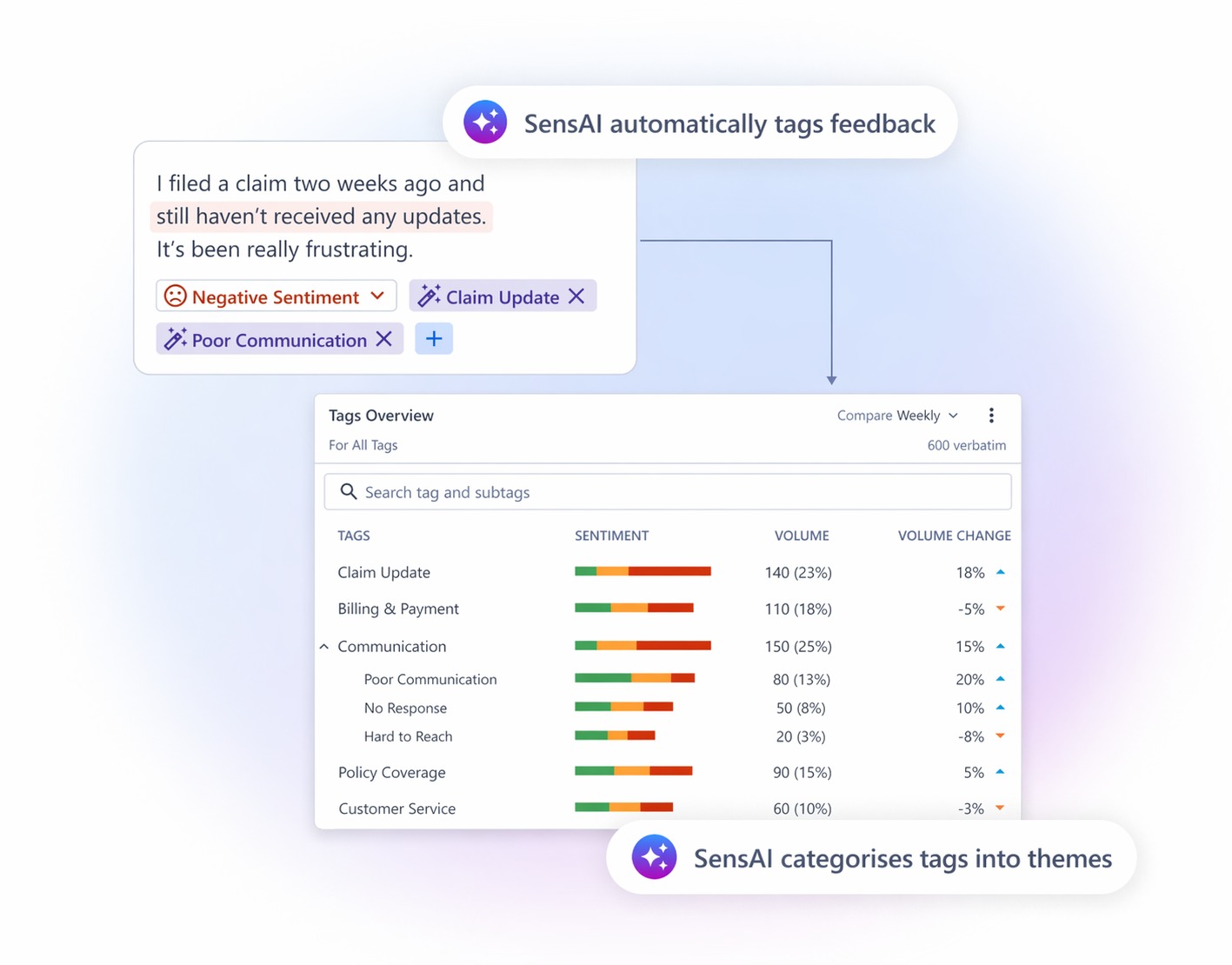
4. Analyze Mis-selling Signals from Comments
SurveySensum’s text analytics tool can group open-ended feedback into themes such as:
- policy not explained
- premium confusion
- documentation delay
- agent misinformation
- coverage misunderstanding
5. Close the Loop on Low NPS Scores
When a customer gives a low onboarding NPS score, SurveySensum can help teams:
- flag the response
- assign it to the right team
- track follow-up
- monitor closure
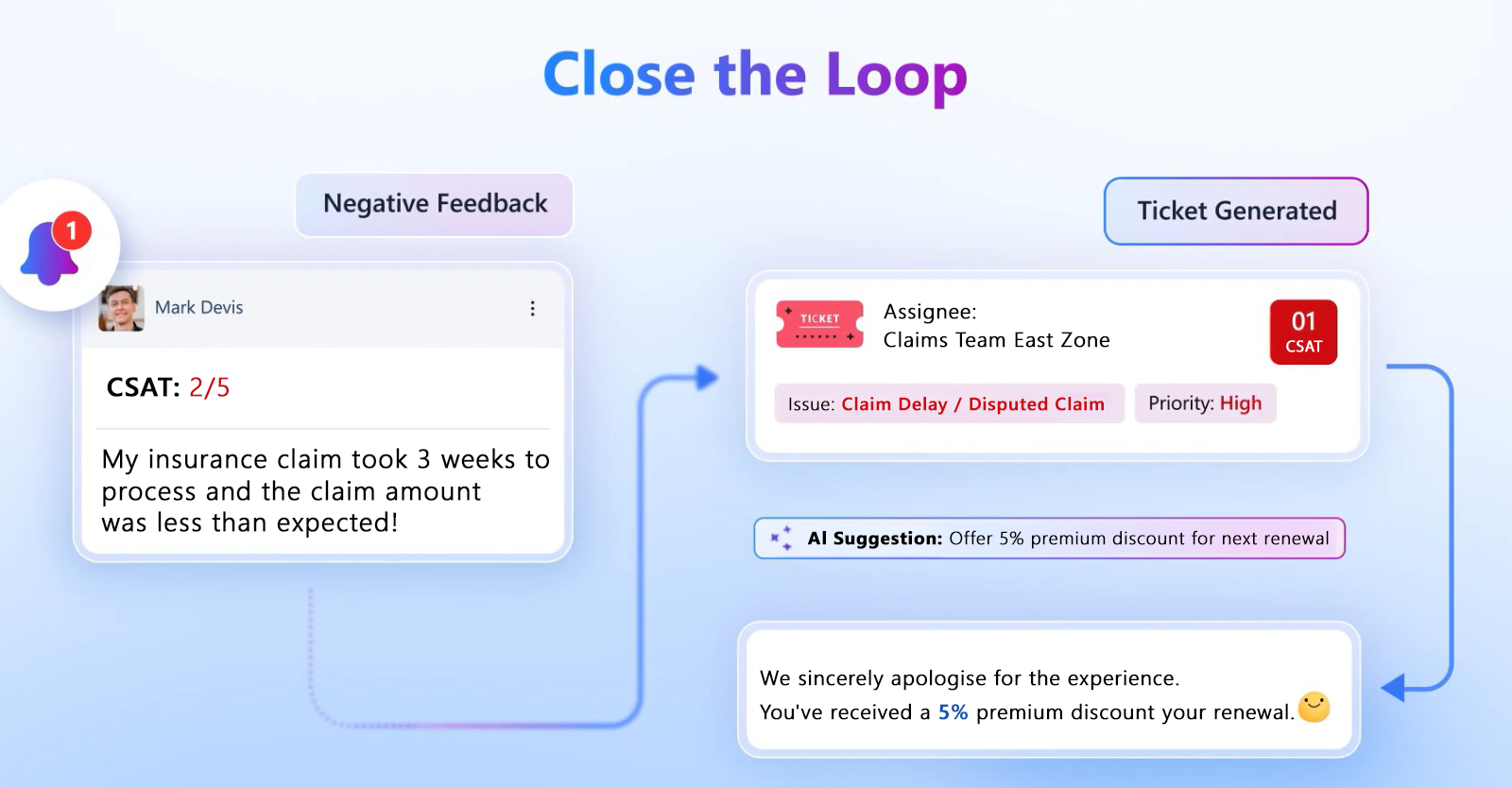
Instead of manually sending surveys and analyzing feedback, insurers can automate onboarding NPS and act on it instantly. Here’s how this works in practice.
What to Look for in Insurance Onboarding Survey Software
If you are evaluating tools, look for:
- NPS survey support
- Email, SMS, and WhatsApp distribution
- trigger-based automation
- mis-selling signal detection
- branch and region-level dashboards
- closed-loop workflows
- role-based access
- fast implementation
- insurance journey reporting
- AI text analytics
A simple survey tool can collect responses.
But an insurance customer feedback platform should help you act on them.
Simple Way to Think About It
An insurance onboarding survey should answer five questions:
- Did the customer understand the policy?
- Was the policy explained honestly?
- Did the onboarding experience build trust?
- Which branches, agents, or channels are creating confusion?
- Which customers need follow-up before they cancel or complain?
If your survey cannot answer these, it is not an onboarding feedback system.
It is just a form.
Final Thought
Insurance onboarding is not complete when the policy is issued.
It is complete when the customer understands what they bought and feels confident about the insurer.
That is why onboarding NPS matters.
It helps insurers detect confusion early, identify mis-selling risk, and act before a small onboarding issue becomes a long-term trust problem.
FAQs
What is an insurance onboarding survey?
An insurance onboarding survey is a feedback survey sent after policy purchase or policy issuance to understand whether the customer clearly understood the policy, documentation, benefits, exclusions, and next steps.
When should insurers send an onboarding survey?
Insurers should send an onboarding survey within 3 to 7 days after policy issuance, document delivery, onboarding call completion, or KYC completion.
Should insurance onboarding surveys use NPS or CSAT?
Use NPS as the primary metric because onboarding is a trust-building moment. CSAT can be used as a supporting metric to understand specific parts of the onboarding experience.
What questions should be included in an insurance onboarding survey?
An insurance onboarding survey should include an NPS question, reason-for-score question, policy clarity question, coverage understanding question, and documentation experience question.
How does an onboarding survey help detect mis-selling?
It captures early feedback from customers who mention unclear promises, missing explanations, wrong expectations, or agent misinformation.
Why is insurance onboarding feedback important?
Because onboarding issues often become complaints, cancellations, poor renewal intent, and long-term trust problems if they are not detected early.
If you’re looking to implement an insurance onboarding survey that actually helps you detect confusion, mis-selling risk, and early churn – it’s worth seeing how leading insurers are doing it in practice.
See how onboarding NPS, open-ended feedback, and real-time action workflows come together.
Free Forever • No Feature Limitation • No Credit Card Required • Sign Up For Free 


Increase ROI by 3x with targeted feedback & analysis
Boost Customer Satisfaction by up to 20%
Reduce Churn by identifying pain points in real time
See it in Action
How much did you enjoy this article?