



Best 5 Medallia Alternatives in Philippines (2026)

The best Medallia alternative in the Philippines is SurveySensum for CX teams that rely on calls, messaging apps, and fast issue resolution. Unlike Medallia, SurveySensum supports call-led closure workflows, AI text analytics for English, Filipino, and Taglish feedback, and action-driven insights that tell teams what to fix, who should act, and what’s urgent – all with fast local support and predictable pricing.
Request a Demo
Customer experience in the Philippines doesn’t break because feedback isn’t collected.
It breaks because issues don’t get resolved on time.
In many Philippine CX journeys, surveys are only the starting point. Teams send feedback requests through email or SMS, but responses are often incomplete or delayed. When clarity is missing, agents follow up on messaging apps. And when resolution truly matters, they make a call.
That call is where confirmation happens.
That call is where trust is rebuilt.
That call is where the customer experience is actually delivered.
Philippine customers expect callbacks, human follow-ups, and quick clarification across email, messaging apps, and voice – all within the same journey. CX success here depends less on dashboards and more on how effectively teams move from feedback to action using modern customer feedback software in Philippines platforms that support real operational workflows.
This is where many global CX platforms, including Medallia, begin to struggle. They are designed for centralized, insight-heavy programs.
Why Medallia Often Falls Short in the Philippines
Most enterprise CX platforms, including Medallia, follow a Western feedback model:
Send a survey → wait for a response → aggregate feedback into dashboards → identify themes → plan actions later → report metrics.
In the Philippines, that flow rarely leads to resolution.
Filipino customers expect direct outreach, often through calls or messaging, not delayed insight reviews. CX teams already understand this reality, but many enterprise tools are built to report what happened, not to guide what should happen next.
As a result, teams spend significant time reviewing dashboards while frontline issues continue unresolved. The gap isn’t data collection. It is execution.
This mismatch becomes clearer when you look at how CX actually plays out on the ground in the Philippines.
The Reality of Customer Experience in the Philippines
1. Calling Is Mandatory, Not Optional in Philippine CX
In many global markets, email and SMS are enough to resolve customer issues.
In the Philippines, they start the conversation.
A typical CX journey looks like this:
- Teams send email surveys or SMS
- Customers follow up on Viber, Facebook Messenger, or chat
- Resolution and confirmation happen on a call
That final call is how issues are resolved across BPOs, telecom, healthcare, utilities, and banking.
However, the problem is that most CX platforms don’t treat calls and conversations as core feedback. Voice and messaging interactions remain scattered across systems, context is lost, and critical issues never make it into CX analysis or prioritization workflows.
That’s why dashboards alone do not close the loop in the Philippines.
CX closes on calls, supported by messaging, ownership, and action.
2. The Struggle of Multilingual Feedback Analysis
Customer feedback in the Philippines rarely comes in clean, structured English. It often blends English, Filipino, and Taglish, with emotional and conversational phrasing.
A comment like:
“Okay naman pero sobrang tagal ng follow-up, nakakainis.”
may look neutral to keyword-based systems, but it clearly signals frustration caused by delay.
When CX tools fail to understand context, intent, and urgency, teams misclassify issues, miss escalation signals, and act too late.
That’s why Philippine CX teams need language-aware AI text analytics tools that go beyond basic sentiment scoring to detect urgency, intent, and root causes.
3. Dashboards Don’t Drive Action
Most CX platforms are good at visualizing data – NPS. CSAT. Trends. Heatmaps.
What they often fail to answer are operational questions CX teams face every day:
- Which customer needs a call today?
- Which issue requires immediate escalation?
- Who should take ownership right now?
There is often no execution layer guiding prioritization and action. For lean, high-volume Philippine CX teams, more dashboards don’t help. What helps is clarity on what to fix first, who should act, and what cannot wait.
Dashboards supported by AI-driven prioritization and urgency detection are far more effective than static reporting in environments where speed to resolution defines customer experience.
4. Local Customer Support Is Not There or Offered
Support responsiveness matters more than vendors admit. For many global CX platforms:
- Priority support is paid
- Standard support has a slow turnaround
- Time zone differences delay resolution
For Philippine enterprises, especially BPOs and customer-facing ops teams, waiting days for support responses is operationally damaging.
Local or APAC-aligned support isn’t a bonus.. It’s a requirement.
These gaps explain why Philippine teams are actively evaluating alternatives.
What Philippine Companies Should Look for in Medallia Alternatives
When evaluating Medallia alternatives in the Philippines, here’s what I found decision-makers prioritize – a local fit over global reputation.
- Call-integrated workflows that log attempts, track outcomes, and close loops on calls
- Native support for Messenger and Viber, with conversations captured as structured data
- Clear resolution paths from email → messaging → calling, with ownership at every step
- AI-Powered Text Analytics tool that goes beyond keyword tagging to identify customer intent, issue themes, urgency signals, and root causes across multilingual feedback
- Action-driven insights that answer what to fix, who should act, and what’s urgent
- PH-aligned support with fast SLAs and regional teams
- Instantly generated AI-driven dashboards for every role with needed access.
If a platform can’t support these, it’s not built for the Philippines.
Top 5 Medallia Alternatives in the Philippines
Here are the top CX tools to explore in 2026 for your teams.
1. SurveySensum – Overall Best Medallia Alternative for the Philippines CX Team
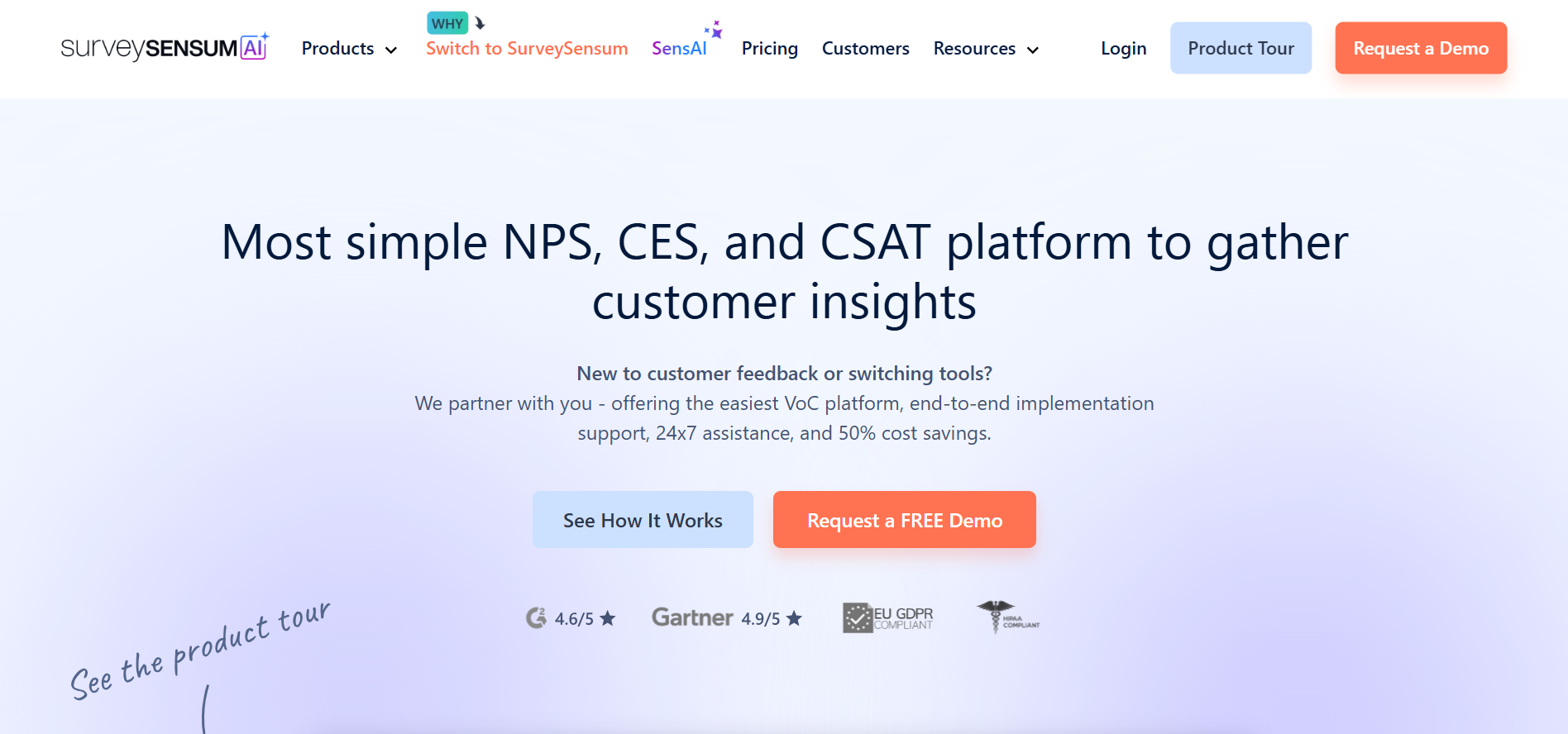
Best for: BPOs, telco, banking, healthcare, and retail teams in the Philippines
SurveySensum is increasingly being adopted by teams across Manila, Cebu, and other service-heavy hubs that want more than dashboards but less complexity than enterprise CX platforms. It focuses on Experience + Action Intelligence, helping lean Philippine CX teams prioritise issues, assign ownership, and close loops faster.
What sets SurveySensum apart in the local context is its ability to combine AI text analytics, root cause detection, and next-action guidance in a way that supports real operational decision-making, not just reporting.
Key Features
- No-code VoC and NPS surveys that teams can launch in minutes, without IT dependency
- Omnichannel survey distribution across email, mobile, and web, built for markets where response rates vary and speed matters
- Real-time dashboards designed instantly with AI for frontline teams, CX managers, and operations leaders with needed role-based access
- AI text analytics powered by SensAI that analyzes multilingual open-ended feedback to identify customer intent, recurring issue themes, urgency, and root causes
- Fast implementation and migration support for teams switching from Qualtrics, legacy tools, or basic survey platforms
- Automated root-cause analysis to identify recurring issues, negative NPS drivers, and early CX risks
- Regional support in your time, by your people on your preferred channels.
- SensAI chat-based engine give you instant insights and recommends actions – so teams know what to fix first and where it will drive the most impact
- Built-in closed-loop ticketing system to ensure detractors don’t fall through the cracks (with escalations)
- Transparent pricing aligned with cost-sensitive Philippine CX budgets, with no hidden enterprise fees
Verdict: If you want AI-driven prioritization and root-cause insights without enterprise complexity, SurveySensum is a strong Medallia alternative. It helps teams quickly identify negative NPS drivers, prioritise issues, and move from feedback to execution.
👉 Explore SurveySensum pricing and see how Philippine CX teams move from feedback to faster resolution
Free Forever • No Feature Limitation • No Credit Card Required • Sign Up For Free 
2. Qualtrics – Enterprise-Grade Insights, Limited Execution Support
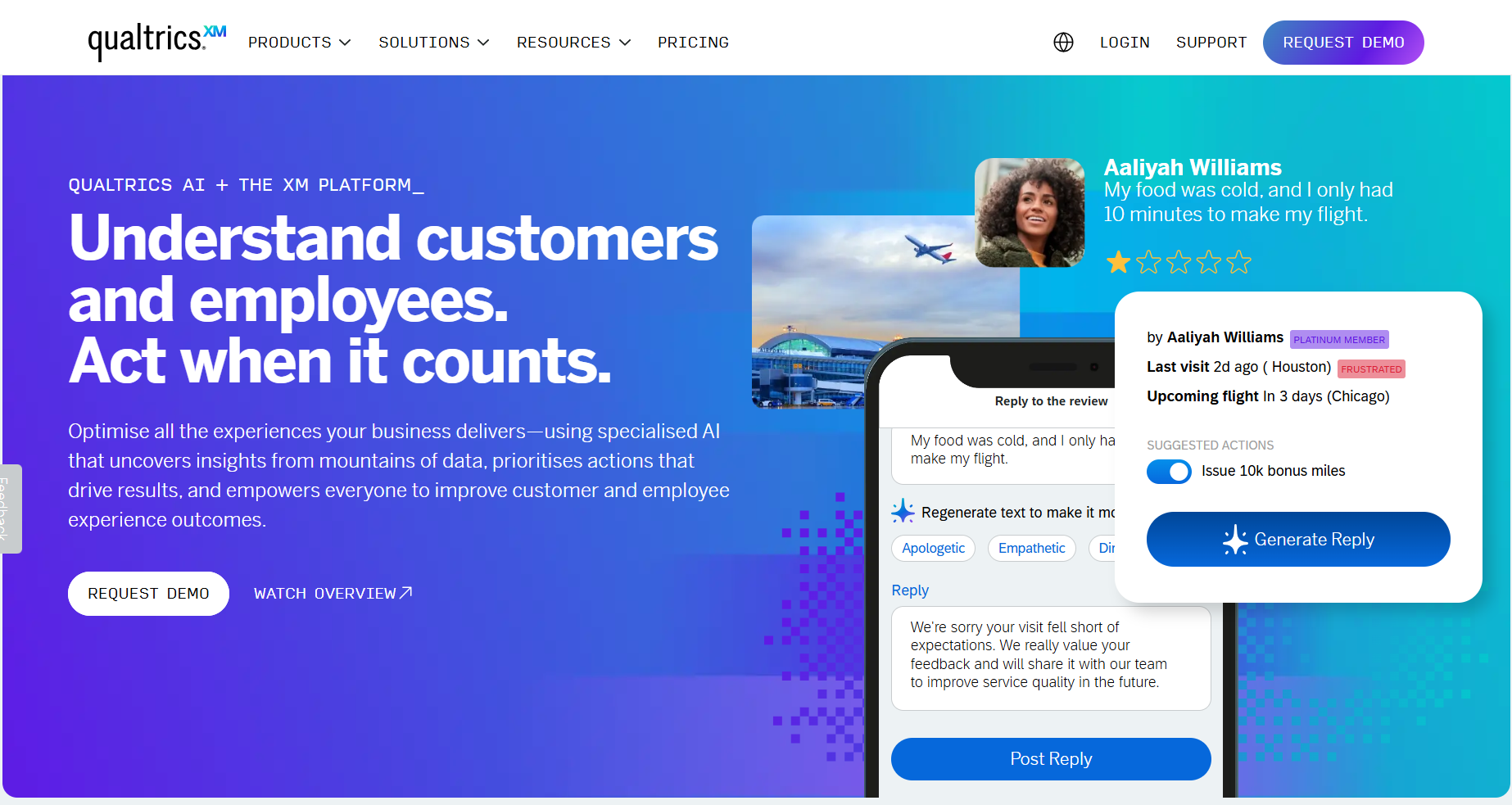
Best for: Large Philippine enterprises seeking deep experience, research, and analytics
Qualtrics is often the first alternative that Philippine enterprises evaluate when Medallia feels too rigid or expensive. It’s well-known, trusted by global brands, and strong in structured experience research.
Key Features
- Advanced survey design and distribution
- Strong experience in analytics and reporting
- Enterprise-grade governance and controls
- Integrations with CRM and ERP systems
Limitations
- Heavily survey-centric, not resolution-centric
- Limited support for call-based closure workflows
- Messaging platforms like Viber and Facebook Messenger are not native channels
Verdict: Qualtrics works well for insight generation in the Philippines, especially at enterprise scale. However, CX teams that depend on calling, follow-ups, and rapid closure may find execution gaps without significant customization.
→ Check out Qualtrics Alternatives in Philippines if research matters more than speed to resolution.
3. Zoho (CRM + Feedback Stack) – Practical and Cost-Conscious for PH Teams
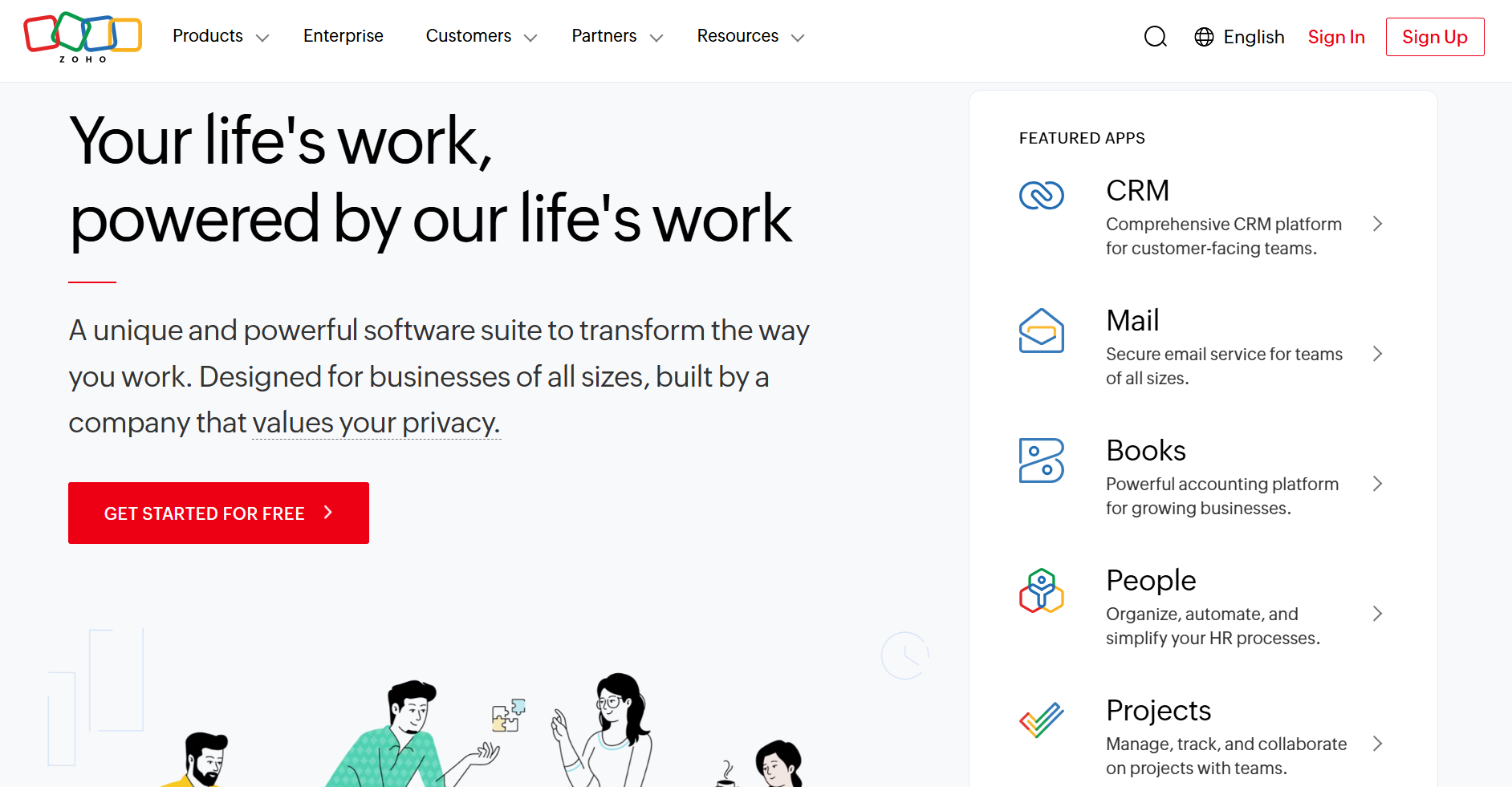
Best for: SMEs and mid-market Philippine companies that want flexibility and cost control
Zoho has quietly built a strong footprint in the Philippines, particularly among SMEs and mid-market companies in Manila and Cebu. Its appeal lies in cost efficiency, flexibility, and local partner availability.
Key Features
- CRM-native feedback and ticketing
- Custom workflows for follow-ups
- Email and SMS survey support
- Strong ecosystem of business tools
Limitations
- Calling workflows exist, but require configuration, not out-of-the-box CX orchestration
- Text analytics struggles with Taglish and slang-heavy feedback
- Insights are operational, not AI-guided
Verdict: Zoho fits Philippine businesses that value flexibility and affordability. It works best when CX teams are comfortable designing their own workflows and don’t rely heavily on AI-driven guidance.
4. SurveyMonkey (Momentive) – Easy Feedback, Shallow Closure
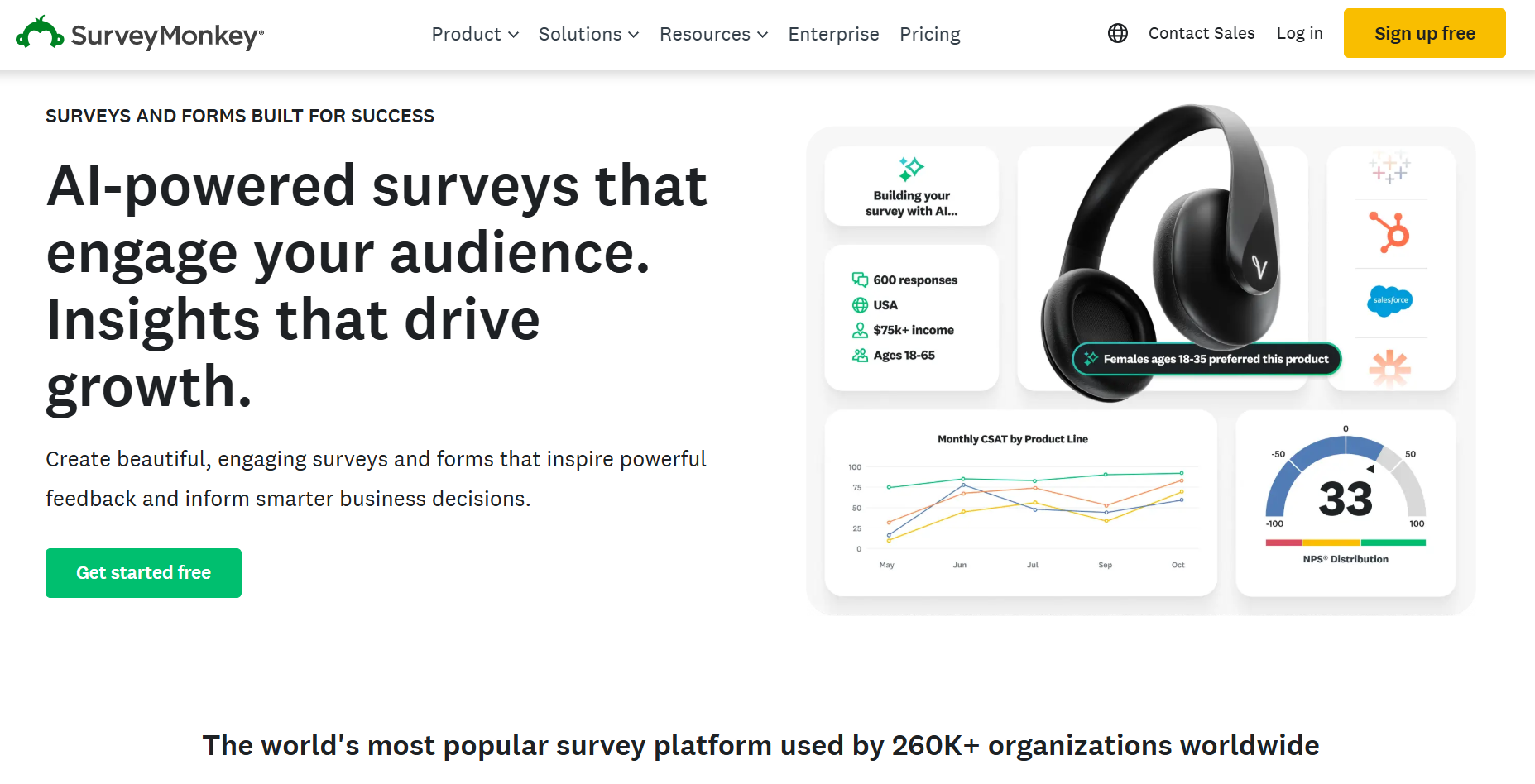
Best for: Basic feedback collection without CX workflow automation
SurveyMonkey is widely used in the Philippines because it’s simple, fast to deploy, and familiar. Teams often adopt it for basic feedback collection when Medallia feels like overkill.
Key Features
- Quick survey setup
- Email and link-based survey distribution
- Basic analytics and exports
- Easy to collect feedback
Limitations
- No real closure or follow-up orchestration
- SMS links often underperform in PH markets
- No support for calling or messaging-first CX
Verdict: SurveyMonkey works for surface-level listening, but not for Philippine CX teams responsible for resolution, escalation, and customer recovery.
→ If your team needs more than basic surveys, explore SurveyMonkey alternatives built for action-driven CX.
5. Regional / APAC-Focused CX Platforms – Built for Local Execution, Not Buzz
Best for: Philippine operational teams that prioritize closure and real-world workflows over brand recognition
Some Philippine enterprises move away from global brands entirely and adopt regional CX platforms designed for Asian communication patterns, high-touch, messaging-heavy, and call-centric.
These tools are often lesser-known but better aligned with local realities.
Key Features
- Flexible workflows that include calling as a core step
- Better accommodation of multilingual feedback
- Faster support aligned with APAC time zones
- Emphasis on action and closure over dashboards
Limitations
- Smaller brand recognition
- AI maturity varies widely
- Integration depth depends on the vendor
Verdict: Regional CX platforms can outperform Medallia in day-to-day Philippine CX execution, but buyers should carefully evaluate scalability, security, and long-term roadmap.
After reviewing the top Medallia alternatives, let’s see how Medallia stacks up against SurveySensum for CX teams in the Philippines.
Medallia vs. SurveySensum: A Quick Comparison for Philippine CX Teams
| Feature | Medallia | SurveySensum |
| Cost | High enterprise pricing with additional costs for services, configuration, and priority support | Affordable pricing with no hidden or surprise costs |
| Value for Money | Powerful but often expensive relative to ROI for PH teams | Greater ROI with powerful features at affordable pricing |
| DIY Capability | No true DIY – even minor changes require paid professional services | DIY NPS software with an intuitive, no-code interface |
| Ease of Use | Complex UI; requires training and admin support | Anyone can use it – no IT or CX training required |
| AI Text Analytics | Keyword-heavy models that often miss multilingual context | AI Enabled Text Analytics analyzes multilingual feedback while understanding the context |
| Action Guidance | Insight-heavy dashboards that require manual analysis to decide what to act on | AI Copilot that gives you insight with just a few prompts. |
| Closed-Loop System | Available, but complex to configure, customize, and maintain across teams | Built-in closed-loop ticketing system that generates tickets, alerts you, and escalates if needed |
| Survey Creation | Powerful but time-consuming | Create surveys with the AI survey builder in a single prompt |
| Implementation Effort | Long implementation cycles and heavy onboarding | Faster onboarding and seamless migration from tools like Qualtrics or Forms |
| Support Responsiveness | Priority support is paid; standard SLAs can be slow | 24×7 local support with faster SLAs and hands-on guidance |
Bottom line: In the Philippine market, the right tool is the one that fits your operational maturity, team size, and speed-to-action requirements.. not just global brand stature. If NPS measurement is a core part of your CX program, exploring the best NPS tools for Philippine CX teams can help sharpen that decision.
👉 Compare your current CX setup against SurveySensum to see where execution gaps are slowing resolution.
Free Forever • No Feature Limitation • No Credit Card Required • Sign Up For Free
Final Takeaway
Medallia remains a strong and widely adopted platform for experience management.
That said, customer experience in the Philippines follows a distinct operational rhythm. Resolution is often call-led, conversations continue across messaging platforms, and CX success depends on how quickly teams can move from feedback to action.
As a result, many Philippine CX teams are re-evaluating what they need from their tools. The focus is shifting away from feature depth and global standardisation, and toward platforms that support practical execution, operational flexibility, and faster closure.
This is where alternatives like SurveySensum are increasingly being considered. Not as a replacement for global platforms in every scenario, but as a better fit for teams that need clear priorities, simpler workflows, and insight that leads directly to action.
For organisations running CX programs across contact centres, branches, and service operations, the right platform is ultimately the one that aligns with local customer behaviour and day-to-day CX realities. When tools match how teams actually work, outcomes tend to improve naturally.
👉 Experience how SurveySensum’s AI Copilot highlights what to fix first, who should act, and what needs urgent attention. Talk to a SurveySensum CX expert who works with Philippine CX teams
Free Forever • No Feature Limitation • No Credit Card Required • Sign Up For Free
FAQs: Medallia Alternatives in Philippines
Which CX platform works best for call-based customer experience in the Philippines?
CX platforms with closed-loop workflows, call tracking, and clear action ownership work best in the Philippines. Since resolution is often call-led, tools must support follow-ups, escalation, and accountability beyond surveys. SurveySensum aligns well with Philippine CX teams that prioritise issue resolution over reporting.
Why is AI text analytics important for Philippine customer feedback?
Philippine feedback is often multilingual and conversational, mixing English, Filipino, Taglish, and local expressions. Keyword-based sentiment analysis frequently misclassifies such feedback. Context-aware AI helps CX teams correctly detect intent, urgency, and root causes.
Is SurveySensum a good Medallia alternative for Philippine businesses?
Yes. SurveySensum offers AI-driven text analytics, closed-loop NPS, DIY setup, and predictable pricing, making it a strong Medallia alternative for Philippine enterprises focused on faster execution.
What should Philippine companies prioritize when choosing a CX platform?
They should prioritise call-integrated workflows, messaging support, language-aware AI, and fast APAC-aligned support, rather than choosing tools based only on global brand recognition.
Is it difficult to migrate from Medallia to another CX platform in the Philippines?
No. Most Philippine CX teams migrate in phases. Platforms like SurveySensum support fast onboarding, data migration, and parallel runs, allowing teams to switch without disrupting live call-center or BPO operations.
👉 See how SurveySensum helps Philippine CX teams move from feedback to resolution faster.
Free Forever • No Feature Limitation • No Credit Card Required • Sign Up For Free


Increase ROI by 3x with targeted feedback & analysis
Boost Customer Satisfaction by up to 20%
Reduce Churn by identifying pain points in real time
See it in Action
Contents
How much did you enjoy this article?