



9 Best GetFeedback Alternatives in 2026: Compare Features, Pricing & Salesforce Integrations

GetFeedback's retirement is forcing Salesforce teams to rethink their customer feedback strategy. Some organizations will simply replace the platform, while others will use the opportunity to improve response rates, automate analysis, and strengthen action management. This guide compares the top alternatives based on pricing, Salesforce integrations, AI capabilities, and migration complexity.
Request a Demo
GetFeedback is officially being retired.
Following the announcement that GetFeedback Direct will shut down on December 31, 2026, many Salesforce teams are now evaluating alternative customer feedback platforms.
The challenge isn’t just replacing surveys.
Most teams need to replace:
- Salesforce integrations
- NPS and CSAT programs
- Automated survey triggers
- Dashboards and reporting
- Closed-loop workflows
- Historical feedback data
and ensuring business teams continue receiving the insights they rely on.
The good news is that there are several strong alternatives available today, ranging from enterprise experience management platforms to more agile customer feedback solutions.
In this guide, we’ll compare the best GetFeedback alternatives based on Salesforce integration, survey automation, analytics, AI capabilities, implementation effort, and pricing.
Best GetFeedback Alternatives at a Glance
| Platform | Best For | Salesforce Integration | AI Analytics | Closed-Loop Workflows | Estimated Pricing |
| SurveySensum | Mid-market and enterprise CX teams | Yes | Advanced | Yes | Starts at $3,600/year |
| SurveyMonkey Enterprise | Existing GetFeedback customers | Yes | Moderate | Limited | Custom |
| Qualtrics | Global enterprises | Yes | Advanced | Yes | Enterprise pricing (~$100K-1M+) |
| Medallia | Large enterprise CX programs | Yes | Advanced | Yes | Enterprise pricing (~$100K-1M+) |
| Alchemer | Salesforce-heavy organizations | Yes | Moderate | Yes | Custom |
| SurveySparrow | Growing CX teams | Yes | Moderate | Yes | Typically ~$3K-5K/year |
| Zonka Feedback | Operational feedback programs | Yes | Moderate | Yes | Typically around ~$3K-5K/year |
| QuestionPro CX | Enterprise feedback management | Yes | Advanced | Yes | Custom |
Why are Teams Looking for GetFeedback Alternatives?
1. GetFeedback Is Being Retired
The biggest reason is simple: organizations need a replacement.
The retirement announcement means existing GetFeedback users must identify a new platform, migrate data, and rebuild workflows before the shutdown date.
For teams running customer experience programs across support, onboarding, product, and account management journeys, waiting until the last minute could create unnecessary disruption.
2. Salesforce Workflows Need to Be Rebuilt
Many organizations selected GetFeedback because it worked closely with Salesforce.
Over time, teams built:
- Automated survey triggers
- Case-based feedback workflows
- Opportunity-based surveys
- Customer success programs
- NPS automation
- Executive dashboards
Moving to another platform often requires recreating these processes.
3. Customer Expectations Have Changed
When GetFeedback launched, survey collection was enough.
Today, organizations expect platforms to help them:
- Analyze feedback automatically
- Identify root causes
- Detect trends
- Prioritize actions
- Alert teams in real time
- Track recovery efforts
This is why many organizations are using the shutdown as an opportunity to upgrade rather than simply replace.
For many teams, the shutdown is simply the trigger. The bigger question is whether to replace GetFeedback or use the opportunity to build a stronger CX program. See how leading teams are approaching the transition →
What to Look for in a GetFeedback Replacement
Before choosing a platform, evaluate more than survey capabilities.
1. Salesforce Integration
Your replacement should support:
- Contact syncing
- Case syncing
- Opportunity syncing
- Trigger automation
- Metadata mapping
2. Multiple Feedback Channels
Modern feedback programs collect responses through:
- SMS
- QR codes
- Web surveys
- In-app surveys
The more channels available, the easier it becomes to improve response rates.
3. AI-Powered Feedback Analysis
Manually reviewing thousands of comments no longer scales.
Look for:
- Sentiment analysis
- Theme detection
- Root cause identification
- Automated summaries
- Trend analysis
4. Closed-Loop Action Management
Collecting feedback is only the first step.
The right platform should help teams:
- Escalate detractor responses
- Assign ownership
- Track actions
- Monitor recovery outcomes
5. Fast Migration
The ideal platform should help migrate:
- Historical responses
- Customer metadata
- Dashboards
- Survey templates
- Salesforce workflows
without requiring months of implementation.
Before selecting a replacement, evaluate how much effort will be required to migrate surveys, workflows, dashboards, and reporting. The migration experience often matters more than the feature list.
9 Best GetFeedback Alternatives in 2026
1. SurveySensum
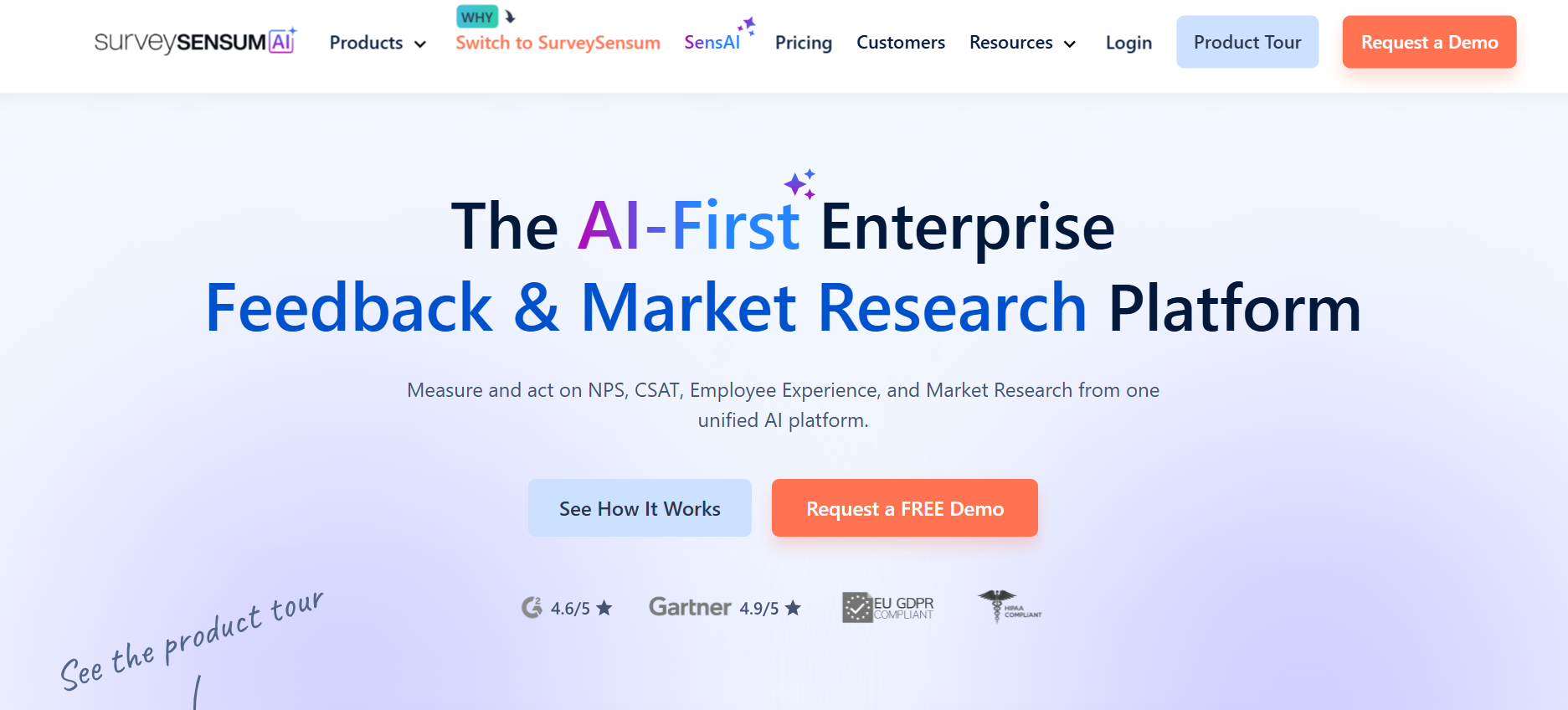
SurveySensum helps organizations run NPS, CSAT, CES, onboarding, support, product, and relationship feedback programs from a single platform.
Unlike traditional survey tools, it focuses heavily on helping teams move from measurement to action through AI-powered analysis and closed-loop workflows.
Best for: Mid-market to enterprise teams looking for an AI-enabled customer feedback platform with strong Salesforce integration, AI analytics, and operational CX workflows.
Key Features:
- Salesforce integration
- NPS, CSAT, CES
- AI text analytics
- AI Copilot
- Real-time alerts
- Role-based dashboards
- Closed-loop workflows
- WhatsApp, SMS, Email, QR surveys
- Action planning
Pros:
- Faster implementation than enterprise platforms
- Strong AI analytics capabilities
- Multi-channel feedback collection
- Enterprise-grade reporting
- Cost-effective for mid-market organizations
Limitations:
- Not positioned as a heavy legacy XM suite for highly complex enterprise governance layers
Pricing: Starts at approximately $3,600 per year.
This is usually easier to understand when you see how feedback moves from survey response to insight to action in a real environment. See SurveySensum in action →
2. SurveyMonkey Enterprise
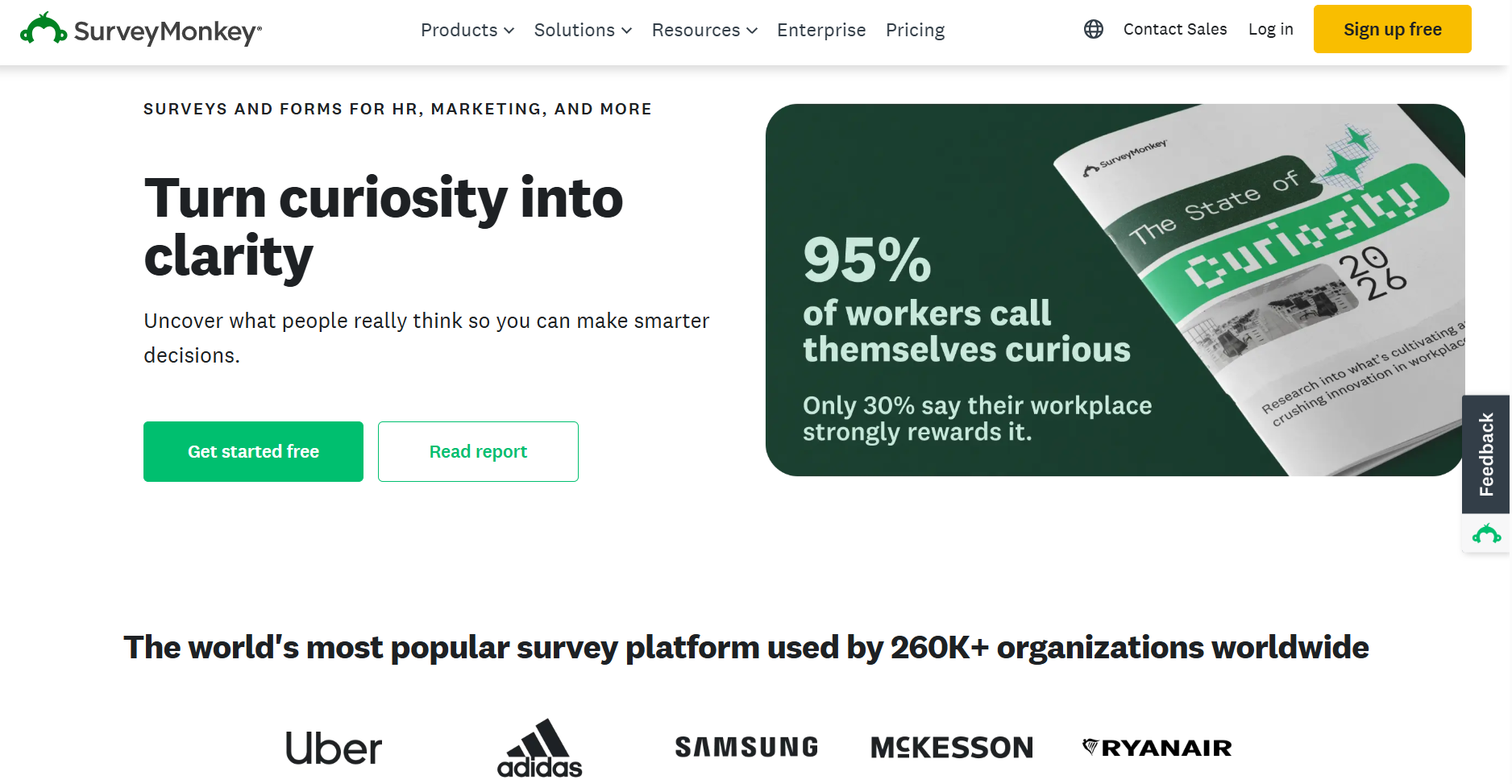
Since SurveyMonkey owns GetFeedback, it is the most obvious migration option for existing customers.
Best for: Organizations looking for the most direct migration path from GetFeedback.
Pros:
- Familiar ecosystem
- Established migration path
- Easy survey creation
Limitations:
- Limited operational CX workflows
- Less advanced action management
- AI capabilities remain relatively limited compared to specialized CX platforms
Pricing: Custom enterprise pricing.
3. Qualtrics
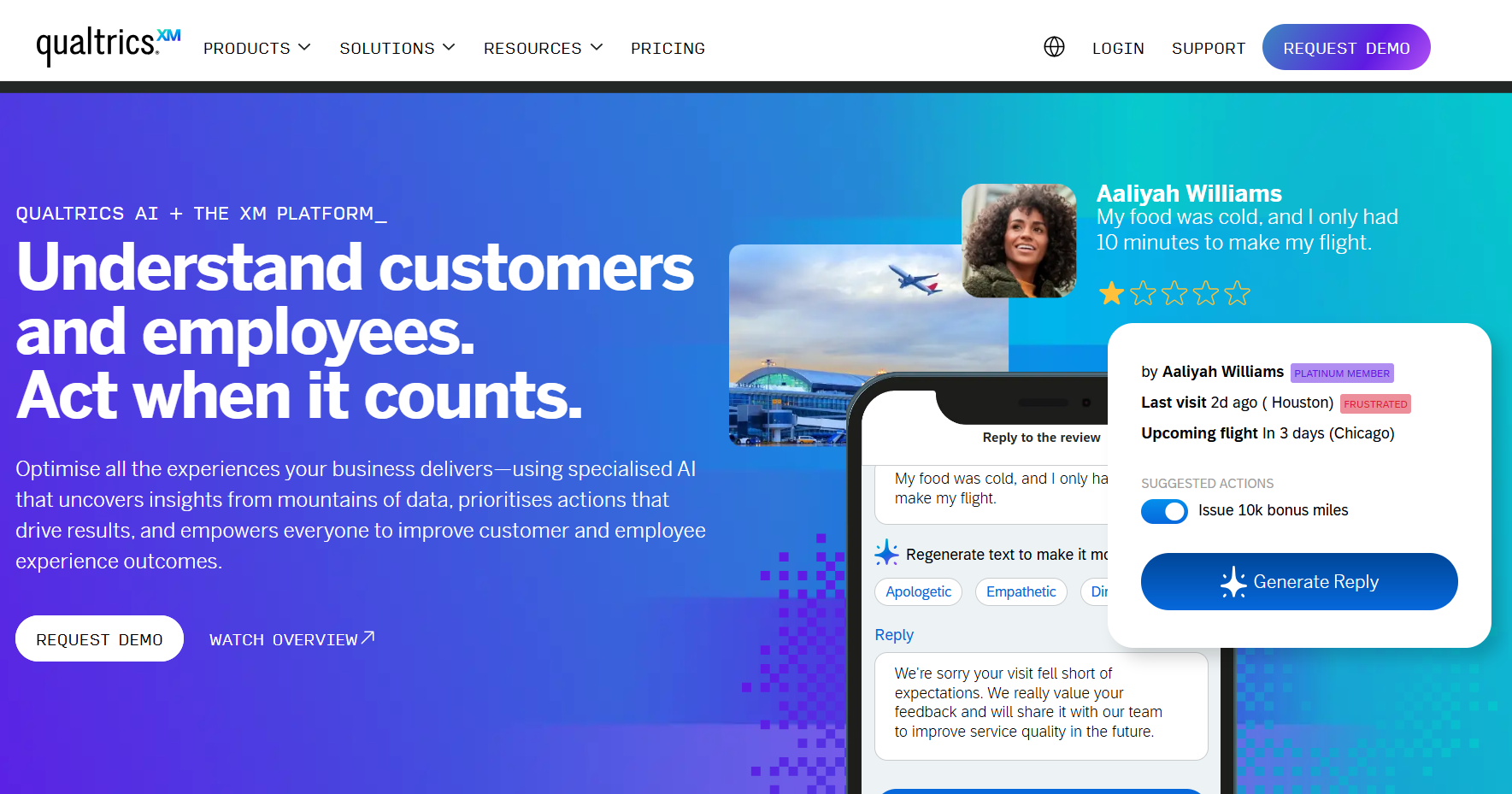
Qualtrics remains one of the most comprehensive experience management platforms available.
Best for: Enterprises needing deep research and governance
Pros:
- Extensive functionality
- Global scale
- Strong analytics
- Mature ecosystem
Limitations:
- High implementation effort
- Complex administration
- Often requires dedicated specialists
- Significant total cost of ownership
Pricing: Enterprise pricing, typically starts around ~$100K/year and scales significantly for global programs.
4. Medallia
Medallia is designed for organizations running sophisticated customer experience operations across multiple business units and geographies.
Best for: Large enterprises with complex CX programs
Pros:
- Strong enterprise capabilities
- Advanced analytics
- Large-scale deployments
Limitations:
- Expensive
- Longer implementation cycles
- Often requires consulting support
Pricing: High-end enterprise pricing, usually suited for multi-million dollar CX transformations.
5. Alchemer
Alchemer has expanded its Salesforce-focused capabilities and offers strong survey flexibility.
Best for
Organizations heavily invested in Salesforce.
Pros
- Strong Salesforce ecosystem
- Flexible workflows
- Good customization options
Limitations
- User experience can feel complex
- Reporting may require additional configuration
Pricing: Typically ranges between $15,000 and $50,000+ annually.
6. SurveySparrow
Best for: SME to mid-market CX teams seeking conversational surveys and employee experience capabilities.
Pros:
- Modern survey experience
- Good multi-channel support
- Easy deployment
Limitations:
- Limited advanced CX action management
- Enterprise analytics less mature than leading CX platforms
Pricing: Typically ~$3K-5K/year for growing CX and recurring NPS programs
7. Zonka Feedback
Best for: Retail brands, offline businesses, and teams running small or early-stage CX programs
Pros:
- Strong QR feedback capabilities
- Real-time alerts
- Easy implementation
Limitations:
- Enterprise analytics capabilities are more limited
- Less suitable for large global deployments
Pricing: Budget-friendly SMB pricing, typically around ~$3K-5K/year for CX teams
8. QuestionPro CX
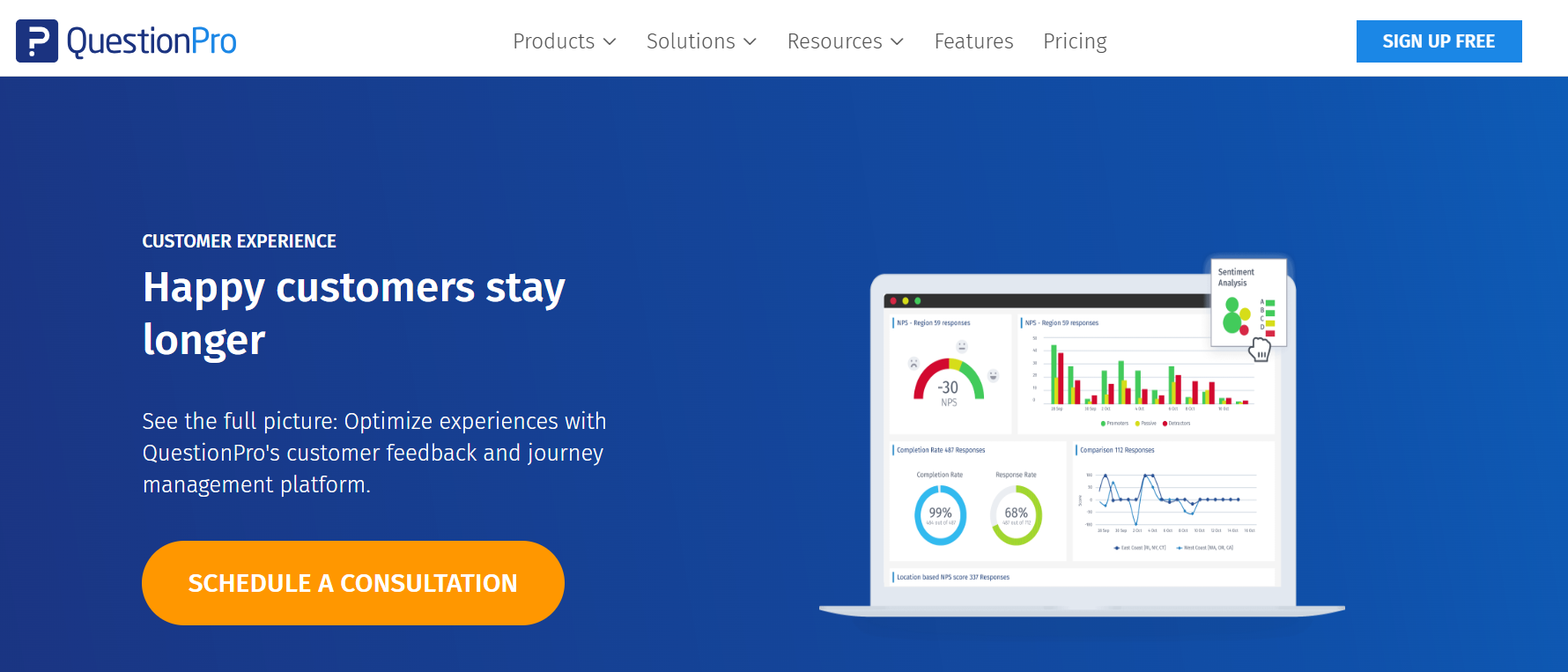
Best for: Enterprise customer experience teams.
Pros:
- Broad feature set
- Strong survey capabilities
- Enterprise-ready reporting
Limitations:
- Some advanced features require premium plans
- Implementation can become complex for large programs
Pricing: Typically ranges from $15,000 to $100,000+ annually.
How Difficult Is It to Migrate From GetFeedback?
Migration complexity depends on how deeply GetFeedback is embedded in your operations.
Typical Migration Timeline
| Program Size | Estimated Timeline |
| Basic survey program | 1-2 weeks |
| Mid-market CX program | 2-4 weeks |
| Enterprise CX program | 1-3 months |
Key Migration Tasks
1. Export Historical Data: Export all survey responses, metadata, dashboards, and reporting requirements.
2. Recreate Salesforce Workflows: Rebuild survey triggers, mappings, and automation rules.
Migrate Dashboards
Ensure executives and operational teams continue receiving the reports they rely on.
3. Train Teams: Provide training on new workflows and reporting structures.
Most migrations are less about moving surveys and more about rebuilding the workflows around them. Get a migration assessment →
Which GetFeedback Alternative Is Right for You?
| Your Stage | What You Need | Recommended Platforms |
| Replacing GetFeedback quickly | Survey distribution and Salesforce continuity | SurveyMonkey Enterprise |
| Running a growing CX program | Feedback collection plus action management | SurveySensum, AskNicely |
| Scaling CX across multiple journeys | NPS, CSAT, closed-loop workflows, AI insights | SurveySensum, InMoment |
| Large enterprise deployment | Advanced governance and global rollouts | Qualtrics, Medallia |
| Salesforce-heavy environment | Flexible integrations and workflow customization | Alchemer |
| Small or early-stage CX program | Simpler implementation and lower complexity | SurveySparrow, Zonka Feedback |
| B2B account experience programs | Account-level insights and revenue linkage | CustomerGauge |
The wrong decision is rarely choosing a “bad” platform.
The bigger mistake is choosing a platform that assumes a level of complexity, ownership, budget, and implementation effort that your team isn’t ready for.
Frequently Asked Questions
Is GetFeedback shutting down?
Yes. GetFeedback Direct is scheduled to be retired on December 31, 2026.
What is replacing GetFeedback?
SurveyMonkey Enterprise is the official migration path, but many organizations are also evaluating alternatives such as SurveySensum, Qualtrics, Medallia, Alchemer, and QuestionPro.
What happens to GetFeedback data?
Organizations should export historical data before the retirement date to ensure survey responses and reporting history are preserved.
Which GetFeedback alternative works best with Salesforce?
Several alternatives offer Salesforce integration, including SurveySensum, Qualtrics, Medallia, Alchemer, QuestionPro, and SurveyMonkey Enterprise.
How much does a GetFeedback migration typically cost?
Migration costs vary based on survey complexity, integrations, dashboard requirements, and historical data volume. Most organizations should budget for implementation, workflow recreation, and training in addition to platform licensing.
Can I migrate historical NPS data from GetFeedback?
Yes. Most enterprise feedback platforms support historical data imports, allowing organizations to preserve trend reporting and benchmark comparisons.
Final Thoughts
GetFeedback’s retirement isn’t just a software change.
For many organizations, it’s an opportunity to rethink how customer feedback is collected, analyzed, and acted upon.
Some teams will choose the easiest migration path and move to SurveyMonkey Enterprise.
Others will use the transition to modernize their customer experience programs with stronger analytics, omnichannel feedback collection, AI-powered insights, and closed-loop workflows.
The right choice depends on where your CX program is today and where you want it to be over the next few years.
For teams evaluating alternatives, the best time to start planning the migration is now, while there is still enough time to preserve data, rebuild workflows, and avoid disruption before the retirement deadline.
GetFeedback may be going away, but it’s also an opportunity to build a feedback program that’s easier to scale, easier to adopt, and easier to act on.
See how leading CX teams are making the switch →
Free Forever • No Feature Limitation • No Credit Card Required • Sign Up For Free 


Increase ROI by 3x with targeted feedback & analysis
Boost Customer Satisfaction by up to 20%
Reduce Churn by identifying pain points in real time
See it in Action
Contents
How much did you enjoy this article?