



7 Best Toluna Alternatives and Competitors in 2026

- The search for Toluna alternatives usually begins when research operations become harder to scale, slower to execute, or too dependent on manual workflows. The best alternatives vary by use case – SurveySensum for AI-led market research automation, Qualtrics for enterprise governance, and Attest for agile research execution. The right platform should match how your research team actually works today.
Request a Demo
Most teams do not start looking for Toluna alternatives because research stopped working.
They start looking because the workflow changed.
Research today is expected to move faster, scale more frequently, and connect directly to decision-making. Business teams no longer want to wait weeks for reporting cycles, manual analysis, or fragmented research execution.
That shift is changing how teams evaluate market research platforms.
The question is no longer: “Which platform can run research?”
It is: “Which platform can help us move from research to decisions faster?”
This guide breaks down the best Toluna alternatives for 2026, tailored to different market research workflows, team structures, and operational needs.
Quick Summary
If you want the short version:
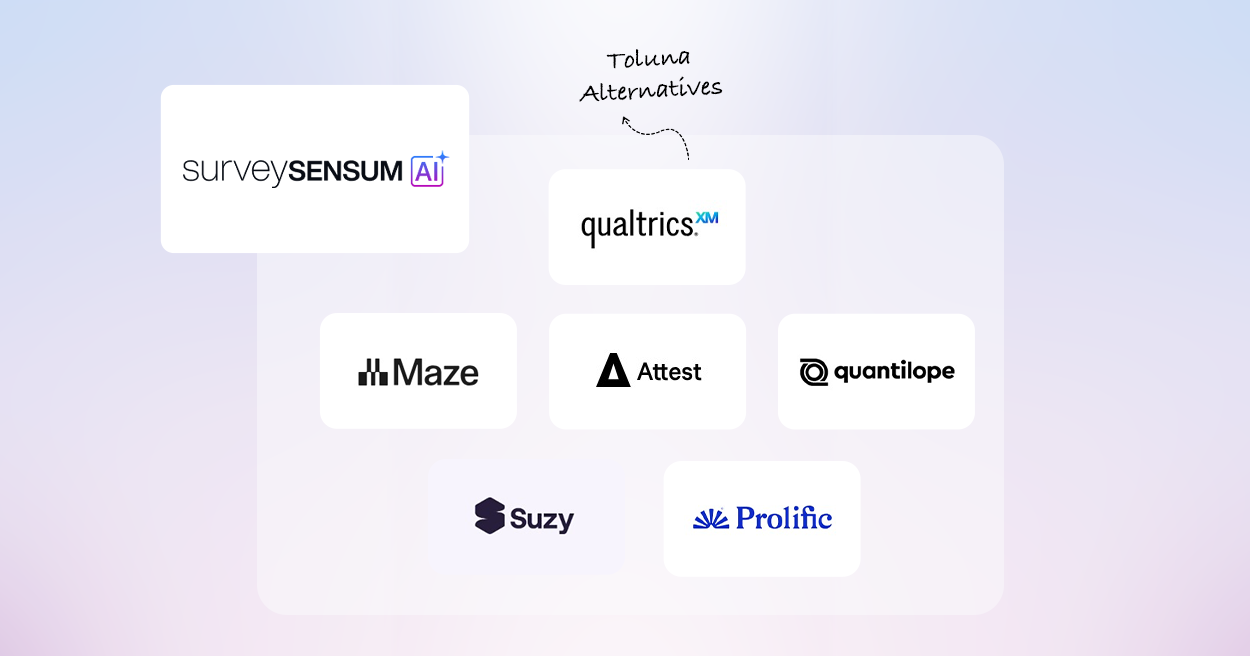
- SurveySensum → Best for AI-led, end-to-end market research
- Qualtrics → Best for enterprise research governance
- Attest → Best for agile consumer research
- Quantilope → Best for advanced quantitative methodologies
- Suzy → Best for rapid consumer insights
- Prolific → Best for participant recruitment
- Maze → Best for product and UX research
But choosing the right Toluna alternative is not really about comparing feature lists.
It is about understanding how your research workflow operates, how quickly your business expects insights, and whether your current platform supports continuous, AI-assisted research execution.
Most Teams Don’t Leave Toluna Because Research Failed
Toluna remains one of the most established market research platforms in the industry.
It combines:
- large-scale global panel access
- enterprise-grade research infrastructure
- DIY and full-service capabilities
- advanced research methodologies
- AI-powered research investments
- extensive international reach
For many enterprise research teams, it still works extremely well.
But the reason teams start exploring alternatives is usually operational.
The Workflow Changed
Modern research environments now expect:
- faster study launches
- continuous research programs
- AI-assisted analysis
- real-time reporting
- lower operational overhead
- easier collaboration between business and insights teams
Traditional research workflows often still look like this:
research brief → setup → fieldwork → analysis → reporting → presentation → decision
The problem is that businesses now expect insight cycles to happen in days or even hours.
That shift is pushing teams toward newer AI market research tools and research automation platforms that reduce operational complexity and accelerate insight delivery.
Who This Guide Is For
This guide is for you if:
- Your research frequency is increasing
- Your business expects faster turnaround times
- You want more flexibility in research design
- Your current research workflow feels operationally heavy
- You want AI-led insight generation and reporting
- You are evaluating online market research platforms beyond traditional enterprise systems
- You are comparing market research tools based on workflow fit, not just features
If that sounds familiar, you are probably not just looking for another platform.
You are looking for a different research operating model.
Best Toluna Alternatives (Quick Answer)
Before we go deeper, here’s the short answer most teams need:
|
Platform |
Best For |
|
SurveySensum |
AI-led end-to-end market research |
|
Qualtrics |
Enterprise research programs |
|
Attest |
Agile consumer research |
|
Quantilope |
Advanced quantitative research |
|
Suzy |
Rapid consumer insights |
|
Prolific |
High-quality participant recruitment |
|
Maze |
Product and UX research |
At this stage, most teams narrow down to two or three platforms.
The real difference usually comes down to research workflow flexibility, execution speed, AI-led analysis, and how quickly teams can move from insights to decisions.
Why Teams Look for Toluna Alternatives
The shift usually does not happen because Toluna lacks the capability.
It happens because research operations evolve.
1. Heavy Research Workflows
Toluna is built for enterprise-grade research operations.
That works well for large structured programs.
But for fast-moving teams, workflows can sometimes feel:
- operationally heavy
- dependent on specialist support
- slower to iterate
- difficult to scale across continuous research cycles
This becomes more noticeable for agile consumer brands, product-led organizations, lean insights teams, and continuous innovation programs.
2. Limited DIY Flexibility
Toluna supports both DIY and service-led models.
But many teams still feel:
- Research workflows remain research-team dependent
- Business stakeholders rely heavily on analysts
- Non-research users struggle with complexity
- Collaboration across teams slows execution
Modern DIY market research platforms increasingly prioritize faster execution, self-serve research workflows, and AI-assisted analysis.
3. Slow Insight-to-Decision Cycles
One of the biggest shifts in market research is the expectation of speed.
Businesses increasingly expect:
- rapid concept validation
- faster insight generation
- real-time reporting
- continuous optimization
Even though Toluna has invested heavily in AI and automation, many traditional research workflows still involve:
- manual analysis
- reporting bottlenecks
- longer interpretation cycles
- presentation dependencies
That is why AI-led research automation platforms are gaining attention.
4. High Operational Cost at Scale
Toluna is designed for enterprise-scale research.
But for organizations running:
- high-frequency studies
- continuous tracking
- multi-market programs
- agile testing cycles
Cost structures can become difficult to scale predictably.
This becomes especially relevant for mid-market research teams, continuous research programs, and brands increasing study frequency.
5. Research Feels Disconnected from Business Execution
This is increasingly becoming the biggest strategic shift in market research.
Traditional workflows often end with dashboards, slide decks, and presentations.
But modern research teams increasingly want:
- continuous insight workflows
- AI-generated recommendations
- faster operationalization
- real-time decision support
- integrated research workflows
The expectation is shifting from “deliver research” to “help the business make faster decisions.”
What to Look for in a Toluna Alternative
Most teams compare features. But the decision usually comes down to how well the platform fits your research workflow.
Here’s what actually matters:
- Research design flexibility: Can you build studies the way you want, or are workflows still operationally heavy and dependent on specialist support?
- Speed of execution: How quickly can you launch studies, access respondents, analyze findings, and share insights internally?
- AI-led analysis: Does the platform automatically generate summaries, themes, and recommendations, or are teams still manually building reports?
- Audience access: Does it support global panels, targeted recruitment, and scalable fieldwork across markets?
- Pricing model: Does pricing scale predictably as research frequency increases, or do operational and project costs rise quickly?
- Insight quality: Are you getting dashboards and raw data, or decision-ready insights that teams can actually act on?
👉 The right market research platform will align with how frequently you run research and how quickly your team needs answers.
This is also where many teams start evaluating newer approaches to research. Instead of relying on slow operational workflows and manual reporting cycles, modern AI market research platforms are increasingly designed to automate insight generation, accelerate decision-making, and support continuous research programs at scale.
A Quick Comparison: Best Toluna Alternatives
Once you’ve aligned on what matters most, a side-by-side comparison helps narrow the shortlist. Here’s how the leading Toluna competitors stack up.
|
Platform |
Best For |
Why Teams Choose It Over Toluna |
Tradeoff |
|
AI-led end-to-end research |
Faster workflows, AI automation, continuous research |
Smaller enterprise legacy footprint |
|
|
Qualtrics |
Enterprise programs |
Governance, scalability, advanced workflows |
Expensive and operationally complex |
|
Attest |
Agile consumer research |
Faster setup and easier execution |
Limited advanced methodologies |
|
Quantilope |
Advanced quant research |
Automated advanced analytics |
Higher learning curve |
|
Suzy |
Rapid insights |
Very fast turnaround |
Limited deep analytics |
|
Prolific |
Participant recruitment |
High-quality respondents |
Not a full-service research platform |
|
Maze |
UX and product research |
Product testing workflows |
Not built for full market research |
This table gives you a starting point. But the right choice usually depends on how well the platform fits your actual research workflow.
7 Best Toluna Alternatives by Use Case
At this point, most teams have a shortlist of two or three platforms. What follows is a detailed look at each – covering where they’re strong, where they fall short, and who they’re actually right for.
1. SurveySensum Qualtrics alternative for market research
Best for: AI-Led, End-to-End Market Research
SurveySensum is built for teams that want more than just research execution.
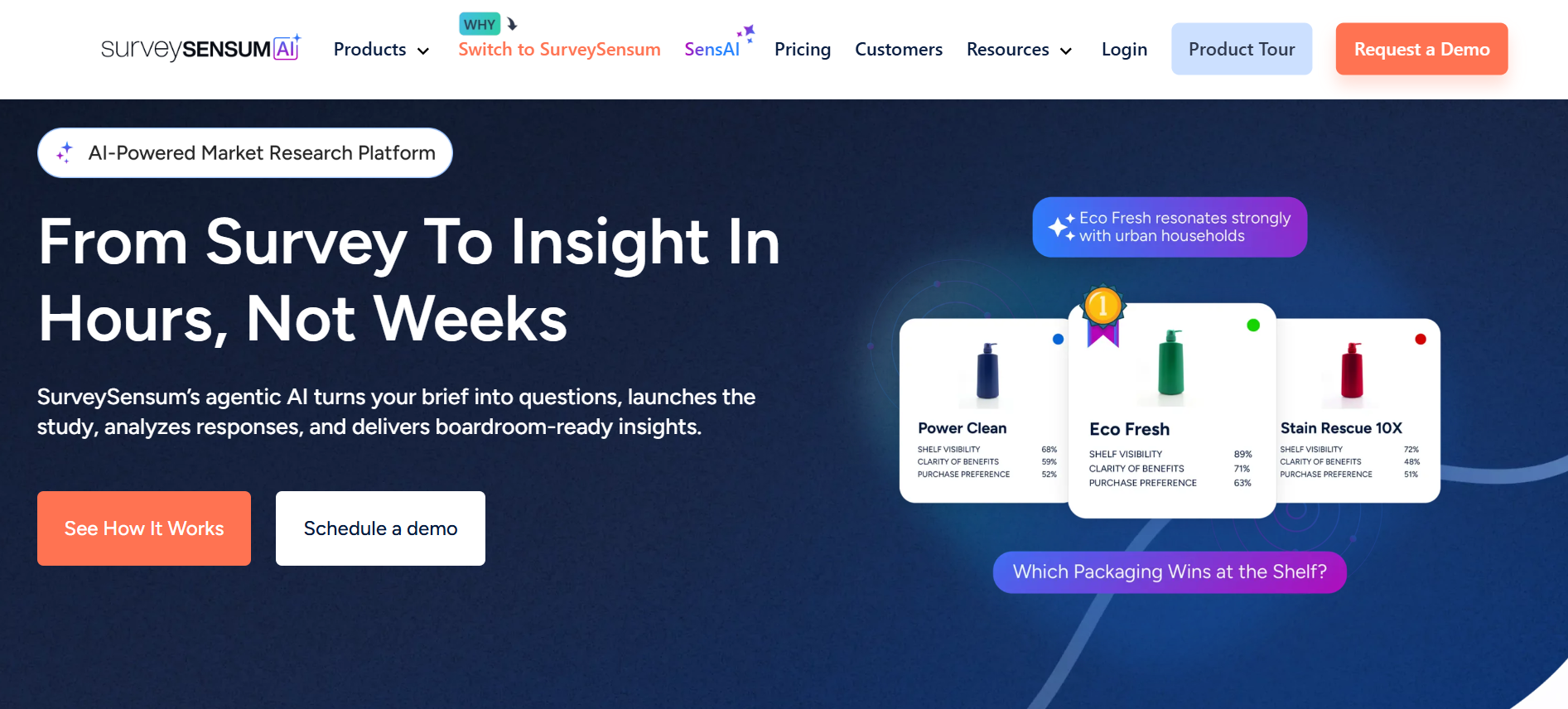
It combines questionnaire creation, panel access, AI quality control, real-time analysis, and automated reporting into a single AI-powered market research platform. Rather than replacing one step in your research process, it reimagines the entire thing.
At the center of the platform is SensAI, an AI intelligence layer that handles everything from generating research-grade questionnaires to surfacing strategic recommendations from your data.
The platform supports the full range of research verticals: concept testing, ad testing, pack testing, product testing, usage and attitude studies, pricing research, brand health tracking, segmentation, and more.
Why teams choose it over Toluna:
Teams switch to SurveySensum when:
- Research frequency is increasing, and workflows need to get faster
- Business teams want to run their own studies without specialist support
- Manual analysis and reporting are creating unacceptable delays
- Per-study pricing is becoming too expensive for continuous research programs
- Insights need to move from reporting to faster, research-driven decisions
Where it is stronger than Toluna:
- End-to-end AI-powered workflow
- Automated summaries and reporting
- Real-time dashboards
- Faster insight-to-decision cycles
- More agility for frequent research
Where Toluna is still better:
- large legacy enterprise ecosystems
- benchmark-heavy programs
- deeply structured research operations
When to choose SurveySensum:
You want a modern market research platform that is built for speed, automation, and decision-ready insights.
If your team is evaluating AI-led market research platforms, seeing an end-to-end research workflow in practice usually makes the differences much clearer. You can explore how teams are running this with SurveySensum →
2. Qualtrics
Best for: Enterprise Research Programs
Qualtrics is designed for large organizations managing complex market research programs across regions and methodologies. It offers broad capability across survey research, analytics, and cross-functional data management.
Strengths:
- Extremely flexible research design and methodology support
- Large global panel access through partnership networks
- Enterprise-grade governance, access controls, and compliance features
- Advanced analytics and statistical modeling capabilities
- Strong integration ecosystem for enterprise tech stacks
Tradeoffs:
- Significant implementation complexity and long setup timelines
- High cost, both licensing and implementation, especially at scale
- Not optimized for speed or agility; better suited for structured, planned research programs
- Can feel over-engineered for mid-market teams or frequent, iterative studies
When to choose Qualtrics:
You need a large-scale enterprise research platform and are willing to trade simplicity for control.
For teams evaluating enterprise market research software, Qualtrics creates the most friction around cost and implementation complexity. See how it stacks up in our detailed Qualtrics alternative for market research breakdown.
3. Attest
Best for: Agile Consumer Research
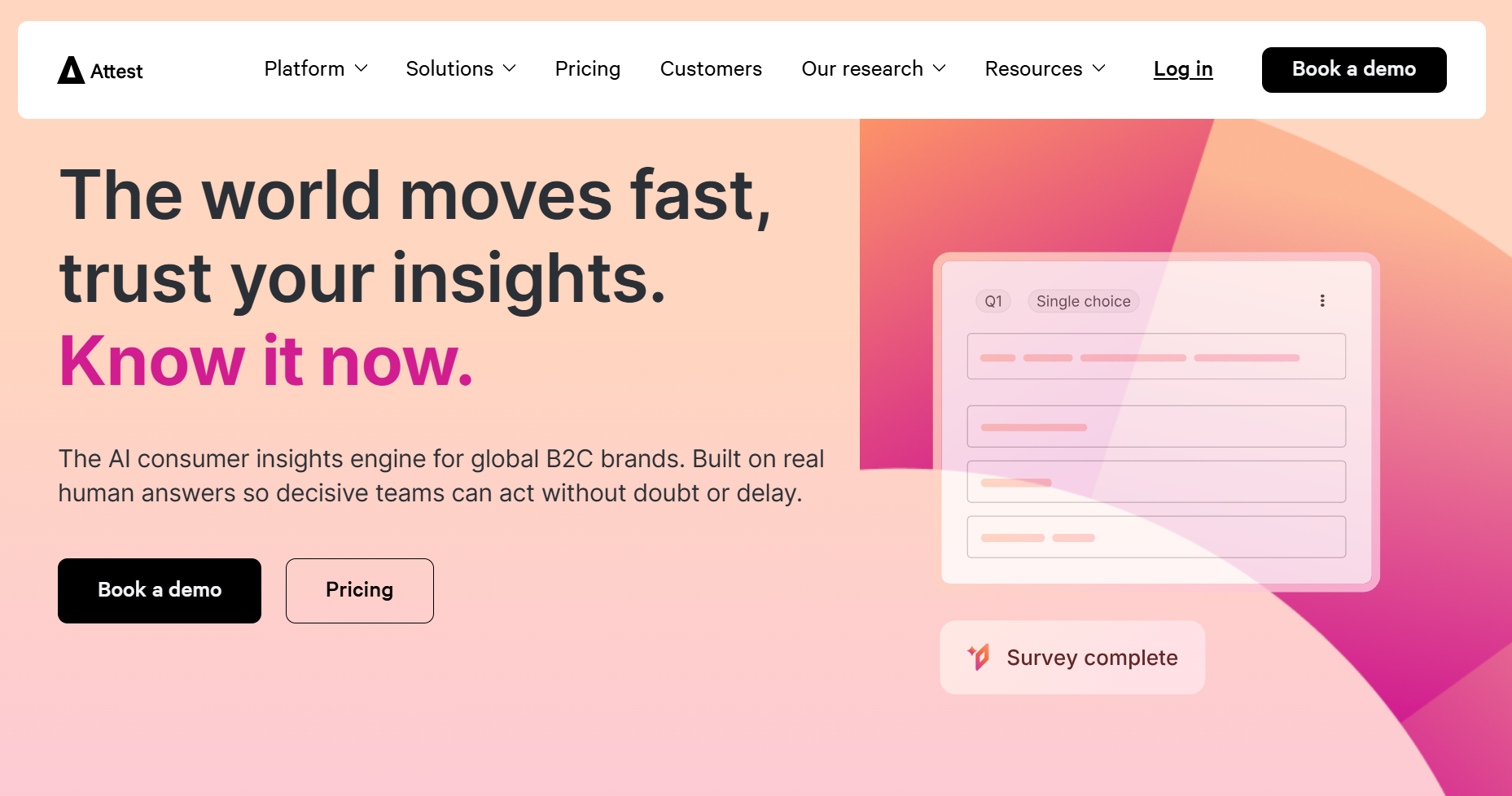
Attest is built for teams that need to run fast, iterative consumer research without heavy platform setup. It’s a strong fit for brand and marketing teams running frequent, lighter-weight studies.
Strengths:
- Fast and intuitive study setup, minimal research expertise required
- Strong consumer panel access across key markets
- Subscription pricing that works for teams running multiple studies per month
- Clear, well-designed results dashboards
- Good for tracking brand perception, messaging validation, and audience understanding
Tradeoffs:
- Less depth for advanced methodologies
- Not built for complex enterprise research programs
When to choose Attest:
You run frequent consumer research and want speed over complexity.
4. Quantilope
Best for: Advanced Quantitative Research
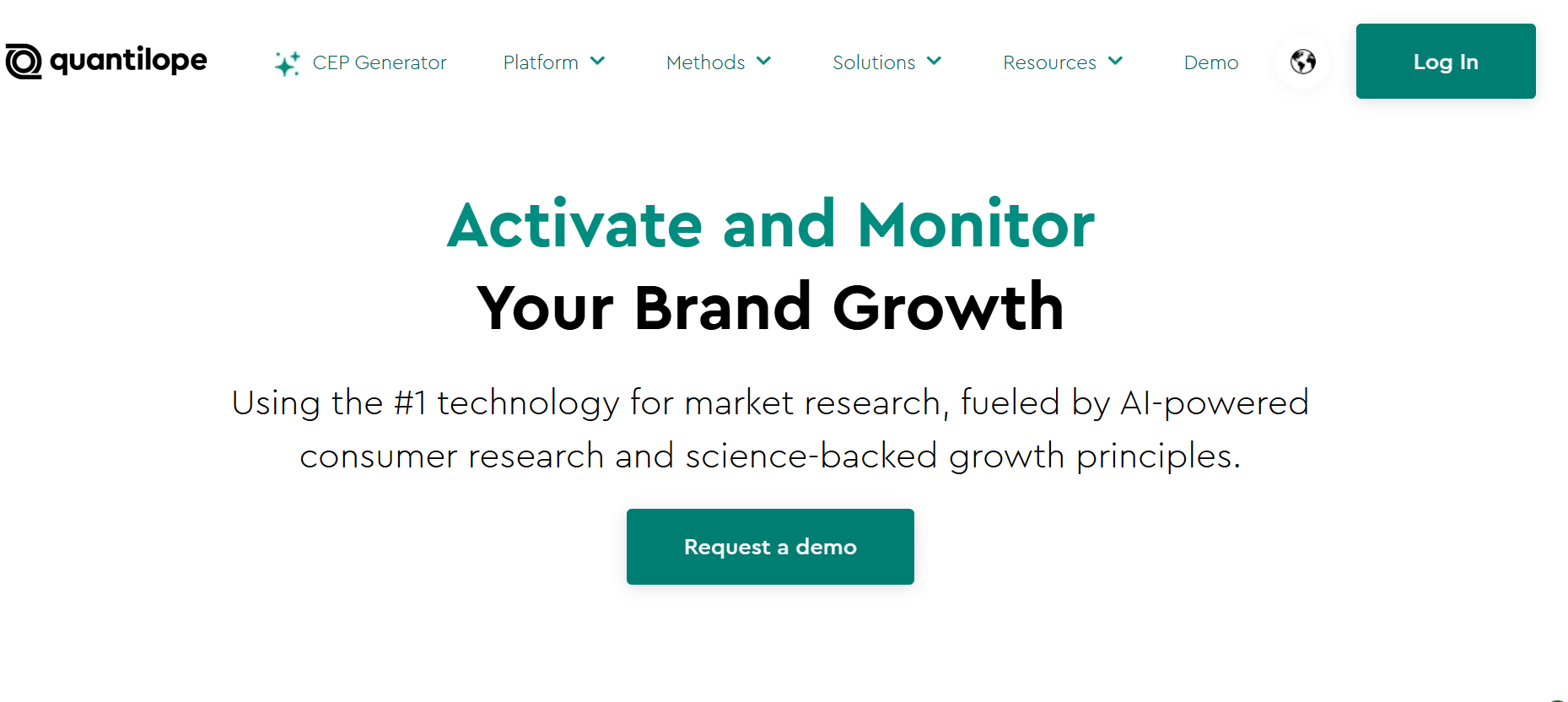
Quantilope is purpose-built for research teams that need to run methodologically advanced studies. This includes conjoint analysis, MaxDiff, TURF, and segmentation, all with a level of automation that traditional research platforms don’t provide.
Strengths:
- Automated advanced quantitative methods, including conjoint, MaxDiff, and TURF
- Real-time data collection and live dashboard updates
- Strong methodology integrity with automated significance testing
- Faster than traditional agency-led advanced quantitative research
- Good for pricing research, product optimization, and portfolio decisions
Tradeoffs:
- steeper learning curve
- more specialized use case
- less suited for broad business-user access
When to choose Quantilope:
You need advanced quant research, and your team is comfortable with methodological depth.
5. Suzy
Best for: Rapid Consumer Insights
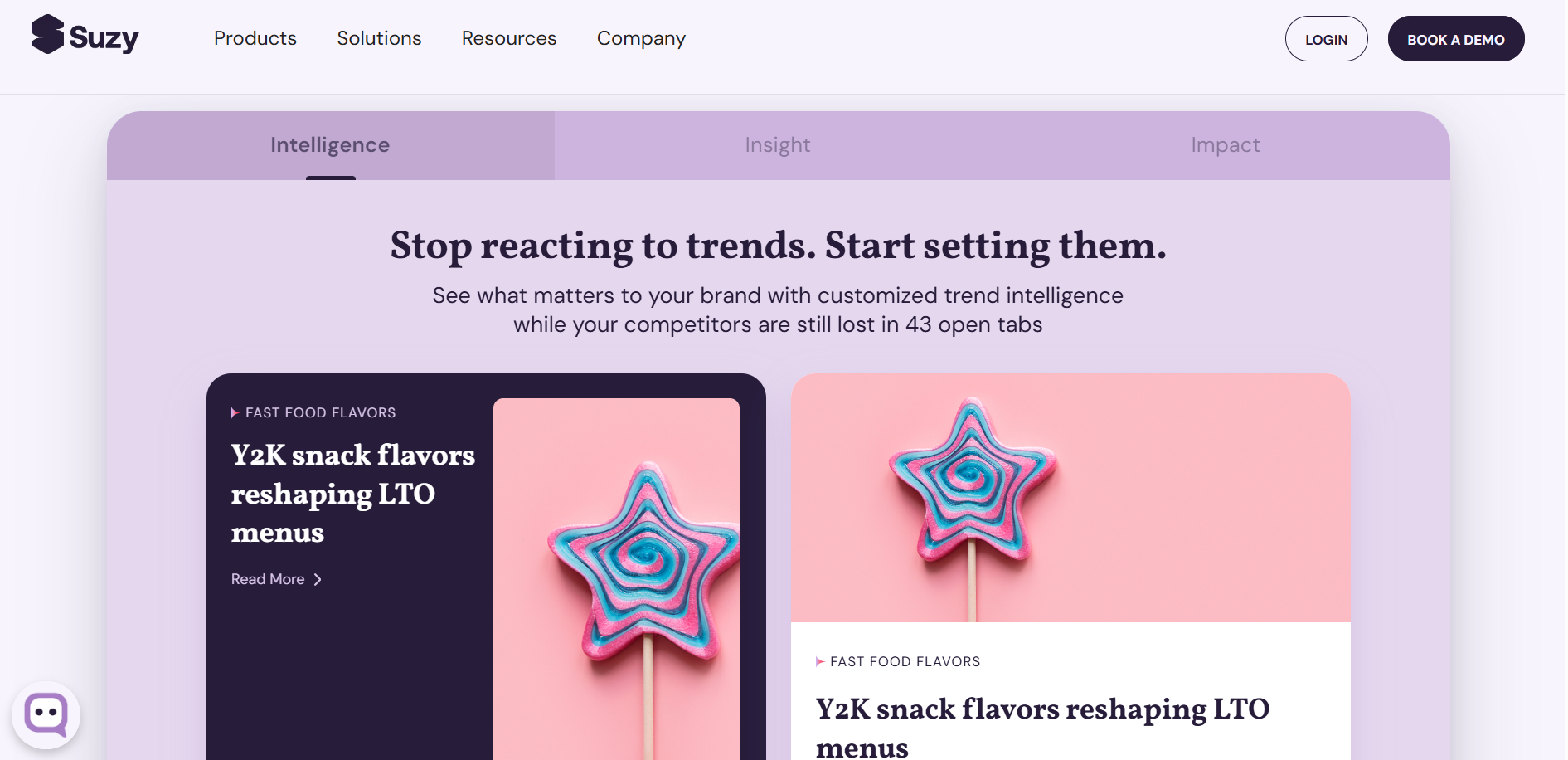
Suzy is focused on speed. It delivers consumer insights quickly through its proprietary panel, making it attractive for teams that need directional answers fast – within hours rather than days.
Strengths:
- Very fast turnaround on study results, often same-day or next-day
- Proprietary consumer panel with strong U.S. coverage
- Supports both quantitative and qualitative research methods
- Simple interface with low setup friction
- Works well for rapid concept testing, message validation, and quick-turn consumer research
Tradeoffs:
- limited deep analytics
- less suitable for complex research programs
When to choose Suzy:
You need answers quickly, and speed matters more than extensive analytical depth.
6. Prolific
Best for: High-Quality Participant Recruitment
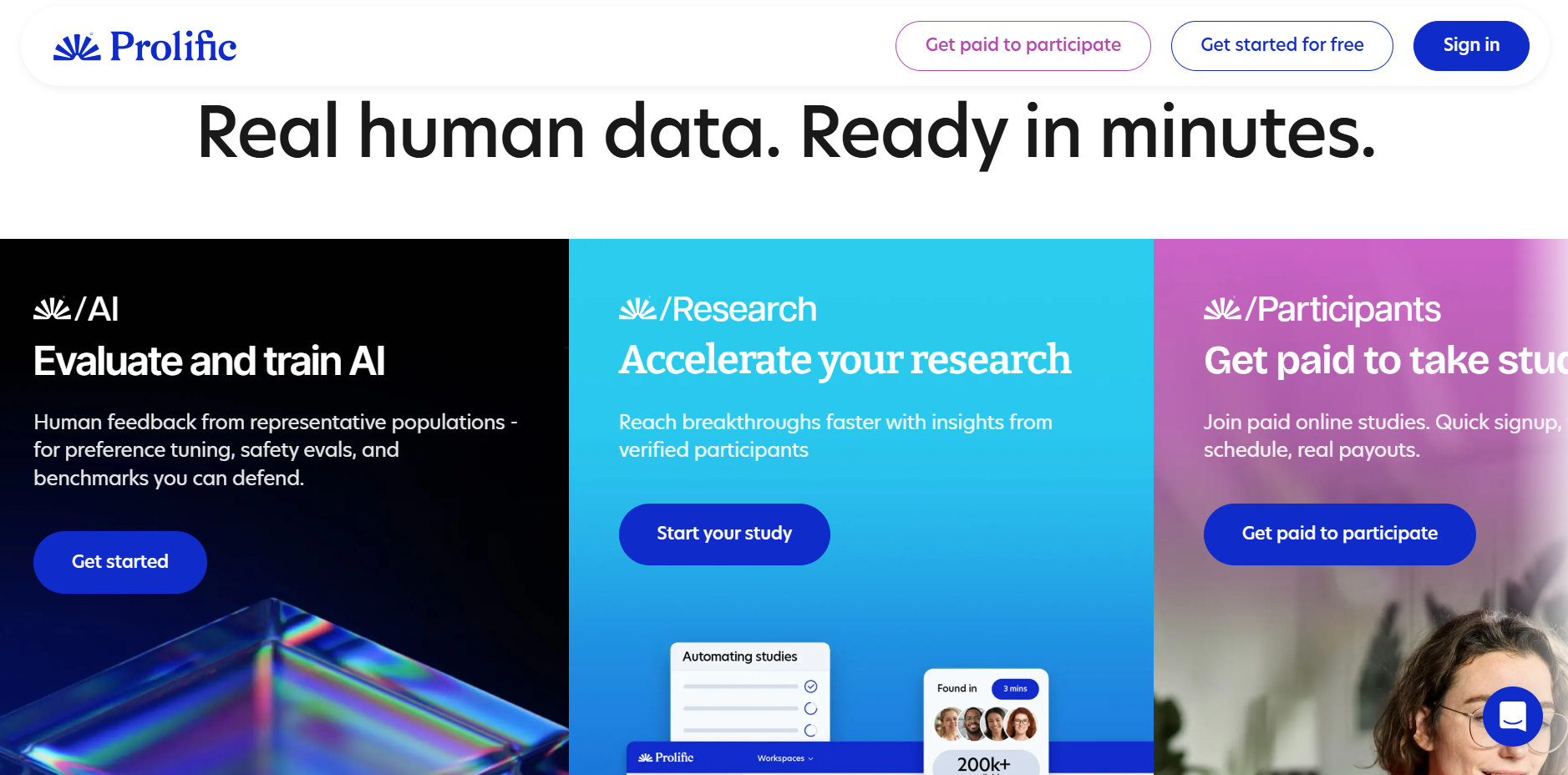
Prolific is not a full market research platform – it’s a participant sourcing platform. Its core value is the quality and verifiability of its respondent pool, which makes it a strong complement to research tools that lack their own panel infrastructure.
Strengths:
- Highly verified, engaged participant pool with strong data quality
- Flexible targeting by demographics, behaviors, and self-reported attributes
- Transparent respondent profiles and honest participation incentives
- Works alongside any research platform
- Strong academic and research community trust
Tradeoffs:
- Not a full market research platform
- Requires other tools for study execution and analysis
When to choose Prolific:
You already have your research stack and only need better participant recruitment.
7. Maze
Best for: Product and UX Research
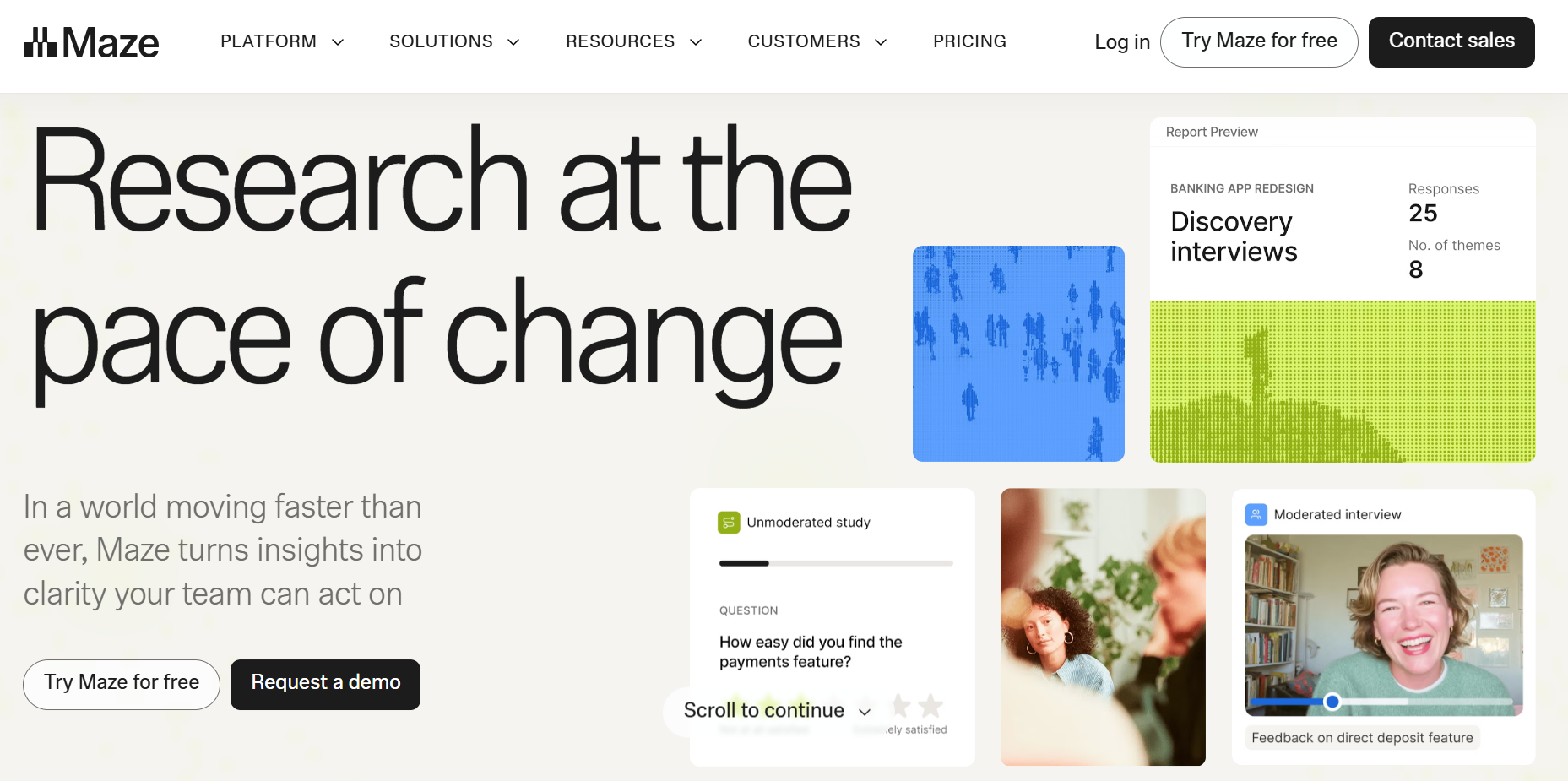
Maze is primarily a product research and usability testing platform rather than a full market research platform. It’s designed for testing product flows, prototypes, and usability with real users. For teams whose research need is primarily product validation and user experience testing, it fills a very specific gap.
Strengths:
- Designed specifically for product flow and prototype testing
- Integrates with design tools like Figma, InVision, and Maze’s own builder
- Fast research cycles for product and UX research teams
- Clear usability metrics and task-completion analytics
Tradeoffs:
- Not built for broader market research
- Limited fit for consumer insights programs
- Less relevant for enterprise research operations
When to choose Maze:
Your work is centered on product validation and usability rather than full market research.
If you’re comparing a few of these platforms, mapping them against how your research workflow actually operates usually makes the decision much clearer than comparing features alone.
Common Mistakes Teams Make When Switching from Toluna
Switching platforms does not automatically improve research operations.
The evaluation approach matters.
→ Choosing Another Heavy Enterprise Platform
Many teams leave one operationally heavy system only to adopt another.
The result:
- similar workflow friction
- similar implementation complexity
- similar execution delays
→ Ignoring Research Frequency
Research economics change significantly when studies become continuous.
A platform optimized for occasional enterprise studies may not work well for:
- weekly testing
- rapid iteration
- ongoing tracking
- agile innovation cycles
→ Overvaluing Features Over Workflow
Long feature lists rarely solve operational bottlenecks.
The better question is: “Does this platform fit how our team actually works?”
→ Not Considering AI-Led Research
AI is rapidly changing:
- questionnaire generation
- analysis
- reporting
- insight discovery
- decision support
Ignoring AI-led workflows today can create major operational disadvantages later.
When You Should Still Use Toluna?
Not every team that’s frustrated with Toluna should switch. There are cases where Toluna remains the right call.
1. FMCG and Structured Research Teams
If your research program is built around structured, recurring studies like annual brand health tracking, category reviews, or continuous panel research, and you have a dedicated insights team managing the workflow, Toluna can still deliver strong and consistent research output.
2. Benchmark-Driven Research Programs
Toluna’s normative databases and benchmarking infrastructure are genuinely valuable for teams whose research decisions depend on comparison against established norms. If your program lives and dies by benchmark data, switching platforms means starting from scratch on your norms history.
3. Large Traditional Insights Teams
Teams with experienced research specialists, dedicated operations support, and well-established Toluna workflows may find that switching creates more disruption than value, especially if their research pace remains stable and the business does not require faster turnaround times.
If none of these describe your situation, and your research workflow is moving toward greater frequency, agility, and AI-driven insight generation, the switch is worth making.
At the same time, the market research category itself is changing. The expectations around how research gets executed, analyzed, and operationalized are evolving much faster than traditional research workflows were originally built for.
Why AI is Changing Market Research Platforms
The reason so many teams are evaluating Toluna alternatives right now isn’t coincidental.
It’s happening because AI has genuinely changed what’s possible in market research, and the gap between AI-native platforms and traditional tools is widening.
1. From Manual Reporting to AI Summaries
The biggest time sink in traditional market research usually happens after data collection.
Research teams still spend significant time on:
- analysis
- cross-tabulation
- chart creation
- insight summaries
- report writing
- presentation design
On traditional market research platforms, most of this work remains manual.
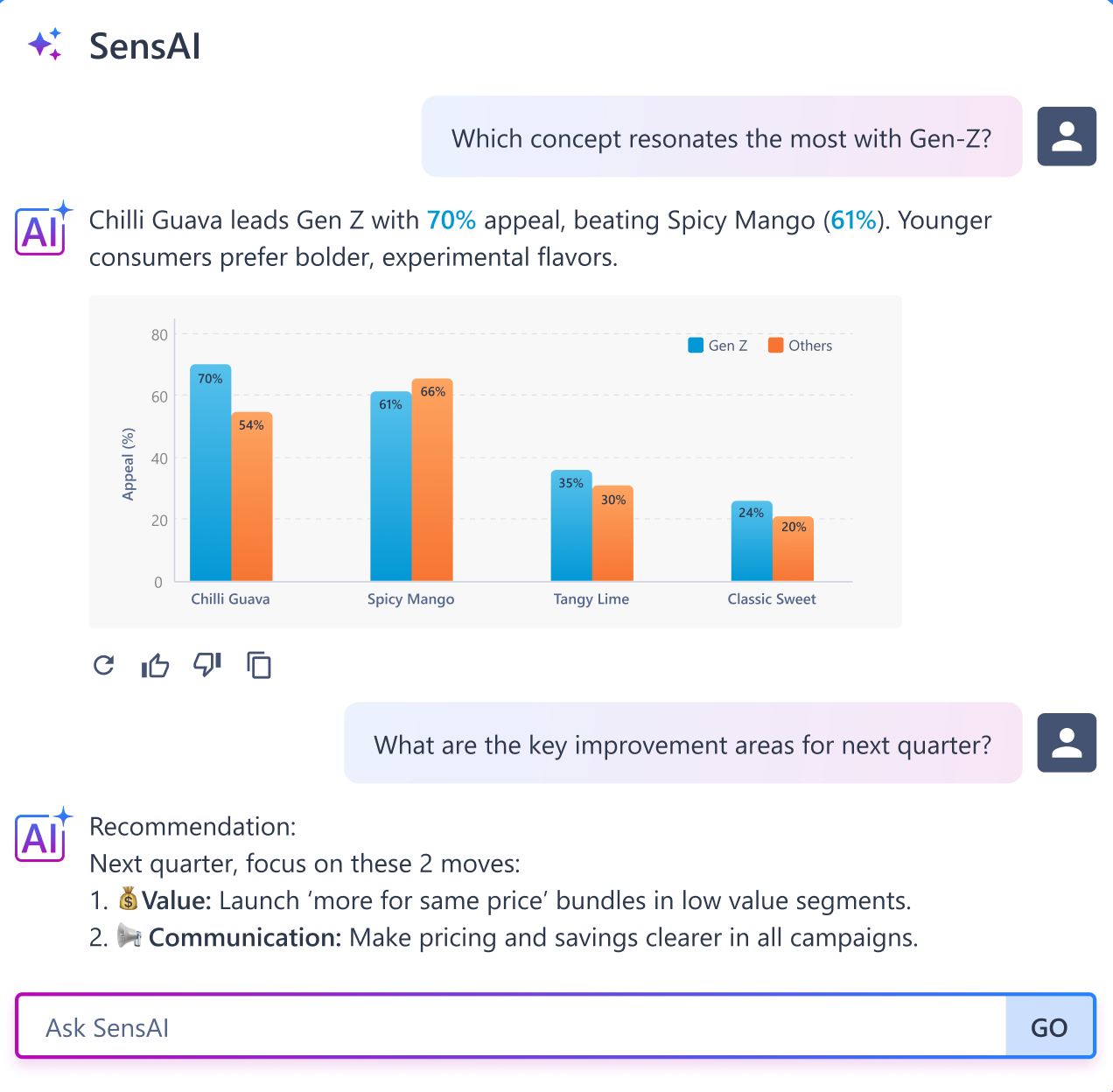
AI-led market research platforms like SurveySensum automate much of this workflow through SensAI. It automatically generates executive summaries, surfaces key findings, identifies patterns, and creates boardroom-ready PowerPoint reports in significantly less time.
2. Faster Insight Generation
Businesses no longer want insights weeks later.
They want:
- rapid validation
- continuous research workflows
- real-time visibility
- faster decision-making
That demand is accelerating the adoption of AI market research tools.
3. Continuous Research vs Static Studies
Research is increasingly shifting from project-based studies to continuous insight ecosystems.
That means:
- always-on tracking
- continuous concept testing
- rapid experimentation
- ongoing consumer research programs
4. AI-Led Decision Support
Modern consumer insights platforms are increasingly expected to:
- surface key drivers
- identify anomalies
- generate recommendations
- prioritize actions
- support business decisions directly
This is moving market research beyond dashboards into operational intelligence.
Frequently Asked Questions
What is Toluna used for?
Toluna is a market research platform used for consumer surveys, brand tracking, concept testing, and panel-based research studies. It supports both DIY and managed research programs and is commonly used by FMCG, CPG, and enterprise research teams.
Why do companies switch from Toluna?
Companies switch from Toluna when they need faster execution, more DIY flexibility, AI-led insight generation, or predictable pricing for continuous research. The trigger is usually a change in how research needs to run, not a failure of the platform itself.
What is the best Toluna alternative?
SurveySensum is the strongest choice for teams that need an AI-led, end-to-end market research platform. Qualtrics fits large enterprise programs, and Attest works well for agile, fast-turnaround consumer research.
Is Toluna good for market research?
Yes. Toluna works well for structured, project-based research programs with dedicated research teams. It creates friction for teams that need faster execution, AI-led analysis, or simpler DIY workflows.
What are AI market research tools?
AI market research tools automate key parts of the research workflow, including questionnaire generation, quality control, insight analysis, and report creation. Platforms like SurveySensum compress research cycles from weeks to hours by handling the entire process end-to-end.
Final Thoughts
Most teams evaluating Toluna alternatives are not looking for another enterprise research platform.
They are looking for a market research workflow that is faster, more flexible, and more automated.
The best platform is not the one with the longest feature list. It is the one that fits how your research actually runs today.
If your research is becoming more frequent, more iterative, and more closely connected to rapid business decisions, seeing how an AI-led end-to-end market research platform works in practice usually makes the evaluation much clearer.
→ See how SurveySensum works for your research workflow.
Free Forever • No Feature Limitation • No Credit Card Required • Sign Up For Free 


Increase ROI by 3x with targeted feedback & analysis
Boost Customer Satisfaction by up to 20%
Reduce Churn by identifying pain points in real time
See it in Action
Contents
How much did you enjoy this article?