



12 Best CSAT Software Tools in 2026: From Feedback to Operational Action

Most CSAT tools help teams measure feedback. Very few help teams act on it. This guide compares the best CSAT software based on workflows, AI insights, implementation speed, operational visibility, and how effectively they help teams move from feedback → operational action.
Request a Demo
Most companies don’t fail at collecting CSAT.
They fail at doing something meaningful with it.
Support teams collect feedback.
Dashboards get created.
Monthly reports get shared.
But operationally?
Nothing changes.
That’s because most CSAT programs today are still built around:
- collecting scores
- reporting satisfaction
- tracking trends
But customer satisfaction doesn’t improve because a dashboard exists.
It improves when:
- support teams respond faster
- operations teams fix recurring friction
- product teams prioritize broken journeys
- leadership connects CSAT with churn, retention, and service quality
And that’s where most CSAT software tools struggle. They help teams measure satisfaction.
Very few help teams operationalize it.
That’s why this guide is different. This is not a list of survey tools.
It’s a breakdown of CSAT software platforms based on:
- how actionable they are
- how operationally useful they are
- how quickly teams move from feedback → improvement
- and which tools actually help customer-facing teams drive outcomes
Because ultimately, the best CSAT software isn’t the one with the most dashboards.
It’s the one that helps teams improve operations.
Quick Decision: What Do You Actually Need?
| Best Tools | Your Need | Best Category | If Your Priority Is… | Company Size | Where It May Not Fit | Pricing Visibility |
| AskNicely, Nicereply | Ticket & support CSAT | Support-led CSAT | Frontline coaching & service recovery | SMBs to mid-market service teams | Enterprise-wide operational orchestration | ~$5K–10K/year |
| Survicate, Refiner | App & product feedback | Product-led CSAT | Product onboarding & in-app feedback | SaaS startups to PLG companies | Offline or operational CX programs | ~$99/month to ~$5K/year |
| SurveySensum | Omnichannel operational CX with AI-led action | AI-Led Operational CSAT platforms | AI summaries + operational action | Mid-market to enterprise teams | Heavy research-only ecosystems or 20+ country governance-heavy deployments | Starts ~$3,600/year |
| Zonka Feedback, SurveySparrow | Lightweight recurring CSAT programs | Lightweight CX tools | Fast setup for growing teams | SMBs and growing businesses | Advanced AI prioritization and enterprise governance | ~$3K–5K/year |
| Qualtrics, Medallia, InMoment | Enterprise governance & analytics | Enterprise CX platforms | Large-scale enterprise governance | Large global enterprises | Mid-market teams needing speed, simplicity, and lower operational overhead | ~$100K–1M+ enterprise pricing |
| CustomerGauge | Revenue-linked CX tool | Account-level B2B satisfaction tracking | Retention, expansion & account health | Mid-market to enterprise B2B companies | Transactional B2C or operational CX programs | Enterprise B2B pricing |
| SurveyMonkey, Typeform | Simple surveys only | Measurement tools | Basic survey collection | Small businesses and individual teams | Closed-loop workflows and operational CX execution | ~$20–30/month |
→ Most wrong decisions happen because teams buy a platform that is more complex than they can operationalize.
Why Most CSAT Programs Fail
Most teams think CSAT problems are survey problems.
They’re not.
They’re operational problems.
Here’s what usually happens:
- feedback stays inside dashboards
- support teams don’t own recurring issues
- operational teams never see the data
- no one prioritizes recurring friction
- and CSAT becomes a reporting KPI instead of an execution system
That’s why the best CSAT software today focuses less on measurement and more on:
- workflows
- routing
- ownership
- alerts
- prioritization
- and operational visibility
The Workflow: Feedback → Operational Action
Most CSAT software tools fall into one of four categories.
1. Measurement
You collect scores.
Everything else is manual.
2. Workflow-Led Action
Teams can respond to feedback and close tickets operationally.
3. AI-Led Operational Action
The platform identifies friction, summarizes feedback, prioritizes issues, and guides execution.
4. Enterprise-Led Orchestration
Action is driven through governance, consulting teams, structured analytics, and enterprise workflows.
→ The real question is: Do you want dashboards, workflows, or operational decisions?
Best CSAT Software by Category
Category 1: AI-Led Operational CSAT Platforms
1. SurveySensum – Best for AI-Led Operational CX
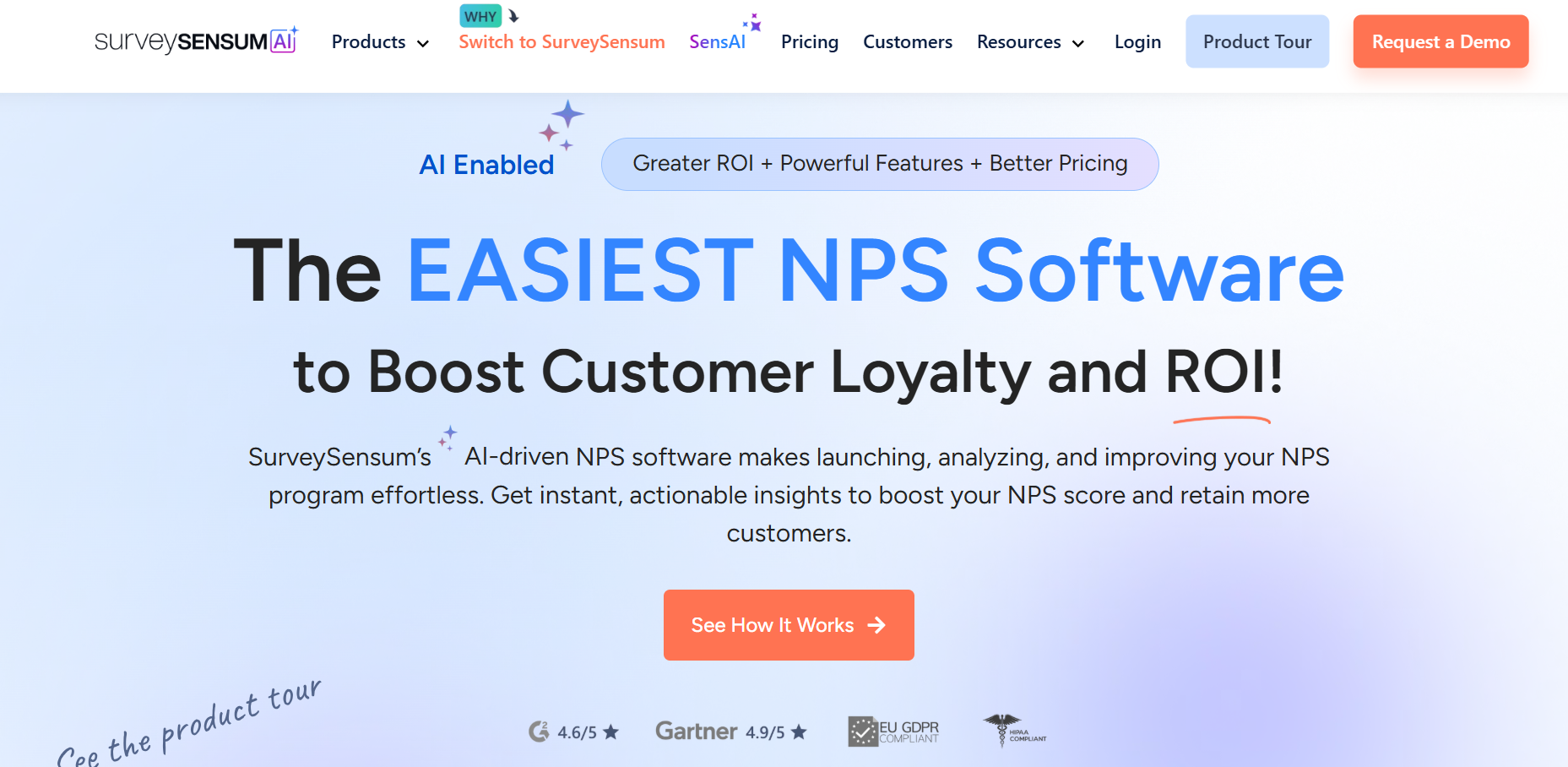
Best For: Mid-market and enterprise teams running operational CX programs
What Makes It Actionable: SurveySensum combines:
- AI summaries
- SensAI guidance
- closed-loop ticketing system
- role-based dashboards
- omnichannel feedback collection
- AI-Powered Text Analysis
Instead of just showing scores, it helps teams understand:
- what went wrong
- where it happened
- who should act
- and what to prioritize first
How Action Actually Happens:
- AI summarizes thousands of responses into operational drivers
- SensAI chat-based engine answers → “Why is CSAT dropping in onboarding?”
- Feedback gets routed automatically to operational teams
- Alerts trigger follow-up workflows
- Dashboards break down issues by branch, region, route, store, support team, agent
👉 Action = operational visibility + execution
Why It Stands Out: Most CSAT tools measure satisfaction. SurveySensum helps teams operationalize feedback, identify recurring friction, prioritize fixes and improve customer experience faster
Why Mid-Market Teams Prefer It
Unlike enterprise platforms requiring consulting-heavy operations, SurveySensum is designed for faster execution, operational flexibility, simpler adoption, and AI-led guidance without enterprise overhead.
Where It May Not Fit: Teams needing:
- extremely large global deployments (20+ countries)
- research-only ecosystems
- advanced governance-heavy operations
Pricing: Starts at ~$3,600/year for smaller teams and scales based on AI, workflows, and response volume.
Category 2: Support-Led CSAT Tools
2. AskNicely – Best for Frontline Coaching & Accountability
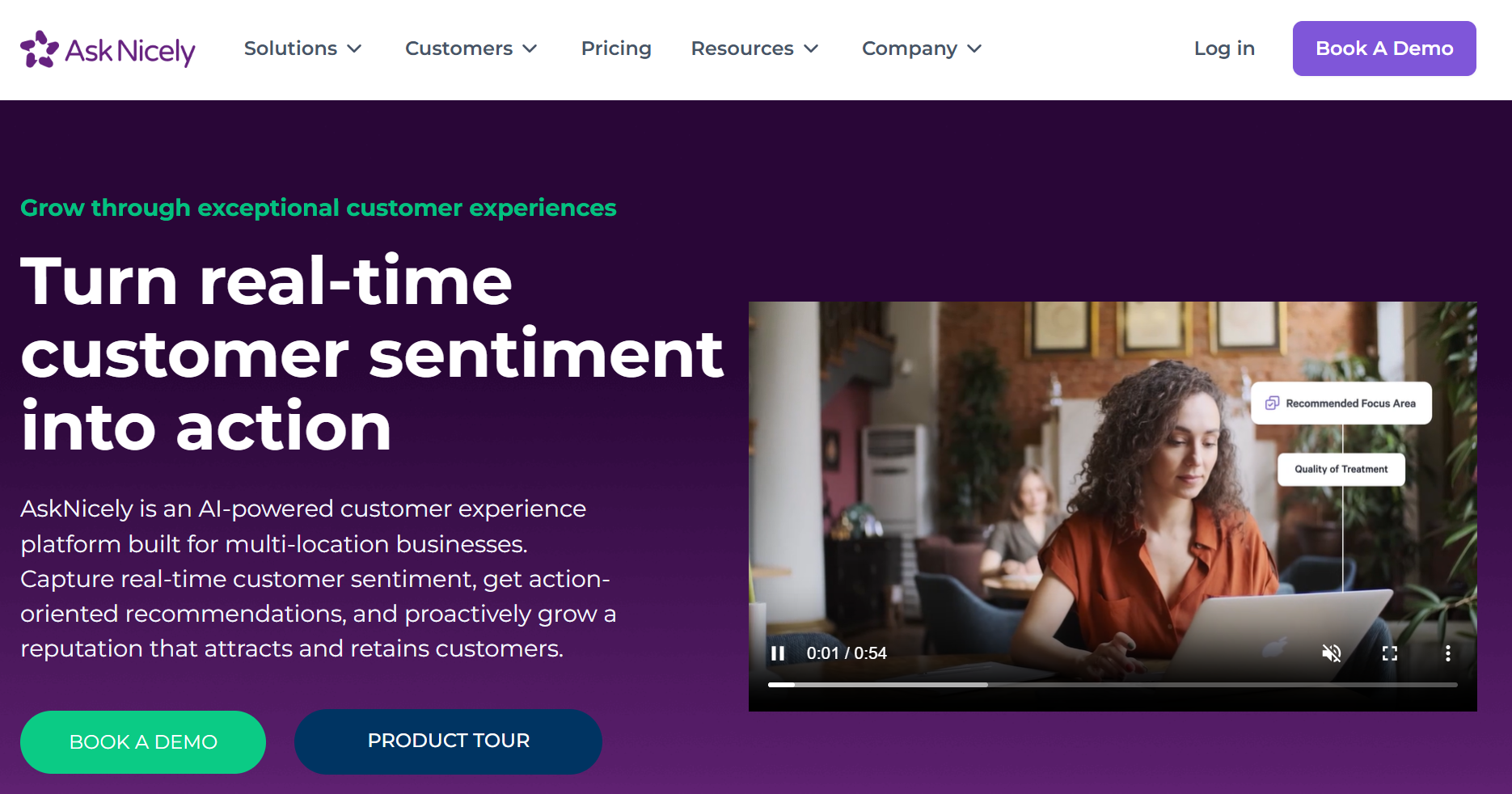
Best For: Service businesses and support-heavy teams improving frontline performance using customer feedback.
What Makes It Actionable: AskNicely focuses on:
- frontline coaching
- employee accountability
- service recovery workflows
- operational response loops
How Action Actually Happens
- Feedback tied to frontline employees
- Managers coach teams using CSAT trends
- Alerts trigger immediate response
- Low scores create accountability loops
👉 Action = frontline behavior improvement
Strengths
- Strong coaching workflows
- Employee-level visibility
- Great for multi-location service businesses
Trade-Offs
- Limited enterprise-wide orchestration
- Not ideal for complex operational CX programs
Pricing: Typically starts around ~$5K–10K/year
→ As CX programs mature beyond frontline feedback, teams often evaluate AskNicely alternatives for broader analytics and workflow capabilities.
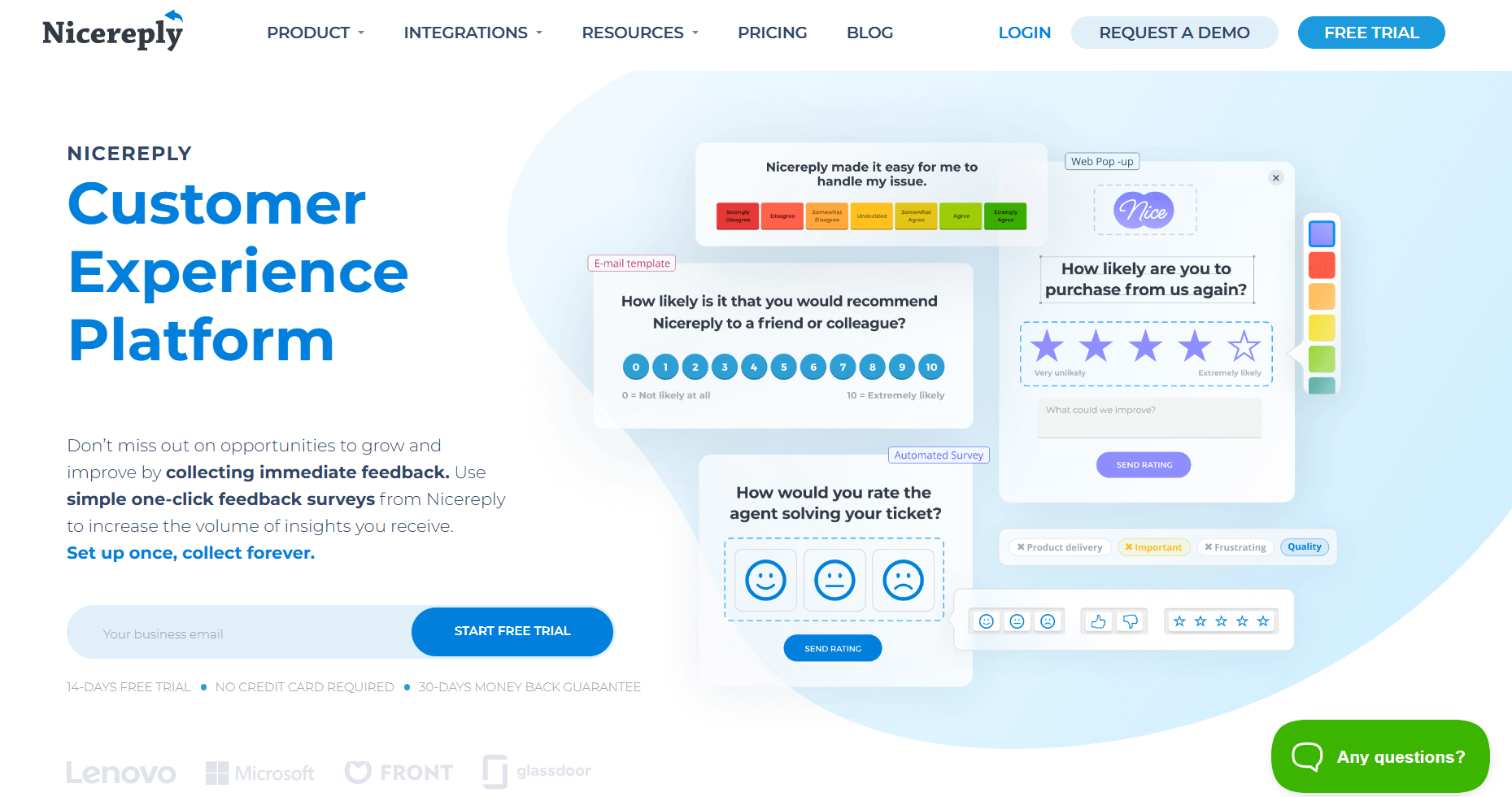
3. Nicereply – Best for Support Ticket CSAT
Best For: Support teams running ticket-based helpdesk operations.
What Makes It Actionable: Nicereply specializes in:
- ticket-level CSAT
- support agent ratings
- operational support workflows
- helpdesk integrations
How Action Actually Happens:
- CSAT tied directly to support tickets
- Managers identify recurring support issues
- Teams improve support quality operationally
👉 Action = support optimization
Strengths
- Lightweight setup
- Strong helpdesk integrations
- Operationally simple
Trade-Offs
- Limited omnichannel workflows
- Not built for enterprise operational orchestration
Pricing: Support-team pricing based on ticket volume and integrations; typically starts around ~$700/year.
Category 3: Product-Led CSAT Tools
4. Survicate – Best for Product-Led Feedback
Best For: SaaS and digital-first businesses collecting feedback across apps and websites.
What Makes It Actionable: Survicate focuses heavily on:
- in-app surveys
- onboarding feedback
- user segmentation
- product-level friction detection
How Action Actually Happens:
- Feedback triggered during onboarding and feature usage
- Product teams identify friction points
- Responses segmented by user cohorts
- Roadmaps updated using customer insights
👉 Action = product optimization
Strengths
- Strong in-app workflows
- Easy deployment
- Product-focused integrations
Trade-Offs
- Limited operational CX workflows
- Not suited for offline operational teams
Pricing: Typically ~$1400/year for product-led teams
5. Refiner – Best for SaaS Micro-Feedback Loops
Best For: PLG and SaaS companies running continuous in-app feedback loops.
What Makes It Actionable: Refiner specializes in:
- behavioral segmentation
- onboarding analysis
- churn detection
- retention optimization
How Action Actually Happens
- Feedback tied to user behavior
- Product teams identify activation friction
- Churn signals identified early
- Onboarding optimized continuously
👉 Action = onboarding + retention optimization
Strengths
- Strong segmentation
- Lightweight setup
- Excellent for SaaS onboarding analysis
Trade-Offs
- Limited omnichannel capabilities
- Narrower use-case scope
Pricing: Starts around ~$99/month for SaaS and product-led growth teams.
Category 4: Lightweight CX Tools
6. SurveySparrow – Best for Lightweight Recurring CSAT
Best For: Growing CX teams and SMBs.
What Makes It Actionable: SurveySparrow combines:
- recurring surveys
- alerts
- conversational feedback
- lightweight workflows
How Action Actually Happens
- Teams collect recurring operational feedback
- Alerts highlight poor experiences
- Managers manually prioritize issues
👉 Action = lightweight operational follow-up
Strengths
- Easy deployment
- Conversational survey experience
- Good SMB fit
Trade-Offs
- Limited AI guidance
- Limited enterprise orchestration
Pricing: Typically ~$3K–5K/year for growing CX programs
→ Growing teams looking for deeper AI analysis and operational workflows often explore SurveySparrow alternatives as requirements evolve.
7. Zonka Feedback – Best for Retail & Offline CX
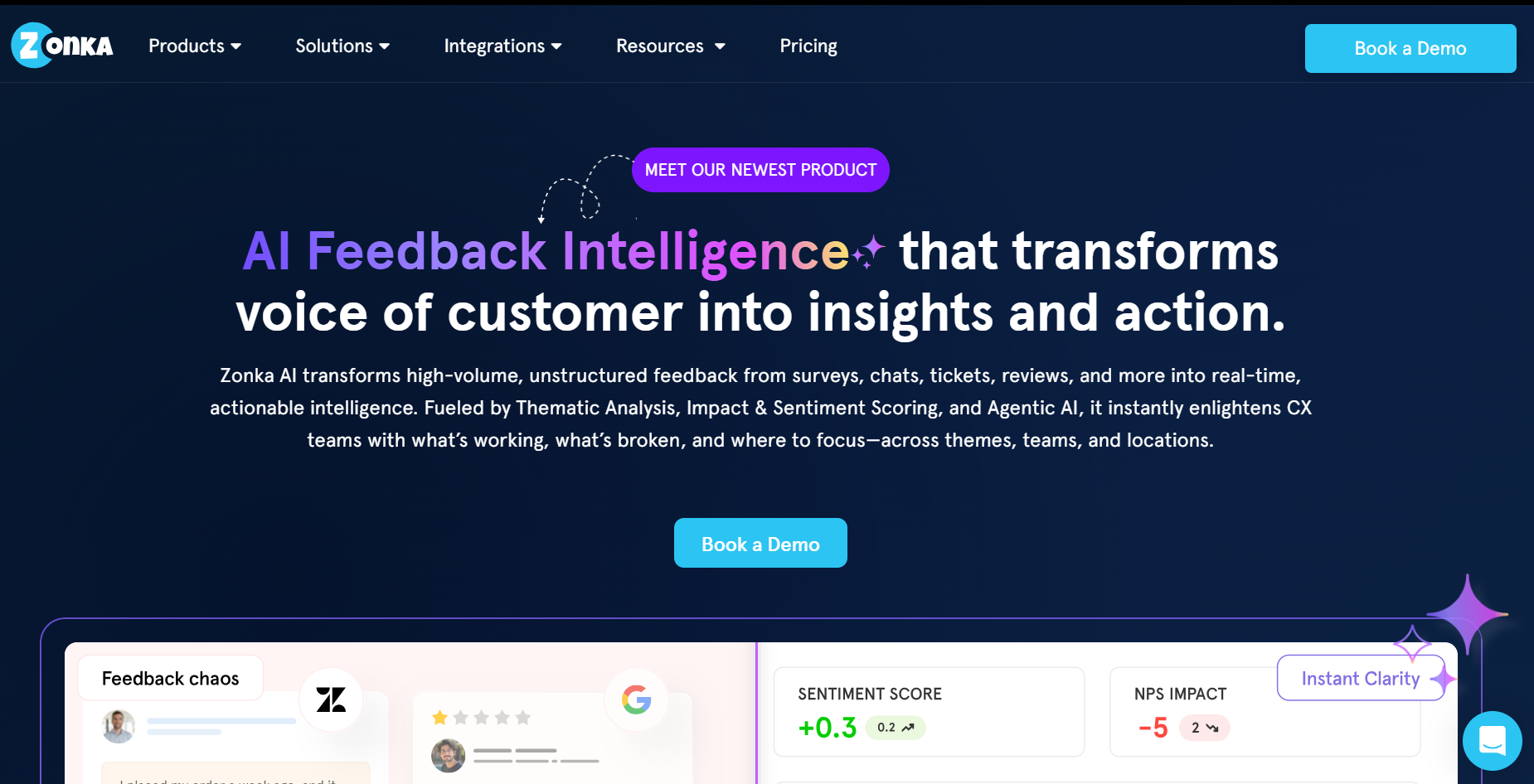
Best For: Retail brands and location-based businesses.
What Makes It Actionable
Zonka focuses on:
- QR surveys
- kiosk feedback
- branch/store reporting
- location-level visibility
How Action Actually Happens
- Feedback collected at operational touchpoints
- Alerts notify store-level teams
- Managers respond locally to issues
👉 Action = localized operational improvement
Strengths
- Easy setup
- Retail-friendly
- Budget-conscious fit
Trade-Offs
- Limited AI prioritization
- Not enterprise orchestration-ready
Pricing: Budget-friendly SMB pricing, typically around ~$3K–5K/year for CX teams
Category 5: Enterprise CX Platforms
8. Qualtrics – Best for Research-Driven Enterprise CX
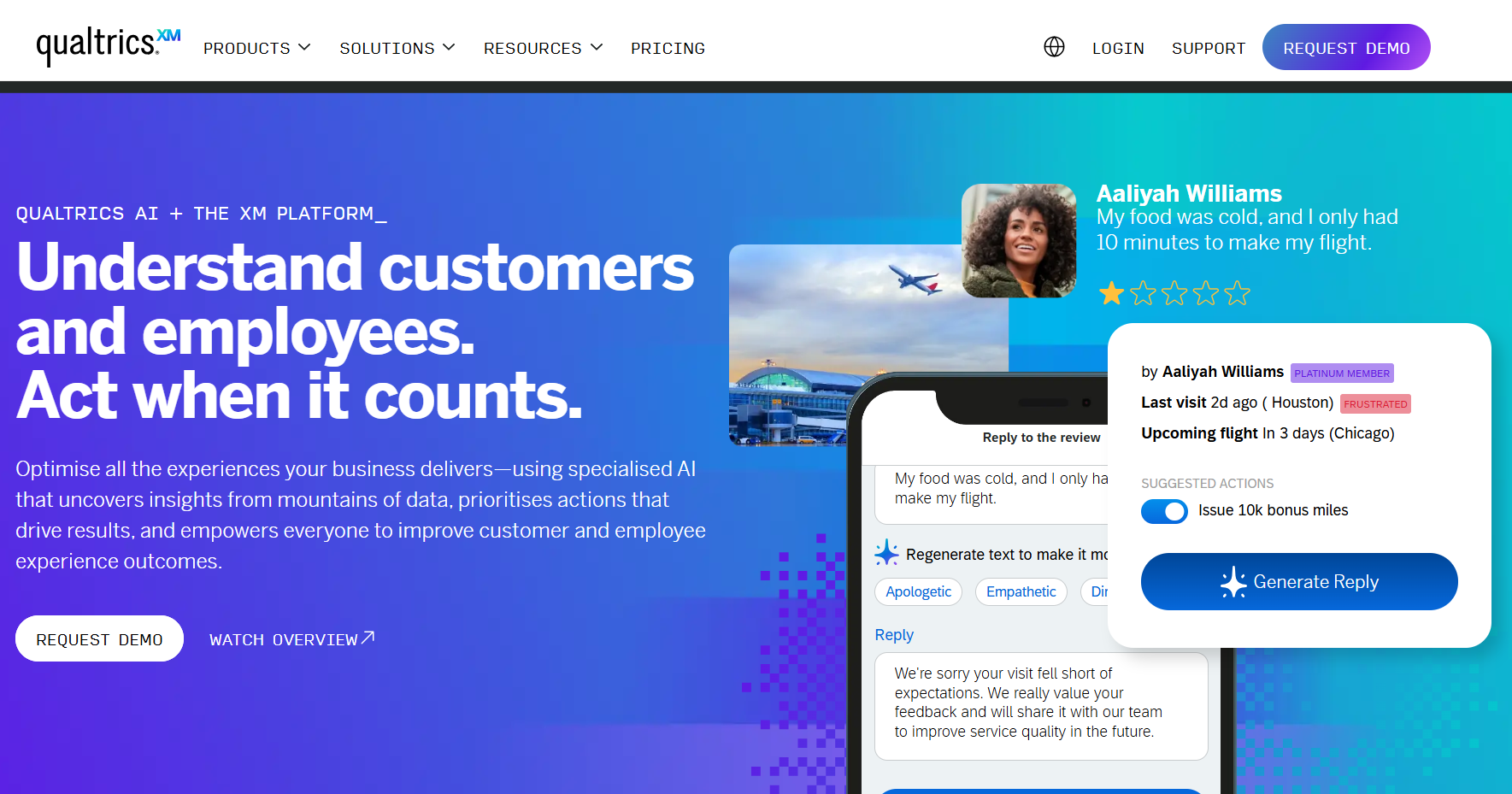
Best For: Large enterprises needing governance, research depth, and structured CX operations.
What Makes It Actionable: Qualtrics combines:
- enterprise analytics
- governance frameworks
- partner ecosystems
- research operations
How Action Actually Happens
- Data analyzed through structured research programs
- Action driven through internal CX teams and consulting partners
- Governance layers manage operational execution
👉 Action = structured enterprise coordination
Strengths
- Deep research capabilities
- Enterprise scalability
- Strong governance layers
Trade-Offs
- Extremely expensive
- Slow support outside implementation
- Consulting dependency
- Operational complexity
Operational Reality
Best suited for organizations with:
- mature CX teams
- strong governance
- internal operational ownership
Pricing: Enterprise pricing, typically ~$100K–1M+ for large programs
→ Teams prioritizing faster execution and operational simplicity often explore Qualtrics alternatives before long-term commitment.
9. Medallia – Best for Enterprise CX Orchestration
Best For: Large enterprises running mature CX transformation programs.
What Makes It Actionable: Medallia focuses on:
- journey orchestration
- consultant-led CX transformation
- enterprise operational workflows
How Action Actually Happens
- Consultants define operational improvements
- Enterprise workflows manage accountability
- Governance structures drive execution
👉 Action = enterprise-wide orchestration
Strengths
- Mature enterprise workflows
- Journey orchestration depth
- Consulting-led transformation
Trade-Offs
- Enterprise-level pricing
- Heavy implementation dependency
- Limited DIY flexibility
Operational Reality: Best suited for organizations with dedicated CX operations and mature governance structures.
Pricing: High-end enterprise pricing, often ~$100K–1M+
→ Organizations looking for lighter operational setups often compare Medallia alternatives before procurement.
10. InMoment – Best for Mature Enterprise CX Operations
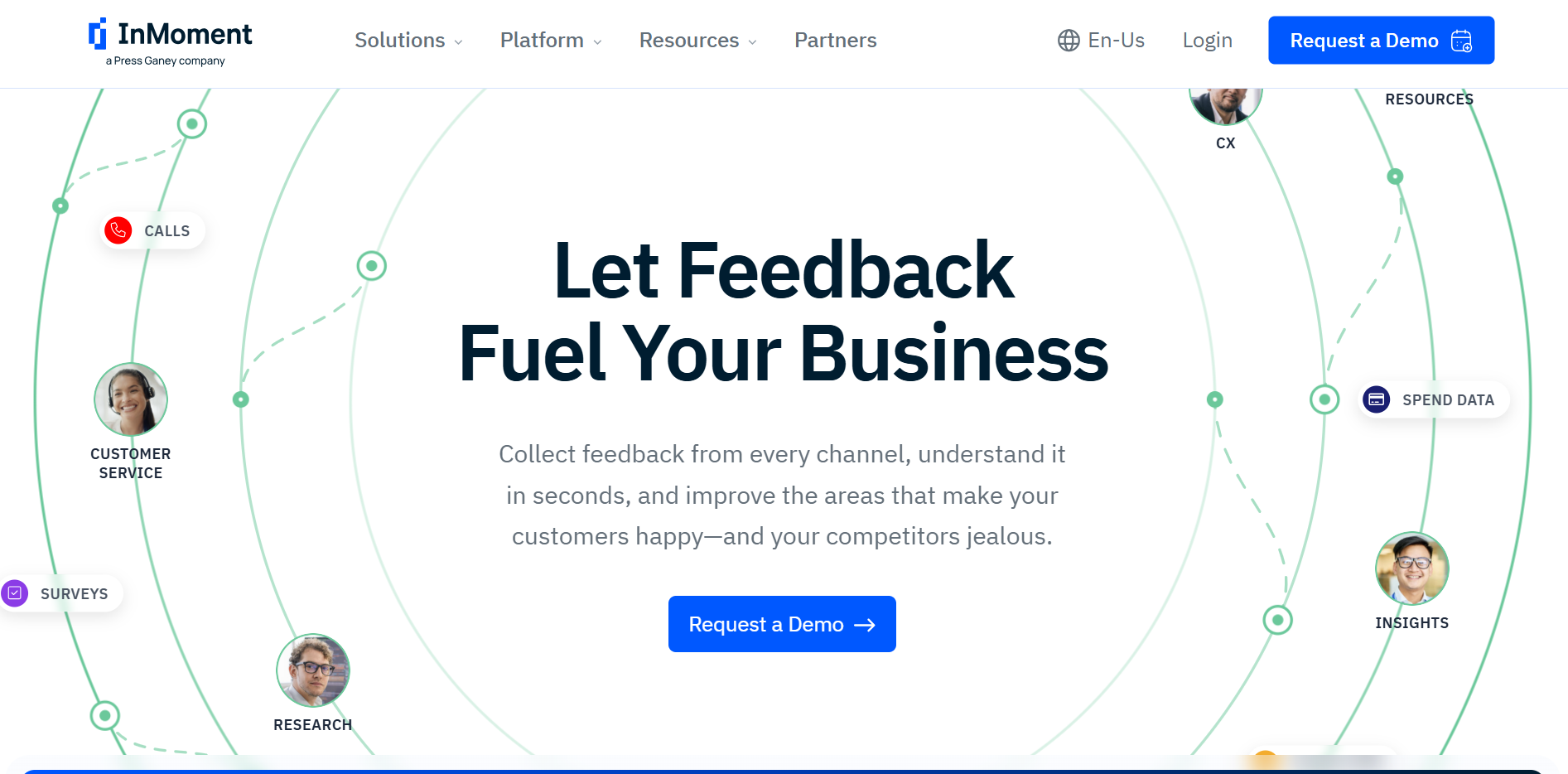
Best For: Large organizations running structured, multi-touchpoint CX programs.
What Makes It Actionable: InMoment combines:
- analytics
- orchestration
- governance workflows
- operational reporting
How Action Actually Happens
- Feedback distributed across operational teams
- Governance layers manage execution
- Analytics identify recurring experience gaps
👉 Action = structured operational coordination
Strengths
- Mature analytics
- Strong orchestration
- Enterprise workflow depth
Trade-Offs
- Slower implementation
- Operational complexity
- Less real-time AI guidance
Pricing: Upper enterprise pricing, often positioned around ~70% of Qualtrics pricing.
→ Teams looking for lower operational overhead and faster execution often evaluate InMoment alternatives during procurement.
Category 6: Revenue-Linked CX Tools
11. CustomerGauge – Best for Account-Level B2B Satisfaction
Best For: B2B organizations tracking:
- account health
- retention
- expansion
- revenue-linked customer satisfaction
What Makes It Actionable: CustomerGauge specializes in:
- account-level feedback
- churn risk analysis
- revenue linkage
- B2B customer health tracking
How Action Actually Happens
- Feedback mapped to accounts instead of individuals
- Detractors trigger account-level follow-ups
- CX aligns directly with sales and retention teams
👉 Action = retention + expansion conversations
Strengths
- Strong B2B fit
- Revenue linkage
- Account-level visibility
Trade-Offs
- Not built for transactional B2C CX
- Limited omnichannel operational workflows
Pricing: Enterprise B2B pricing based on account volumes and integrations
→ As B2B CX programs expand into omnichannel and AI-led workflows, teams often explore CustomerGauge alternatives for greater flexibility.
Category 7: Measurement Tools
12. SurveyMonkey & Typeform – Best for Basic CSAT Collection
Best For: Simple surveys and lightweight feedback collection.
Reality
These tools:
- collect scores
- create forms
- generate basic reports
But operational execution remains manual.
👉 Action = manual follow-up
Strengths
- Easy to use
- Affordable
- Fast deployment
Trade-Offs
- No operational workflows
- Limited prioritization
- No enterprise orchestration
Pricing: Typically starts around ~$20–30/month.
Which CSAT Software Should You Choose?
Choose based on how your teams operate:
- Choose SurveyMonkey / Typeform → if you only need simple surveys
- Choose AskNicely / Nicereply → if you run support-heavy operations
- Choose Refiner / Survicate → if you’re product-led
- Choose Qualtrics / Medallia / InMoment → if you need governance-heavy enterprise CX
- Choose SurveySensum → if you want operational CX execution powered by AI + workflows
→ The best CSAT software is not the one with the most features. It’s the one your teams can actually operationalize.
Final Takeaway
The future of CSAT is not measurement.
It’s operational execution.
The winning teams are no longer asking: “What is our CSAT score?”
They’re asking:
- What operational issue caused it?
- Who should act on it?
- How quickly can we fix it?
- And what business impact will it create?
That’s where modern CSAT software is heading.
Want to See What Operational CSAT Actually Looks Like?
Most CSAT tools stop at measurement.
Modern CX teams need:
- operational visibility
- AI-led prioritization
- automated routing
- and faster execution across support, operations, and product teams.
See how teams use:
- AI summaries
- omnichannel feedback
- operational dashboards
- and closed-loop workflows
to move from feedback → operational improvement.
Book a quick walkthrough and see how teams operationalize CSAT in weeks – not months.
Free Forever • No Feature Limitation • No Credit Card Required • Sign Up For Free 


Increase ROI by 3x with targeted feedback & analysis
Boost Customer Satisfaction by up to 20%
Reduce Churn by identifying pain points in real time
See it in Action
Contents
How much did you enjoy this article?